Skip to content
中文

BRITAIN · Cultural Monograph

British Tea Culture: From Courtly Luxury to Working-Class Fuel and Empire Branding

How an imported Asian leaf—paired with Caribbean sugar, industrial shift work, and vertical branding—reshaped class, gender, and British consumer society

Britain grows virtually no tea of its own, yet built one of history's most influential tea cultures—transforming an aristocratic curiosity of the 1660s into sweetened industrial fuel, gendered Victorian tea-room sociability, and a mass-branded imperial commodity.

Key Cultural Terminology

Afternoon Tea (Afternoon Tea (Low Tea))
1840s aristocratic drawing-room custom bridging lunch and late dinner with dainty sandwiches, scones, and porcelain service.
High Tea (High Tea (Meat Tea))
Historically a hearty working-class evening meal served at a high dining table—hot tea with meat, bread, and pies—not an elite afternoon snack.
Temperance (Temperance & Tea)
19th-century temperance campaigns championed tea as a sober, moral alternative to gin and ale, accelerating nationwide adoption.
Teabag & Blend (Builder's Tea & Proprietary Blends)
Strong, brisk blends of Assam, Ceylon, and Kenyan CTC fannings brewed in a mug with milk and sugar—Britain's egalitarian everyday staple.
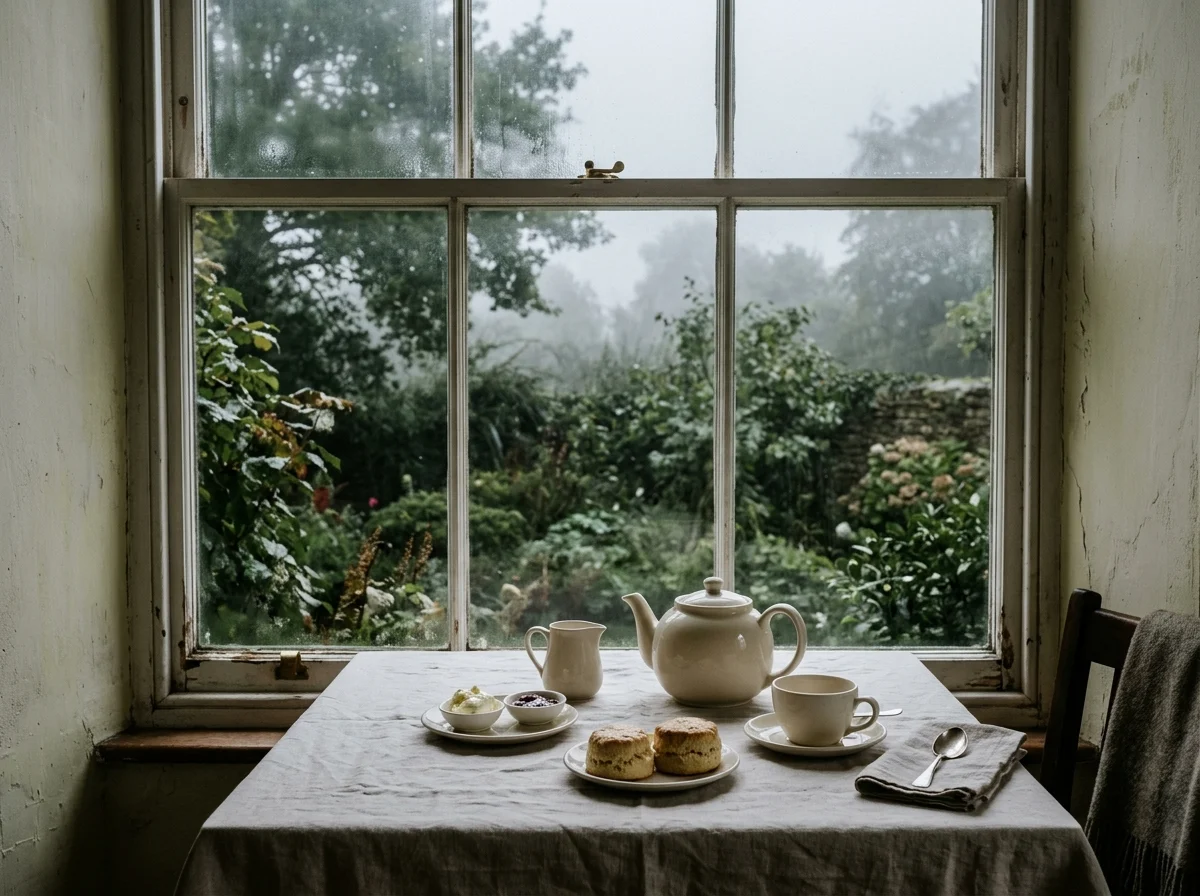
English afternoon tea table beside a sash window with cream bone-china teapot and linen cloth
Curatorial Visual (AI Generated)
British Afternoon Tea: bone china, milk jug, and overcast window light domesticate global imperial black tea.Curatorial Cultural Scene (AI Generated)
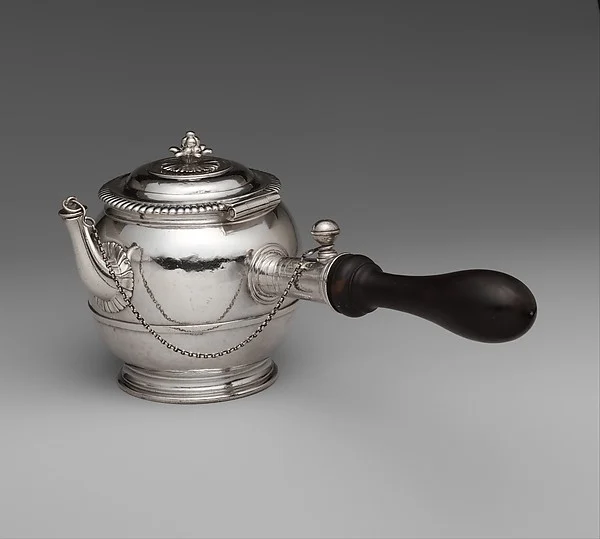
Early English silver and ebony teapot, London, 1699–1700 (The Met)
Museum Open Access · CC0 · The Met
Among the earliest surviving English silver teapots (1699–1700), pairing Chinese globular form with insulating ebony handle.The Metropolitan Museum of Art (CC0 Open Access) · Accession: Met 200114 · Source
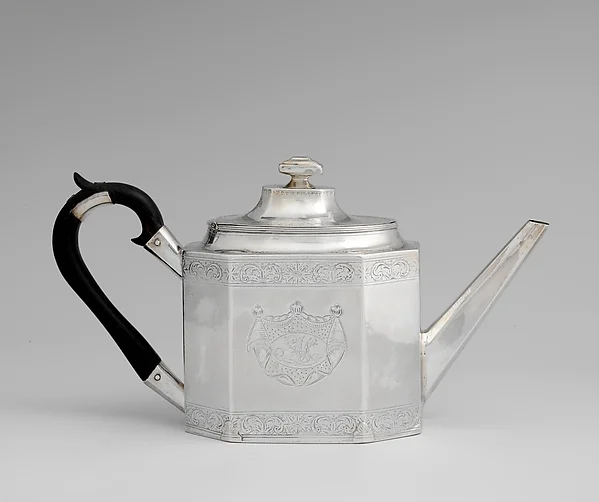
Late 18th-century neoclassical Georgian silver teapot (The Met)
Museum Open Access · CC0 · The Met
Late 18th-c. neoclassical silver teapot reflecting tea's integration into British domestic ritual and display.The Metropolitan Museum of Art (CC0 Open Access) · Accession: Met 8356 · Source
Historical Record

From Aristocratic Silver Teapots to Working-Class Caloric Staple

Introduced to court circles in the 1660s by Catherine of Braganza, tea initially belonged to locked caddies, Georgian silver teapots, and imported porcelain. Yet by the late 18th century—especially after the 1784 Commutation Act slashed duties—hot tea sweetened with Caribbean plantation sugar became an essential working-class staple: boiled water lowered waterborne disease while delivering quick calories and warmth during brutal factory shifts.

Scholarly Interpretation

Afternoon Tea, Gendered Respectability, and Consumer Society

Around 1840, Anna, Duchess of Bedford, popularized Afternoon Tea to stave off late-afternoon hunger before fashionable 8 p.m. dinners, turning the drawing-room tea table into a choreographed ritual managed by women. By the 1880s–1900s, urban chains like A.B.C. and Lyons Corner Houses created respectable, alcohol-free public tea shops where unchaperoned women workers and shoppers could dine independently.

Scholarly Interpretation

Industrialization, Imperial Branding, and the Modern Mug

To end bulk-tea adulteration and market South Asian estates, Thomas Lipton and rival firms pioneered sealed branded cartons, standardized blending, and patriotic advertising that engineered British preference for brisk colonial black teas. In the late 20th century, electric kettles and CTC teabags—now accounting for over 90% of British tea consumption—turned tea into an instant, comforting pause across every social class.

Verified References & Provenance

  1. [01] 2017Source

    A Thirst for Empire: How Tea Shaped the Modern World

    Erika Rappaport · ISBN 9780691167114

    Princeton University Press study demonstrating how temperance movements, imperial propaganda, branding, and corporate integration (such as Lipton) manufactured British imperial tea taste.

  2. [02] 2003Source

    Tea: Addiction, Exploitation, and Empire

    Roy Moxham

    Historical synthesis by a former tea planter tracing Britain's tea dependency, opium triangulation, and harsh plantation labor conditions across Assam, Ceylon, and Africa.

  3. [03] 2020Source

    Tea War: A History of Capitalism in China and India

    Andrew B. Liu · 10.12987/yale/9780300243734.001.0001

    Yale University Press comparative history of Huizhou, Wuyi, and Assam, showing how both colonial penal indenture and Chinese piece-rate time discipline constituted dynamic Asian capitalist accumulation.

  4. [04] 2026Source

    The Metropolitan Museum of Art Open Access Collection (CC0)

    The Metropolitan Museum of Art

    Provides CC0 Public Domain imagery and provenance data for Jian ware, Yue ware, Yixing stoneware, Raku chawan, and Georgian silver teapots.