Skip to content
中文

GALLERY IV · Comparative Civilizations

Historical Record

The Cultures of Tea

Ten Distinct Human Worlds Around One Botanical Leaf

From Chaoshan street trays and Kyoto's two-tatami chashitsu to British working kitchens, Jaipur rail platforms, and Marrakech courtyards, each culture answers its own climate, fuel, and social fabric—equal in dignity.

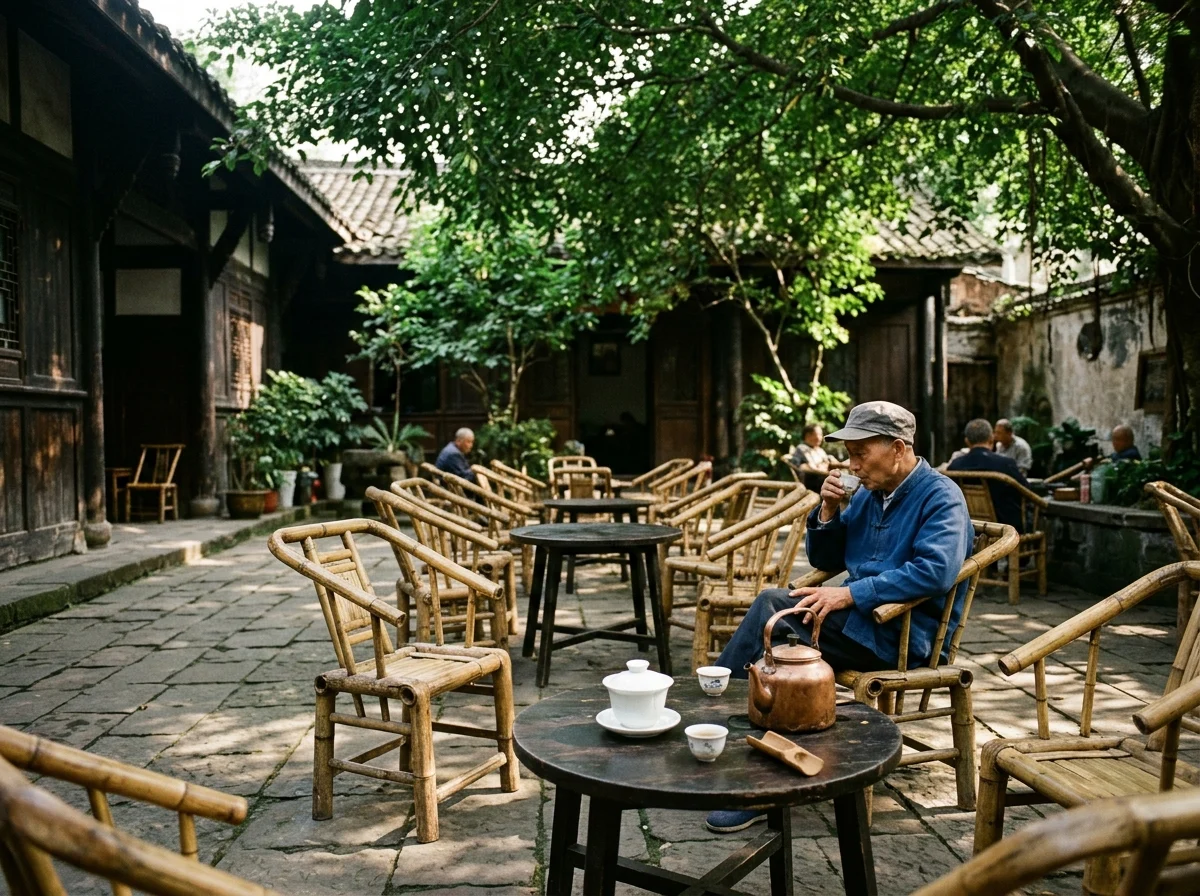
Traditional Sichuan courtyard teahouse with bamboo chairs, white porcelain gaiwan, and copper kettle
Curatorial Visual (AI Generated)
Sichuan Courtyard Teahouse: bamboo armchairs and lidded gaiwan bowls anchor everyday civic sociability.Curatorial Cultural Scene (AI Generated)

CHINA · Flagship Study

Chinese Tea Culture: Literati Aesthetics, Gongfu Craft, and Everyday Teahouses

Homeland of six tea families, spanning daily necessity and philosophical reflection across regional landscapes

As tea's botanical cradle and the birthplace of all six major processing families, China never confined tea to a single codified rite: it spans Tang-Song aesthetics, Ming-Qing literati studios, Chaoshan Gongfu tables, bustling Sichuan teahouses, and vibrant multi-ethnic mountain customs.

工夫茶 · Gōngfu chá盖碗 · Gàiwǎn (San-cai bowl)禅茶一味 · Chán chá yī wèi茶馆 · Cháguǎn
Read Full Monograph →
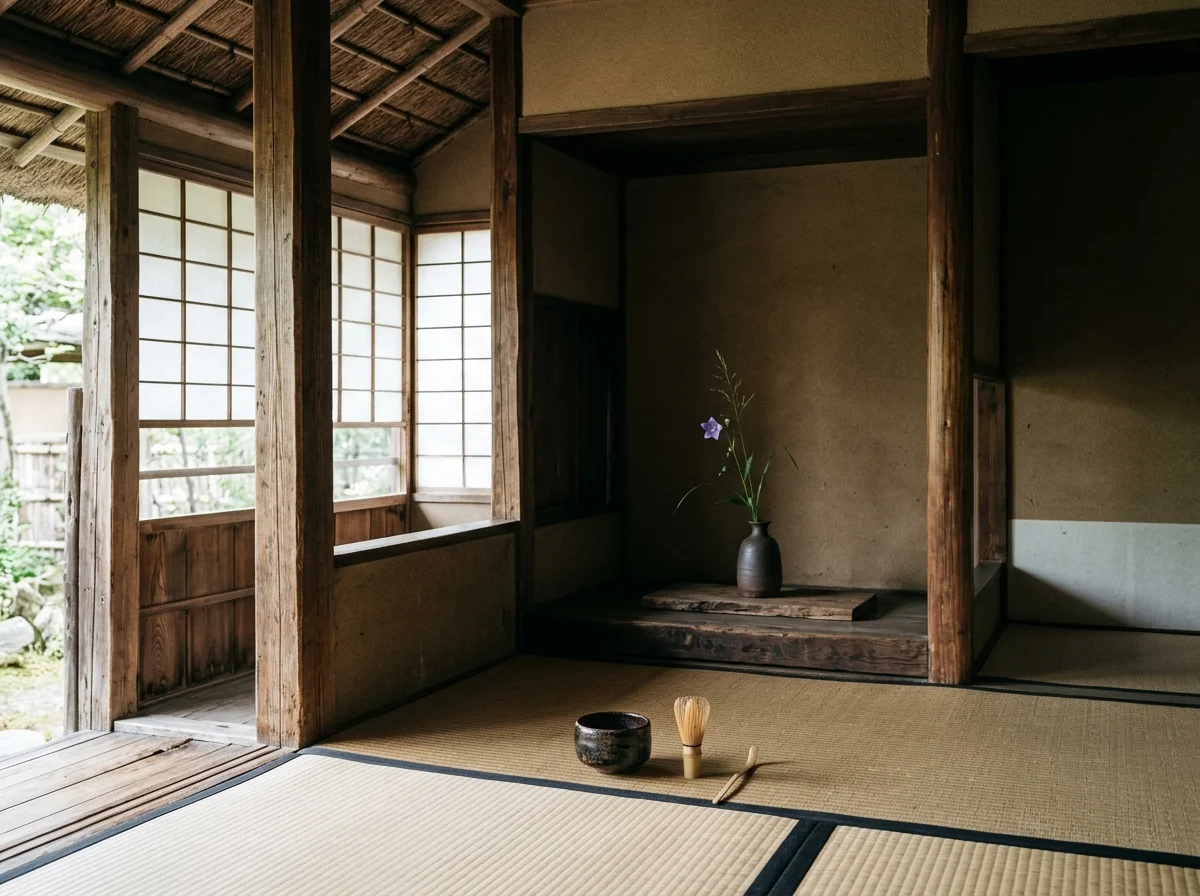
Traditional Japanese chashitsu tea room with tatami, shoji paper screens, chabana, and matcha bowl
Curatorial Visual (AI Generated)
Japanese Chashitsu: diffused shoji light, single-stem chabana, and handmade chawan define wabi proportion.Curatorial Architectural Study (AI Generated)

JAPAN · Flagship Study

Japanese Chado (Chanoyu): Zen Matcha, Wabi-Cha Masters, Spatial Poetics, and Politics

Preserving powdered whisked tea and forging it into a total art of architecture, roji gardens, ceramics, and disciplined hospitality

Japanese Chado is no timeless museum piece: sparked by Eisai's Zen tea transmission, revolutionized from imported luxury to wabi simplicity by Murata Jukō, Takeno Jōō, and Sen no Rikyū, it also served as an arena of samurai power, social hierarchy, and modern cultural identity.

和敬清寂 · Wa-Kei-Sei-Jaku一期一会 · Ichigo Ichie侘び寂び · Wabi-sabi茶碗·茶筅·茶杓·釜 · Chawan · Chasen · Chashaku · Kama
Read Full Monograph →
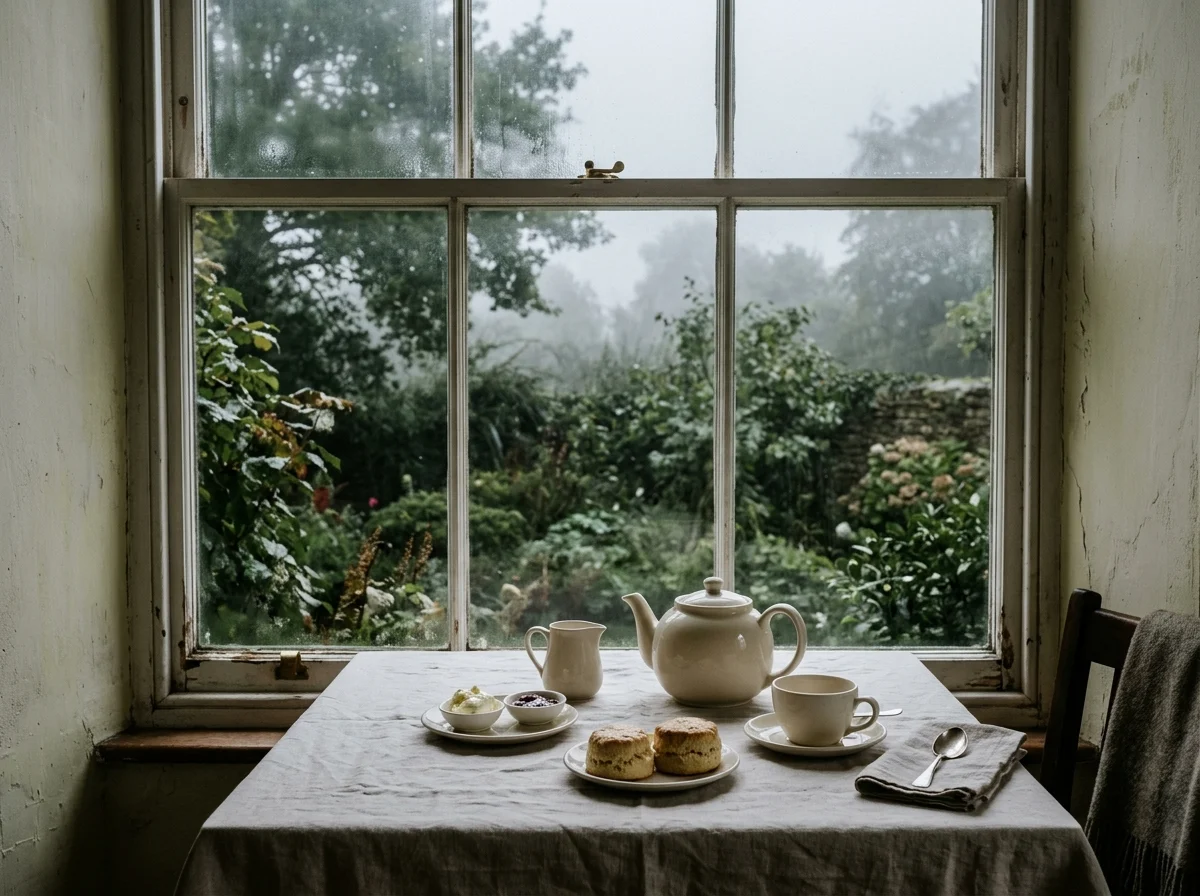
English afternoon tea table beside a sash window with cream bone-china teapot and linen cloth
Curatorial Visual (AI Generated)
British Afternoon Tea: bone china, milk jug, and overcast window light domesticate global imperial black tea.Curatorial Cultural Scene (AI Generated)

BRITAIN · Flagship Study

British Tea Culture: From Courtly Luxury to Working-Class Fuel and Empire Branding

How an imported Asian leaf—paired with Caribbean sugar, industrial shift work, and vertical branding—reshaped class, gender, and British consumer society

Britain grows virtually no tea of its own, yet built one of history's most influential tea cultures—transforming an aristocratic curiosity of the 1660s into sweetened industrial fuel, gendered Victorian tea-room sociability, and a mass-branded imperial commodity.

Afternoon Tea · Afternoon Tea (Low Tea)High Tea · High Tea (Meat Tea)Temperance · Temperance & TeaTeabag & Blend · Builder's Tea & Proprietary Blends
Read Full Monograph →

Seven Global & Regional Traditions

Simmered, Churned, Spiced & Steeped Across Continents

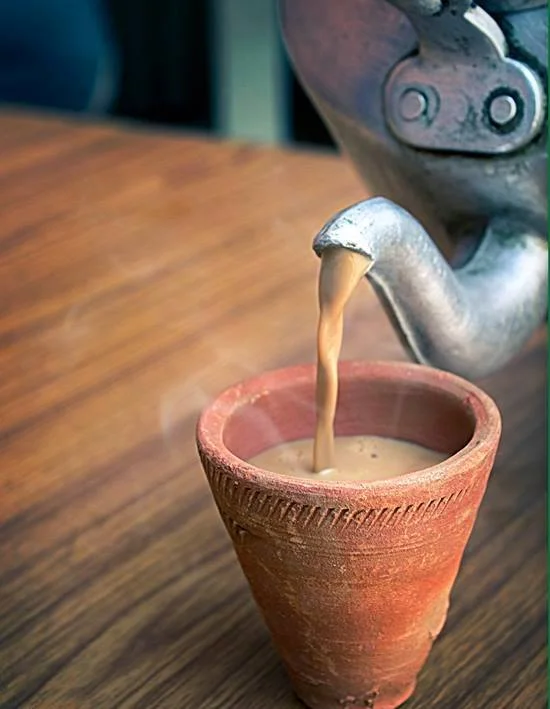
Indian spiced Masala Chai served in a terracotta kulhar cup
CC BY-SA 4.0 · Wikimedia Commons

India's Masala Chai: Roadside Chaiwalas, Spiced Milk Decoction, and Reinvention

How railway vendors and home kitchens transformed an export-oriented plantation crop into India's most democratic daily drink

Though Singpho communities brewed indigenous Assam leaf long before British arrival, colonial estates ignored local drinkers in favor of London auctions. Only in the early 20th century—when domestic campaigns met roadside vendors boiling affordable CTC tea dust with milk, sugar, and spices—did modern Masala Chai sweep the subcontinent.

Read Profile →
Turkish crimson Çay served in a classic tulip-shaped glass
CC BY-SA 3.0 · Wikimedia Commons

Turkish & Azerbaijani Çay Culture: Black Sea Harvests, Double Kettles, and Tulip Glasses

Among the world's highest per-capita tea cultures, defined by ruby-clear liquor, twin kettles, and neighborhood tea gardens

Though historically famed for coffee, post-Ottoman import disruptions and successful Black Sea cultivation in Rize turned Turkey—alongside neighboring Azerbaijan, home to famed Lankaran tea—into a powerhouse of crimson loose-leaf çay hospitality.

Read Profile →
Moroccan Atay mint green tea poured from silver pot into glass
CC BY-SA 4.0 · Wikimedia Commons

Moroccan Mint Tea (Atay): Chinese Gunpowder Green, Spearmint, and Three-Glass Hospitality

An enduring Afro-Eurasian bridge fusing Chinese green tea with vibrant Maghrebi spearmint, poured high to crown each glass with foam

Morocco remains China's single largest export destination for green tea. Adopted across the Maghreb between the 18th and 19th centuries, Chinese Gunpowder and Chunmee leaves merged with fresh spearmint and sugar into 'Maghreb tea'—the beating heart of Moroccan and Saharan hospitality.

Read Profile →
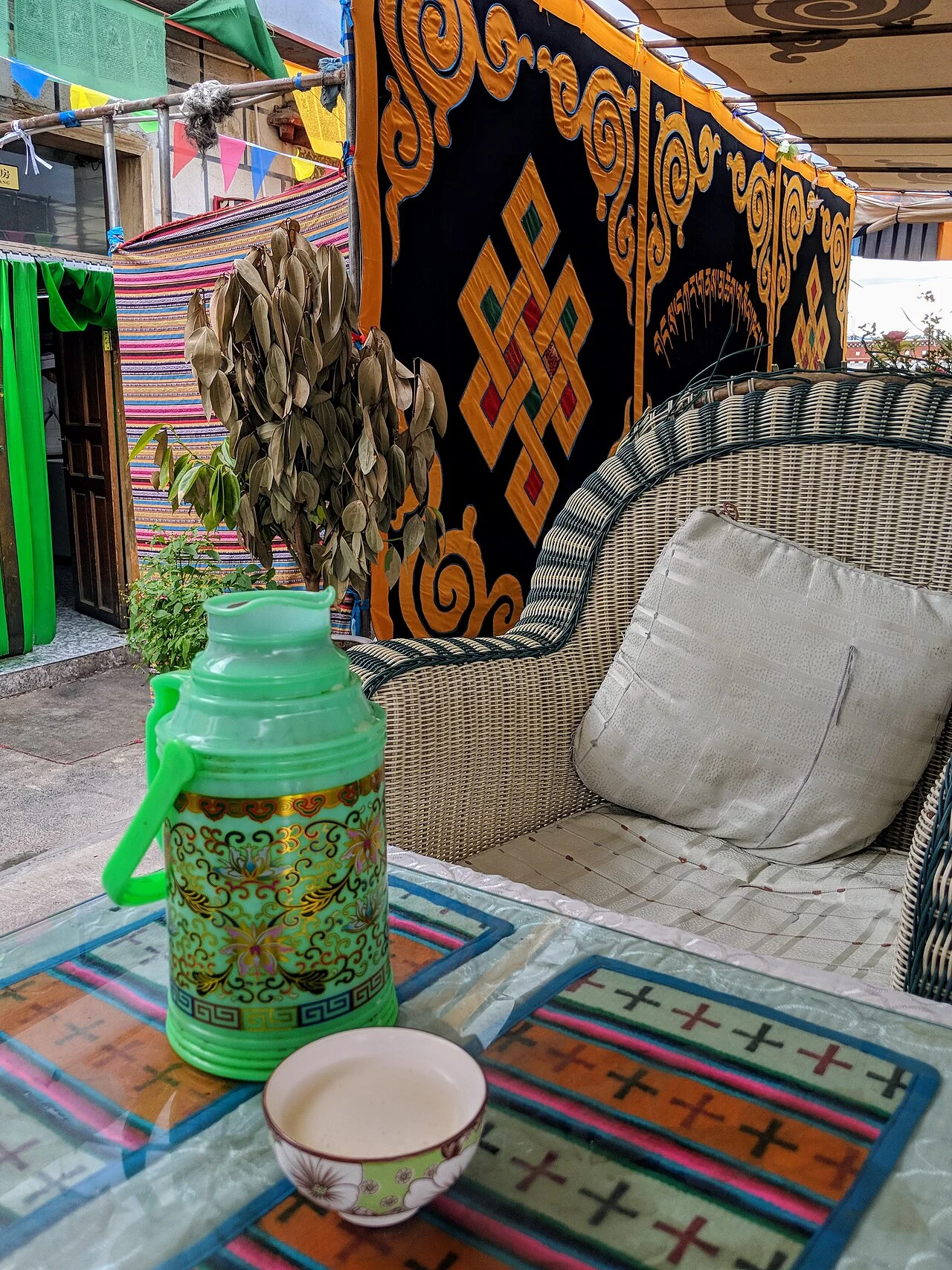
Tibetan butter tea bowl and thermos in a traditional teahouse
CC BY-SA 4.0 · Wikimedia Commons

Tibetan Butter Tea (Po Cha): High-Altitude Nourishment and Deep Archaeological Roots

An emulsified fusion of boiled brick tea, yak butter, and salt sustaining warmth, hydration, and monastic community across the roof of the world

Confirmed by 2nd–3rd century CE tea buds at Gurgyam Cemetery, tea's presence on the Tibetan Plateau predates Tang records by centuries. Churned with yak butter and salt, po cha transforms compressed brick tea into high-calorie warmth, essential nourishment alongside tsampa barley, and the centerpiece of monastic and home hospitality.

Read Profile →
Traditional metal samovar tea urn
CC BY-SA 4.0 · Wikimedia Commons

Russian Samovar Culture: Caravan Brick Tea, Brass Kettles, and Literary Tables

An overland Eurasian 'cha' tradition born along Siberian caravan roads, centering on glowing brass samovars, strong zavarka, and long conversation

Unlike maritime Western Europe, Russia received 'chai' overland across Mongolia and Siberia via the Kyakhta caravan route from the 17th century onward. Centered around a glowing brass samovar, Russian tea culture turned long winter evenings and railway journeys into unhurried salons of storytelling and hospitality.

Read Profile →
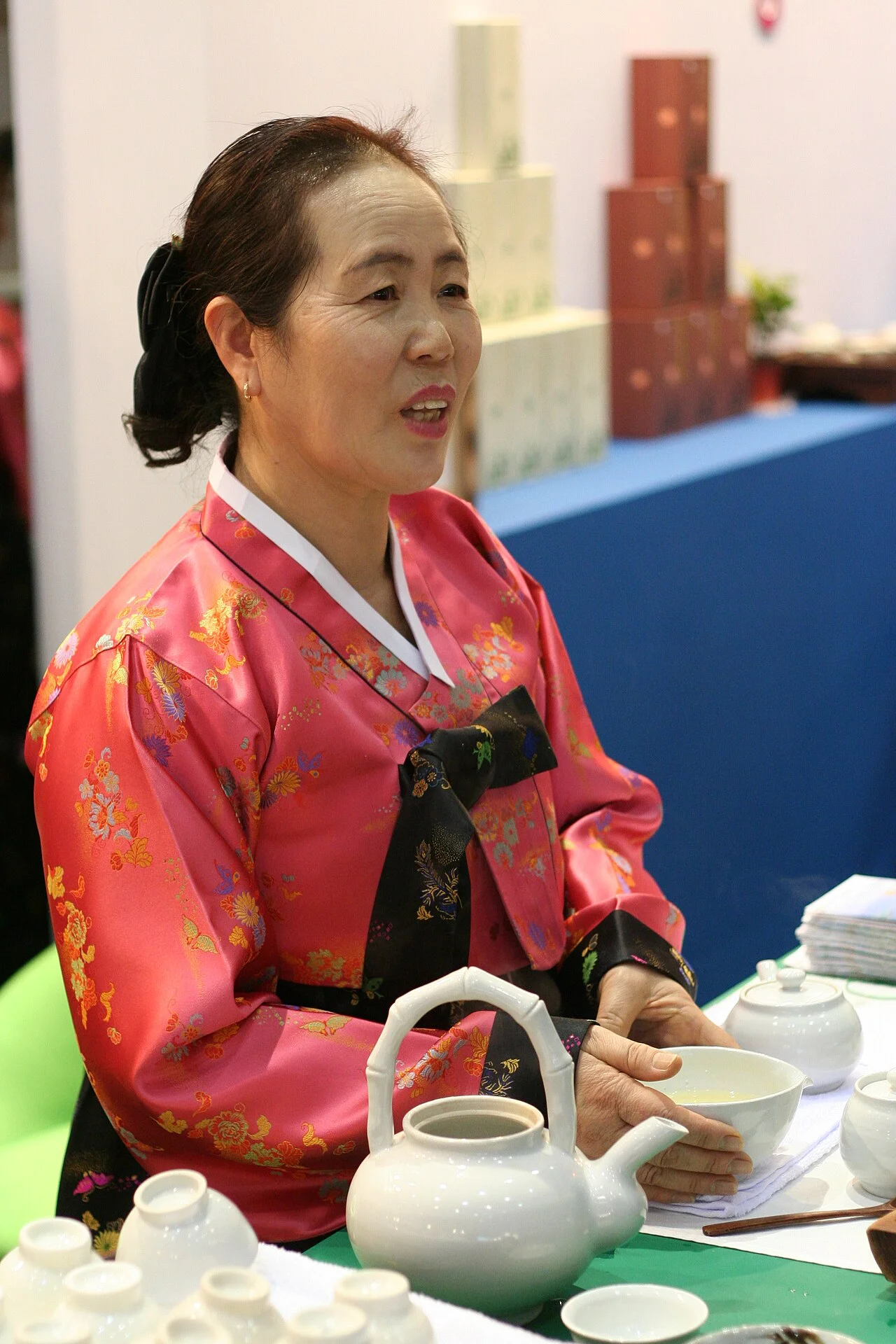
Korean traditional tea ceremony (Darye) pouring tea
CC BY-SA 2.0 · Wikimedia Commons

Korean Darye: Mountain Temples, Ven. Choui, and Unpretentious Everyday Harmony

Treading a distinctive path between courtly ritual and rustic spontaneity, anchored in wild mountain teas and warm celadon-to-buncheong wares

Flourishing under Silla and Goryeo Buddhist patronage before retreating to southern mountain monasteries during the mid-Joseon era, Korean tea was revitalized in the 19th century by scholars like Dasan Jeong Yak-yong and Ven. Choui—yielding a gentle, unpretentious aesthetic known as Darye.

Read Profile →
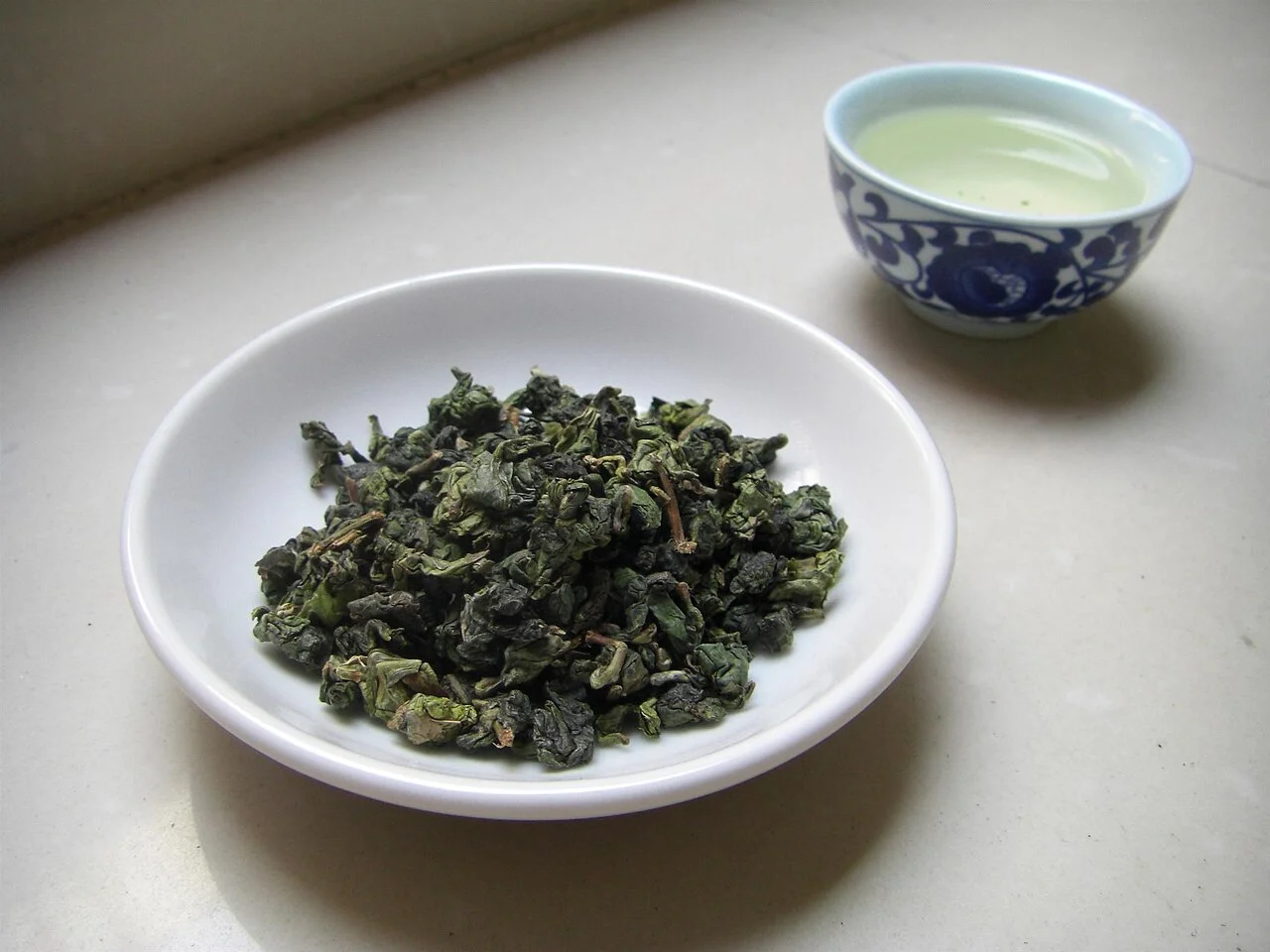
Tightly rolled Anxi Tieguanyin oolong tea leaves photograph
Museum Open Access · CC0 · Wikimedia Commons

Taiwanese Tea Culture: High-Mountain Oolong, Oriental Beauty, and Contemporary Tea Arts

Tracing Fujian-rooted cultivars as they evolved into high-elevation alpine oolongs, leafhopper-bitten honey teas, and modern 'Chayi' tearoom design

While Qing-era pioneers brought tea cultivars from Fujian across the strait, Taiwan forged an extraordinarily inventive tea culture of its own—pioneering high-mountain alpine oolongs, charcoal-roasted Dongding, ecological leafhopper-bitten Oriental Beauty, and the modern 'Chayi' tea-house movement that reshaped contemporary East Asian tea aesthetics.

Read Profile →

Verified References & Provenance

  1. [01] c. 760–780Source

    The Classic of Tea (Chajing) by Lu Yu

    Lu Yu (c. 760–780 CE)

    The earliest surviving systematic monograph on tea, organized into ten chapters covering origins, tools, processing, vessels, boiling, drinking, historical anecdotes, regions, omissions, and scroll diagrams.

  2. [02] 2022Source

    Traditional tea processing techniques and associated social practices in China

    UNESCO Intangible Cultural Heritage · Nomination File No. 01884

    Inscribed in 2022; documents the six core Chinese tea categories, reprocessed teas, and their embedded social rituals across 44 national heritage items.

  3. [03] 1979Source

    Chen Chuan's Six-Category Tea Classification (1979) & Camellia sinensis Phylogeography

    Chen Chuan (1979) / Chen Zongmao (ed., China Tea Classic)

    Chen Chuan (1979) established the modern scientific taxonomy of six tea families based on processing mechanisms (enzyme inactivation, withering, yellowing, semi-oxidation, full oxidation, microbial piling) rather than linear fermentation; Chen Zongmao's China Tea Classic synthesizes modern agronomy and tea chemistry.

  4. [04] 2009Source

    The True History of Tea

    Victor H. Mair & Erling Hoh

    Philological and historical synthesis tracing tea from southwest China/Southeast Asia across overland 'cha' and maritime 'te' linguistic and trade corridors.

  5. [05] 1211Source

    Kissa Yōjōki (Drinking Tea for Health, 1211) by Myōan Eisai

    Myōan Eisai (1141–1215)

    Japan's earliest extant tea treatise (1211), introducing Song-style powdered tea cultivation and preparation alongside Zen monastic practice.

  6. [06] 2024Source

    Urasenke Official Introduction to Chado (The Way of Tea)

    Urasenke Foundation

    Authoritative overview of Chado lineage from Sen no Rikyū, the four principles Wa-Kei-Sei-Jaku, and modern tea gathering choreography.

  7. [07] 2023Source

    The Metropolitan Museum of Art: The Japanese Tea Ceremony

    The Metropolitan Museum of Art

    Heilbrunn Timeline essay examining the transition from prized Chinese karamono utensils to wabi-cha Raku wares and bamboo scoops.

  8. [08] 1906Source

    The Book of Tea

    Okakura Kakuzō · Project Gutenberg #769

    Published in English in 1906 across seven chapters while Okakura curated Asian art at the Museum of Fine Arts, Boston; interprets Teaism, Taoist/Zen aesthetics, the chashitsu, and tea masters.

  9. [09] 2017Source

    A Thirst for Empire: How Tea Shaped the Modern World

    Erika Rappaport · ISBN 9780691167114

    Princeton University Press study demonstrating how temperance movements, imperial propaganda, branding, and corporate integration (such as Lipton) manufactured British imperial tea taste.

  10. [10] 2003Source

    Tea: Addiction, Exploitation, and Empire

    Roy Moxham

    Historical synthesis by a former tea planter tracing Britain's tea dependency, opium triangulation, and harsh plantation labor conditions across Assam, Ceylon, and Africa.

  11. [11] 2020Source

    Tea War: A History of Capitalism in China and India

    Andrew B. Liu · 10.12987/yale/9780300243734.001.0001

    Yale University Press comparative history of Huizhou, Wuyi, and Assam, showing how both colonial penal indenture and Chinese piece-rate time discipline constituted dynamic Asian capitalist accumulation.

  12. [12] 2026Source

    The Metropolitan Museum of Art Open Access Collection (CC0)

    The Metropolitan Museum of Art

    Provides CC0 Public Domain imagery and provenance data for Jian ware, Yue ware, Yixing stoneware, Raku chawan, and Georgian silver teapots.

  13. [13] 2025Source

    International Tea Committee (ITC) & National Tea Boards (Kenya, India, Sri Lanka) 2024–2025 Export Data

    ITC / Tea Board of Kenya / Sri Lanka Tea Board / Tea Board India

    Aggregates 2024–2025 national export benchmarks: Kenya ~652.8k t (~$2.20–$2.27/kg bulk CTC); Sri Lanka ~258k t (~$5.50–$5.83/kg orthodox/value-added); India ~257.9k t (~$3.40/kg).

  14. [14] 2021Source

    Royal Botanic Gardens, Kew: The History of Tea from China to India

    Royal Botanic Gardens, Kew

    Traces botanical classification of Camellia sinensis var. assamica, Wardian-case plant transport, and Kew's role in colonial botanical networks.

  15. [15] 2025Source

    FAO Beverages: Tea Markets & Trade Overview & International Tea Day Address

    Food and Agriculture Organization of the United Nations (FAO)

    Notes in 2025 International Tea Day materials that over 60% of global tea is produced by smallholders; FAO IGG on Tea tracks processed made-tea output and uneven farm-gate price transmission.

  16. [16] 2026Source

    2025 China Tea Import and Export Briefing

    China Tea Marketing Association (CTMA)

    Based on China Customs data: 2025 tea exports reached 418,800 tonnes (+11.93% YoY), USD 1.546 billion (+8.91%), avg price USD 3.69/kg (-2.70%); green tea accounted for 88.11% of volume.

  17. [17] 2016Source

    Earliest tea as evidence for one branch of the Silk Road across the Tibetan Plateau

    Houyuan Lu, Jianping Zhang, Yimin Yang, Dorian Q. Fuller et al. · 10.1038/srep18955

    Uses calcium phytolith micromorphology and UPLC-MS/GC-MS detection of caffeine and L-theanine to verify tea buds in Han Yangling Mausoleum (c. 141 BCE) and Gurgyam Cemetery, western Tibet (2nd–3rd c. CE).