GALLERY VI · Material Culture & Craft
Historical RecordObjects of Quiet Beauty
Glaze, Clay, Kintsugi, and the Patina of Time
Tea vessels are material witnesses to shifting brewing rituals: Yue celadon for boiled Tang tea, Jian bowls for Song froth, Yixing clay for steeped Ming leaves, and hand-molded Raku for quiet wabi gatherings.
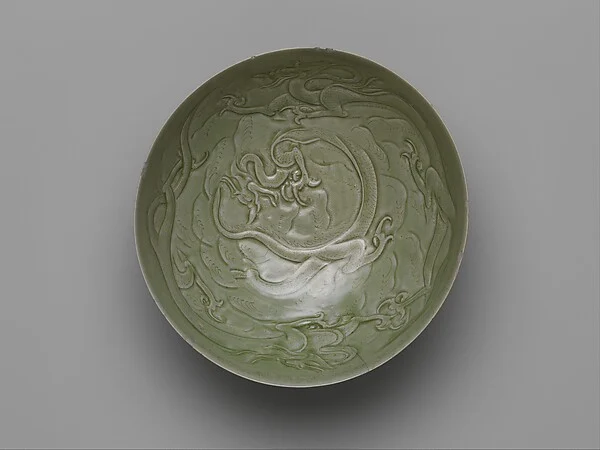
Tang Dynasty Yue Celadon Tea Bowl and Ewer
Tang to Five Dynasties (c. 9th–10th century)
Lu Yu ranked Yue ware first among Tang tea bowls in his Classic of Tea (c. 760–780), praising its jade-like, ice-toned celadon glaze for brightening the green clarity of boiled tea.
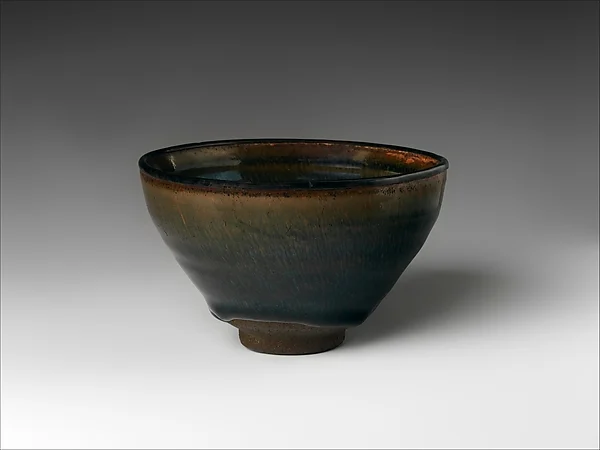
Song Dynasty Jian Ware 'Hare's Fur' Tea Bowl
Southern Song Dynasty (12th–13th century)
The quintessential vessel of Song whipped tea (diancha): iron-oxide streaks flow down a pitch-black glaze like fine hare's fur, creating stark visual contrast against snow-white tea foam.
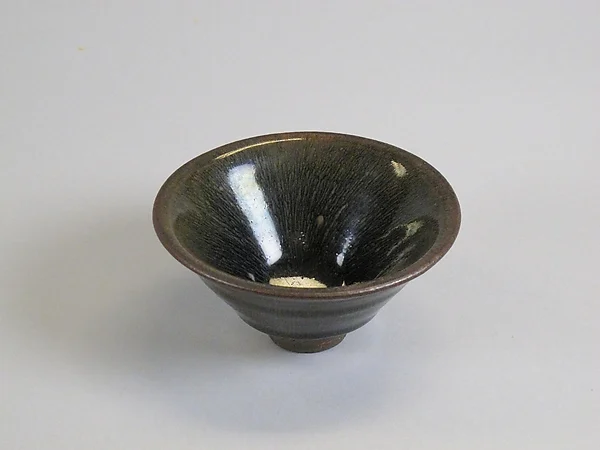
Song Dynasty Jian Iron-Glazed Tea Bowl (Tea Contest Vessel)
Song Dynasty (11th–13th century)
In Song 'tea battles' (doucha), victory hinged on pure white froth and how slowly a dark 'water line' appeared where foam receded from the wall—making lustrous iron-black glaze a functional optical gauge.
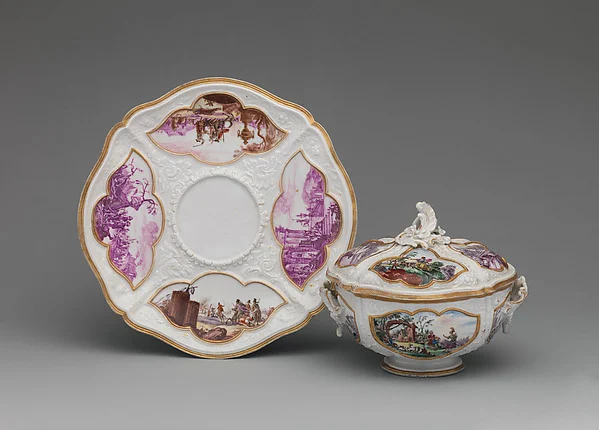
Ming–Qing Porcelain Gaiwan (Lidded Bowl)
Qing Dynasty (18th–19th century) and living tradition
Following the Ming transition from whipped tea cakes to steeped whole leaves, the porcelain gaiwan evolved into a complete three-piece brewing instrument—lid (heaven), saucer (earth), and bowl (humanity).
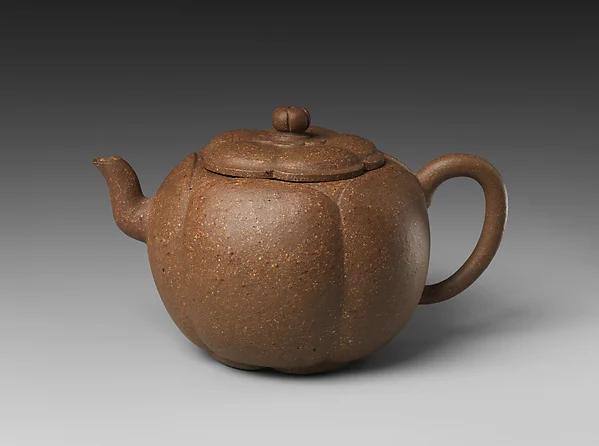
Yixing Zisha Stoneware Teapot (Literati & Export Traditions)
Qing Dynasty (17th–19th century)
Fired unglazed from iron-rich Yixing clays containing microscopic dual pores, zisha stoneware retained heat and softened astringency—soon becoming the structural prototype for early European metal and porcelain teapots.
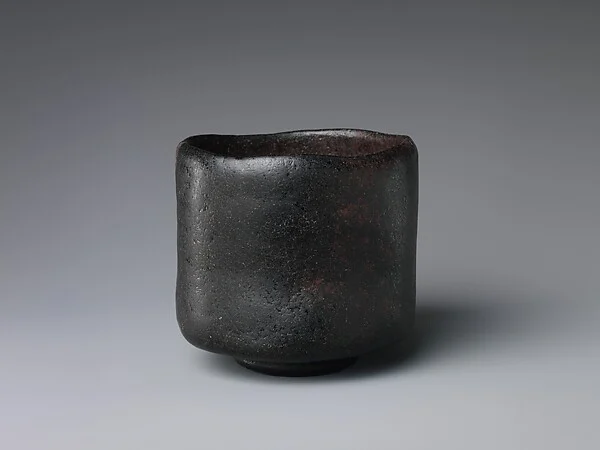
Japanese Black Raku Tea Bowl (Kuro Raku Chawan)
Momoyama to Edo Period (16th–18th century)
Developed in late 16th-century Kyoto by potter Chōjirō under Sen no Rikyū's aesthetic direction, hand-formed Black Raku marked the decisive break from symmetrical Chinese imports toward austere wabi-cha materiality.
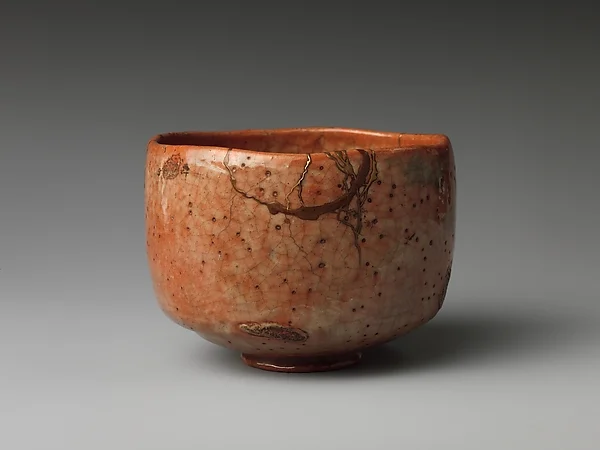
Japanese Red Raku Tea Bowl with Gold Lacquer Repair (Kintsugi)
Edo Period (17th–19th century)
Warm ochre-terracotta Red Raku pairs with visible kintsugi lacquer repairs—transforming accidental fracture from a disqualifying flaw into an honest biographical seam across the bowl's life.
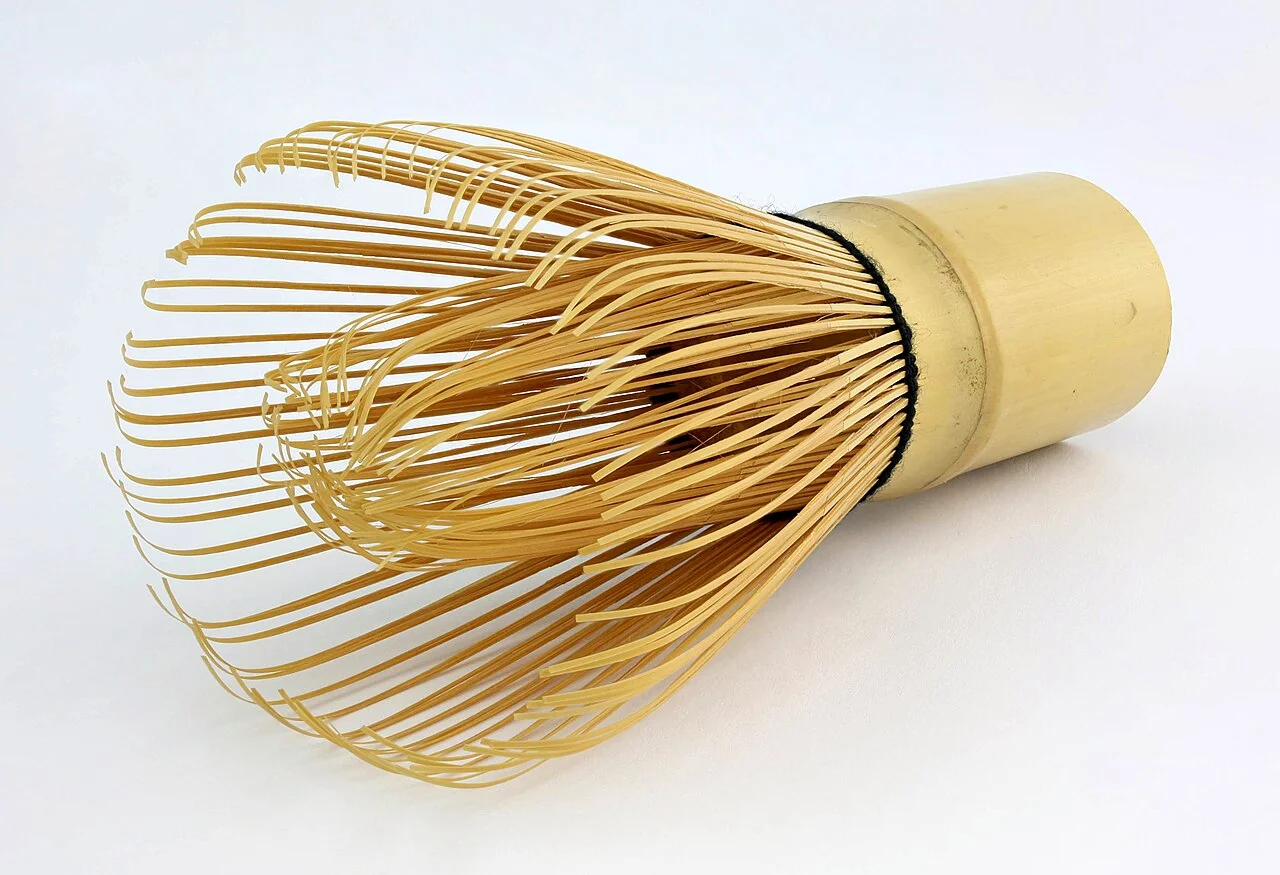
Bamboo Tea Whisk (Chasen) & Muromachi Iron Kettle (Kama)
Muromachi Period (15th–16th century kettle) & Takayama whisk craft
Split from a single piece of seasoned bamboo into dozens of curling tines, the ephemeral chasen meets the heavy cast-iron kama kettle—pairing weightless plant fiber with the 'wind-in-the-pines' hum of simmering water.
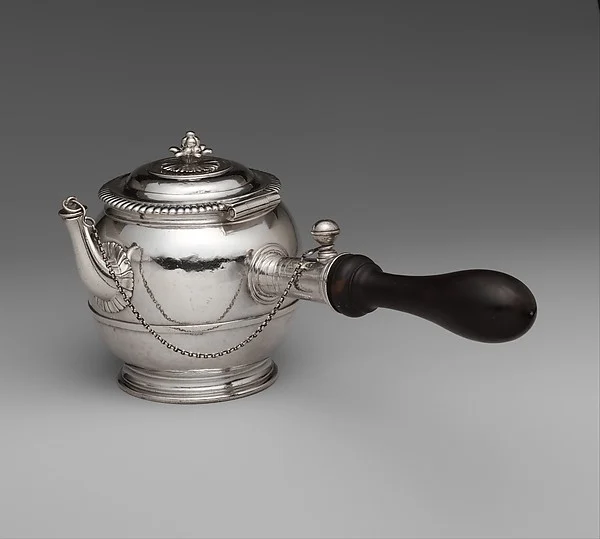
Georgian Silver Teapot & Contemporary Wood-Fired Stoneware
1699 English Silver vs. 21st-Century Studio Wood-Fired Ceramics
Pairing a 1699 London silver teapot with a contemporary wood-fired clay pot spans three centuries of tea materiality—from aristocratic silver display at the dawn of British tea fashion to today's quiet return to raw kiln-scarred earth.
Verified References & Provenance
- [01] c. 760–780Source
The Classic of Tea (Chajing) by Lu Yu
Lu Yu (c. 760–780 CE)
The earliest surviving systematic monograph on tea, organized into ten chapters covering origins, tools, processing, vessels, boiling, drinking, historical anecdotes, regions, omissions, and scroll diagrams.
- [02] 2026Source
The Metropolitan Museum of Art Open Access Collection (CC0)
The Metropolitan Museum of Art
Provides CC0 Public Domain imagery and provenance data for Jian ware, Yue ware, Yixing stoneware, Raku chawan, and Georgian silver teapots.
- [03] 2026Source
The Cleveland Museum of Art Open Access Collection (CC0)
Cleveland Museum of Art
Provides CC0 Public Domain metadata and imagery for Song Jian ware, Yue ware ewers, and Muromachi iron kama kettles.
- [04] 2023Source
The Metropolitan Museum of Art: The Japanese Tea Ceremony
The Metropolitan Museum of Art
Heilbrunn Timeline essay examining the transition from prized Chinese karamono utensils to wabi-cha Raku wares and bamboo scoops.
- [05] 2022Source
Traditional tea processing techniques and associated social practices in China
UNESCO Intangible Cultural Heritage · Nomination File No. 01884
Inscribed in 2022; documents the six core Chinese tea categories, reprocessed teas, and their embedded social rituals across 44 national heritage items.
- [06] 2017Source
A Thirst for Empire: How Tea Shaped the Modern World
Erika Rappaport · ISBN 9780691167114
Princeton University Press study demonstrating how temperance movements, imperial propaganda, branding, and corporate integration (such as Lipton) manufactured British imperial tea taste.
- [07] 2024Source
Urasenke Official Introduction to Chado (The Way of Tea)
Urasenke Foundation
Authoritative overview of Chado lineage from Sen no Rikyū, the four principles Wa-Kei-Sei-Jaku, and modern tea gathering choreography.
- [08] 1906Source
The Book of Tea
Okakura Kakuzō · Project Gutenberg #769
Published in English in 1906 across seven chapters while Okakura curated Asian art at the Museum of Fine Arts, Boston; interprets Teaism, Taoist/Zen aesthetics, the chashitsu, and tea masters.