GALLERY I · Botany & Ecology
Historical RecordThe Leaf
From Camellia sinensis Morphology to Molecular Terroir
Every ritual and trade route rests on a single evergreen plant: Camellia sinensis. Understanding its anatomy, secondary metabolites, and terroir reveals why its flavor bends so dramatically under craft.
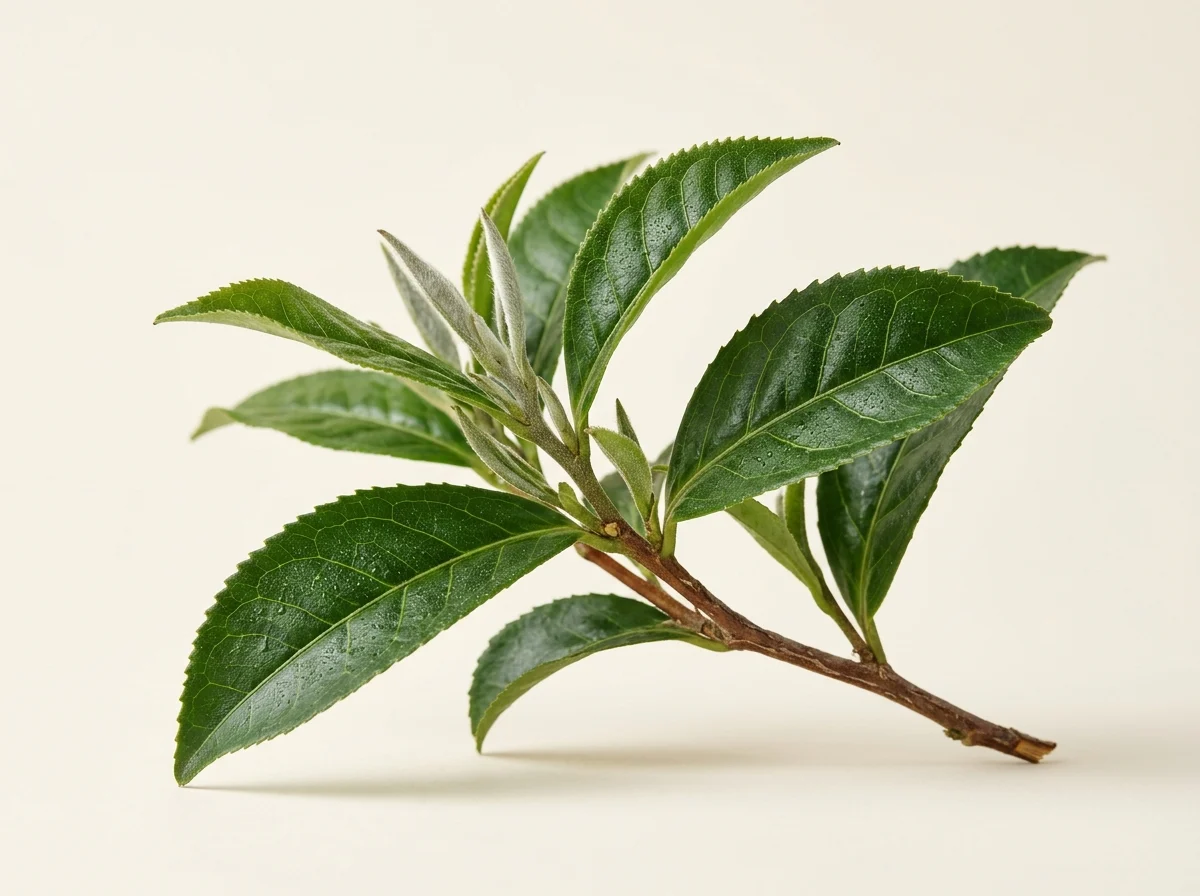
Taxonomic Classification: Family Theaceae · Genus Camellia · Species Camellia sinensis (L.) Kuntze
How the Tea Plant Speaks Through Chemistry
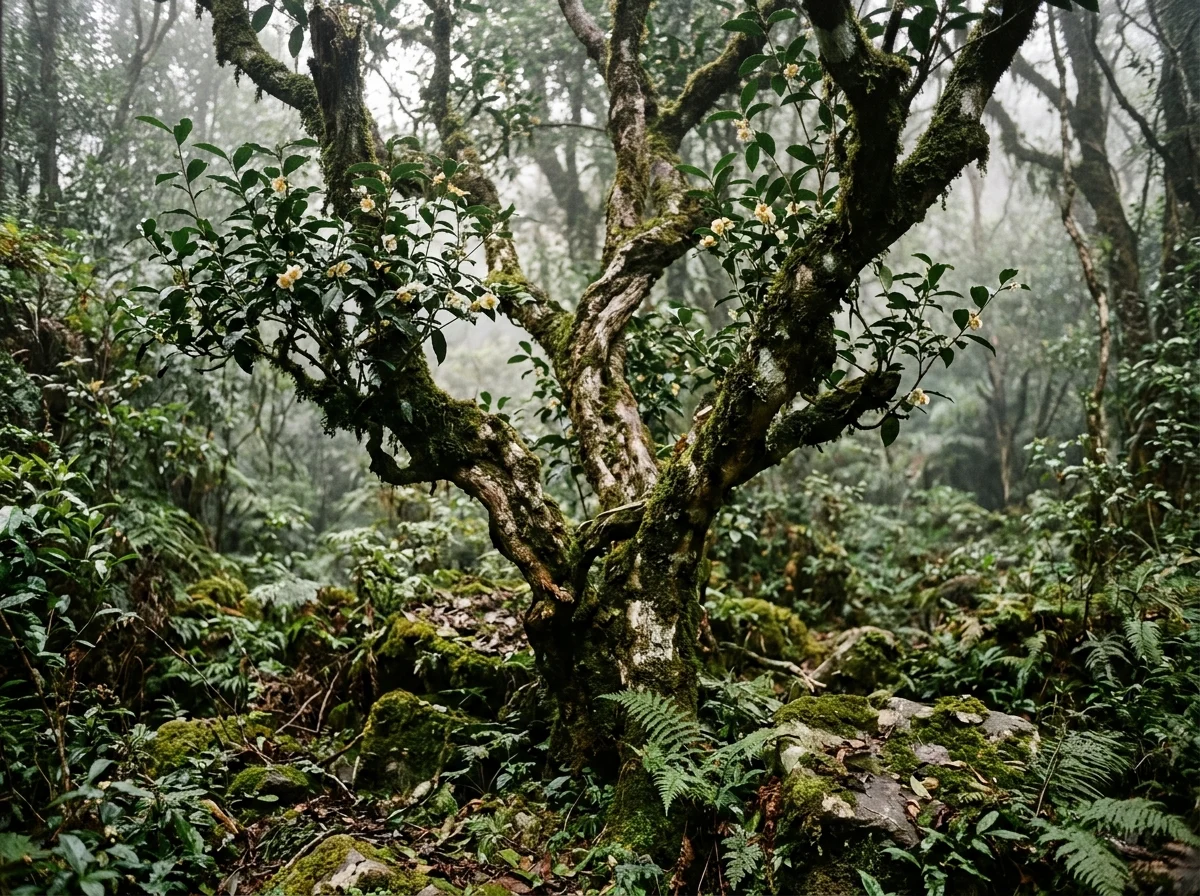
Adapted to misty subtropical forest understories, Camellia sinensis prefers diffuse light, acidic well-drained soils, and high humidity. To deter insects and UV damage, young shoots concentrate catechins, caffeine, and root-synthesized L-theanine—the exact chemistry humans later learned to coax into aroma and taste.
var. sinensis (Small-Leaf)
Native and widely cultivated across China's Yangtze & coastal hills, Japan, and Korea.
Primary cultivar group for green, white, yellow, oolong, and delicate Chinese black teas.
var. assamica (Large-Leaf)
Distributed across southwestern Yunnan, Assam, northern Myanmar, Sri Lanka, and East African highlands.
Foundation for Dianhong black tea, Yunnan Pu-erh, Assam, and Kenyan black teas.
Interactive Botanical Plate
Camellia sinensis — Anatomy & Organ Physiology
Select numbered pins to inspect organ physiology · Toggle varieties above
Apical meristem & unicellular trichomes
Terminal Bud & Trichomes
Unopened apical shoots densely covered with fine white trichomes (pekoe down), rich in free amino acids and aroma precursors.
Caffeine and L-theanine typically peak in the terminal bud and first unfolding leaf.
Camellia sinensis var. sinensis
Native Range and Origins: Beyond a Single Origin Myth
Phytogeography and modern population genomics locate the primary diversity center of Camellia sect. Thea across the mountainous monsoon belt linking southwestern China (Yunnan, Guizhou, Sichuan) with northern Mainland Southeast Asia and Assam.
Academic debate centers on distinguishing wild botanical range from domestication events. Earlier models posited a single Yunnan-Guizhou origin radiating eastward; recent comparative genomics indicates deep divergence between small-leaf (var. sinensis) and large-leaf (var. assamica) lineages, suggesting multiple independent selection histories across southwestern and southern China rather than a single linear origin.
Elevation & Diffuse Light
Mid-to-high mountain mist filters harsh ultraviolet radiation and moderates temperatures, slowing polyphenol synthesis while preserving amino acids such as L-theanine in tender shoots.
Acidic Soil & Mineral Drainage
Camellia sinensis thrives in well-drained acidic soils (optimal pH 4.5–5.5). Weathered sandstone gravels, rich humus, and iron-aluminum availability shape root uptake and secondary metabolite balance.
Thermal Rhythm & Monsoon Variability
Cool nights and steady moisture support aromatic density; conversely, abrupt shifts from spring drought to intense monsoon downpours accelerate shoot elongation and dilute catechins.
Key Phytochemical Constituents
Four Chemical Pillars of Tea Liquor
Tea Polyphenols (Catechins & Oxidation Products)
15% – 30% dry weightFlavan-3-ols (EGCG, ECG, EC, EGC) → Theaflavins / Thearubigins
Provide structural astringency, briskness, and palate grip; enzymatic oxidation converts catechins into golden-bright theaflavins and rich amber-red thearubigins.
Higher water temperatures (90–100°C) and extended steeps accelerate extraction and astringency.
L-Theanine (Unique Tea Amino Acid)
1% – 3% dry weight (higher in shaded teas)γ-glutamylethylamide
Primary source of savory umami sweetness and brothy texture; shading tea bushes inhibits conversion into catechins, elevating sweetness.
Readily extracts at 60–80°C, explaining why shaded green teas taste remarkably sweet at cooler temperatures.
Caffeine (Methylxanthine Alkaloid)
2% – 4.5% dry weight1,3,7-Trimethylxanthine
Contributes crisp bitterness and brisk backbone; complexes with theaflavins to create creamy briskness while providing alert focus.
Solubility rises steeply with heat; cold-brewing at 4°C markedly lowers extracted caffeine and astringent catechins.
Volatile Aromatic Compounds
< 0.05% dry weight (over 600 identified molecules)Terpenoids (Linalool, Geraniol), Fatty Acid Derivatives, Pyrazines
Over 600 trace volatiles govern floral, stone-fruit, grassy, pine, and roasted aromas, largely unlocked during withering, bruising, and firing.
High-boiling floral and fruit aromatics need sufficient heat to volatilize without boiling away delicate top notes.
From Fresh Leaf to Finished Tea
How One Botanical Leaf Diverges Across Six Craft Paths
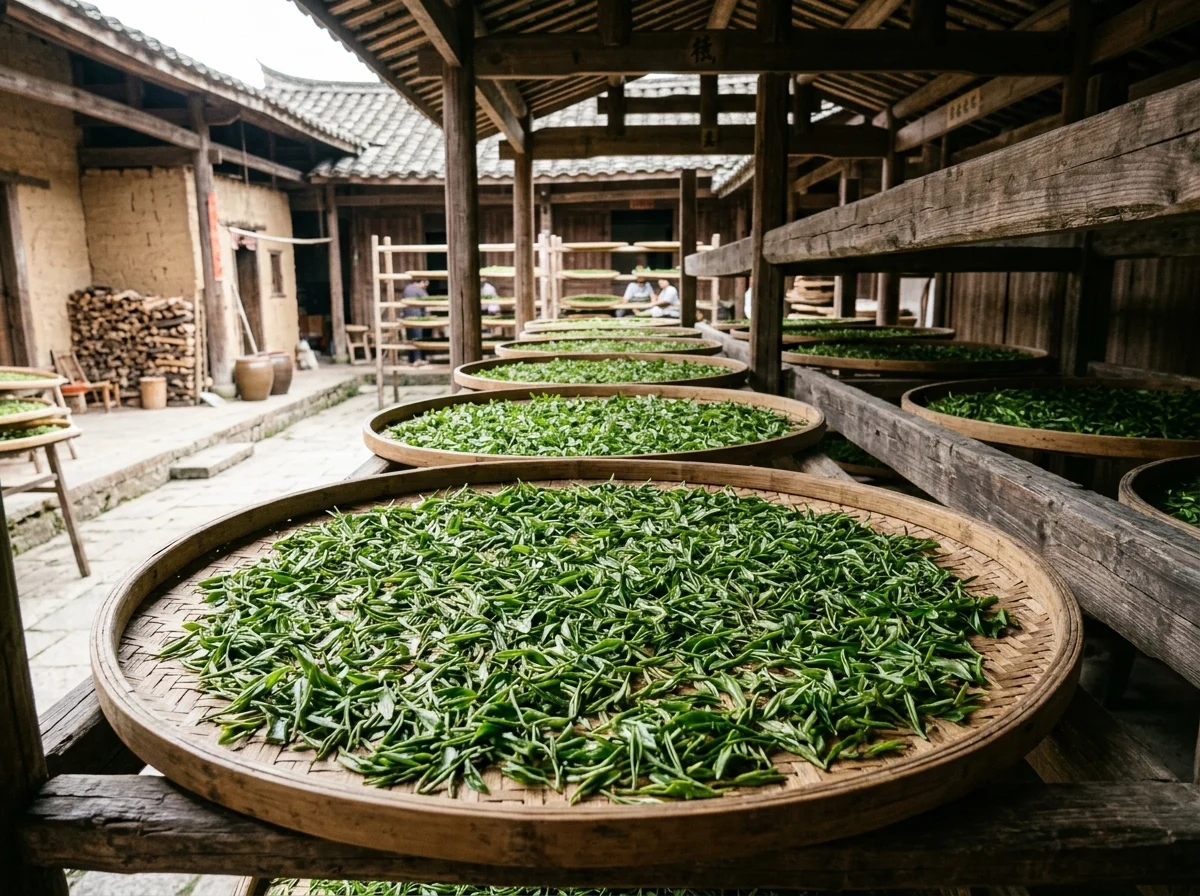
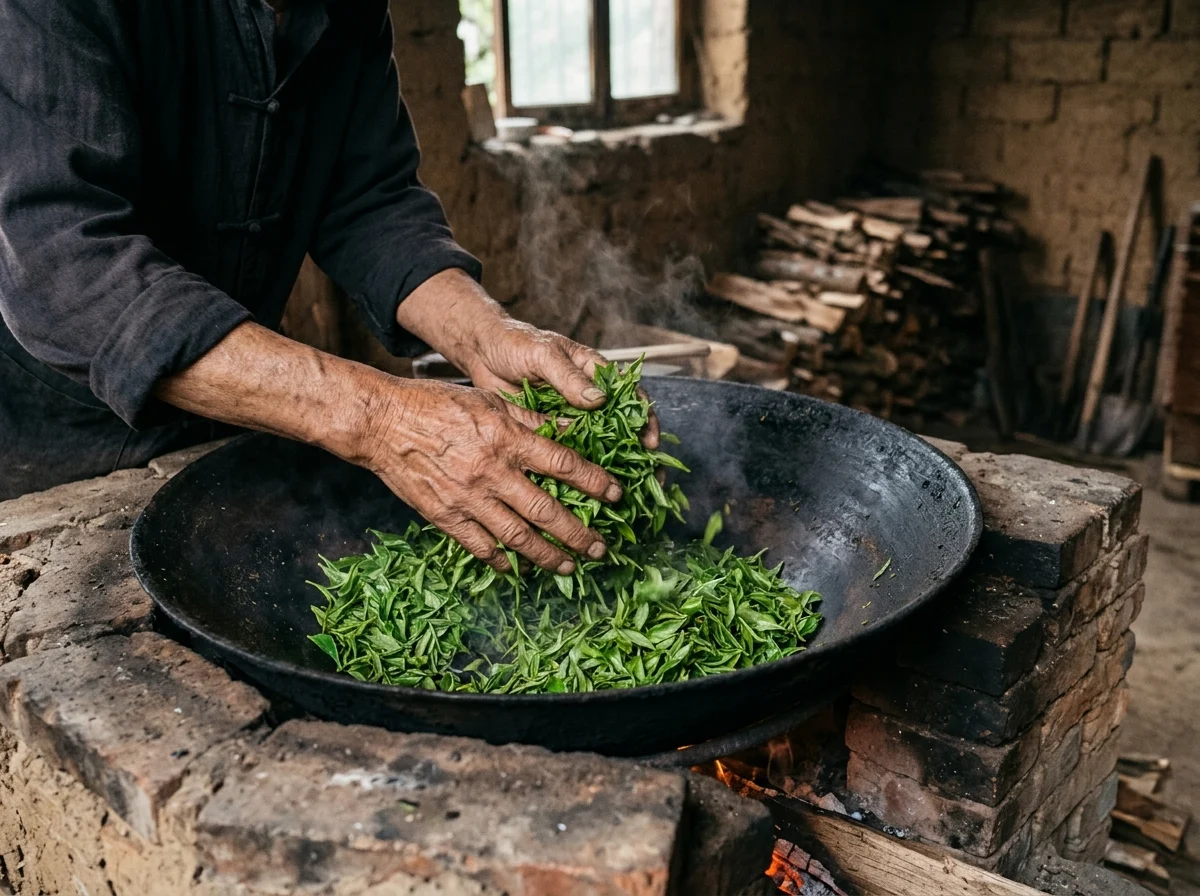
Plucking Fresh Leaf
Shoots are harvested by seasonal flush and leaf maturity, then ventilated immediately to prevent unwanted anaerobic heating.
Cellular & Biochemical Mechanism
75%–78% moisture; polyphenol oxidase (PPO) remains compartmentalized from catechins.
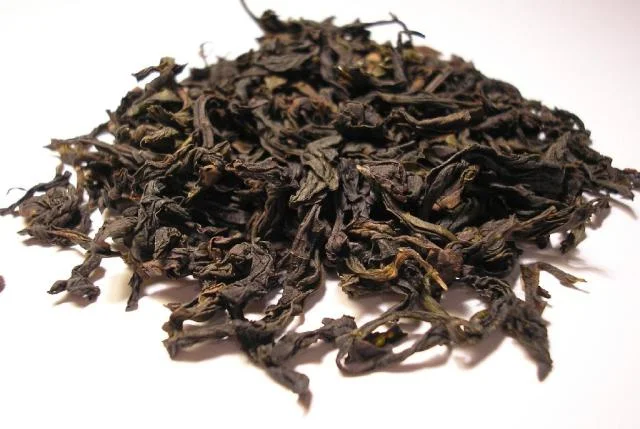
Seasonality & Plucking Standards
Early Spring (Pre-Qingming) · Narrow harvest window
Single Unopened Bud
Roughly 40,000–60,000 individual buds yield 500 g of finished tea, prized for silvery down.
Maximum amino-acid sweetness and silky texture, though often lighter in complex aromatics and infusion longevity.
Spring Flush · Benchmark for classic loose-leaf teas
One Bud, One to Two Leaves
Balances the bud's umami sweetness with the fuller phenolic structure and aromatic oils of young unfolded leaves.
Delivers rounded aroma, structural briskness, and multi-steep stamina across Longjing, Keemun, and Darjeeling.
Late Spring / Summer · Essential for Oolong & Dark teas
Mature Shoot (3–4 Leaves / Banjhi)
Thicker cuticles, mature stems, and elevated sugars endure vigorous bruising, rolling, and charcoal roasting.
Too fibrous for delicate green tea, yet vital for rock oolongs and dark teas where maturity produces deep mineral sweetness.
Taxonomy Boundary
Camellia sinensis vs. Tisanes: Botanical Boundaries
Everyday trade lumps chamomile, peppermint, rooibos, hibiscus, and roasted barley under the word 'tea.' Botanically, however, true tea derives strictly from Camellia sinensis (including var. sinensis, var. assamica, and closely related cultivated section Thea taxa). Pure botanical infusions without Camellia leaves are tisanes or herbal infusions: they typically lack caffeine and L-theanine and do not share tea's polyphenol-oxidase chemistry.
Verified References & Provenance
- [01] 1979Source
Chen Chuan's Six-Category Tea Classification (1979) & Camellia sinensis Phylogeography
Chen Chuan (1979) / Chen Zongmao (ed., China Tea Classic)
Chen Chuan (1979) established the modern scientific taxonomy of six tea families based on processing mechanisms (enzyme inactivation, withering, yellowing, semi-oxidation, full oxidation, microbial piling) rather than linear fermentation; Chen Zongmao's China Tea Classic synthesizes modern agronomy and tea chemistry.
- [02] 2021Source
Royal Botanic Gardens, Kew: The History of Tea from China to India
Royal Botanic Gardens, Kew
Traces botanical classification of Camellia sinensis var. assamica, Wardian-case plant transport, and Kew's role in colonial botanical networks.
- [03] 2014Source
Effects of Extreme Climate Events on Tea (Camellia sinensis) Functional Quality Validate Indigenous Farmer Knowledge
Selena Ahmed, Colin M. Orians, J. Richard Stepp et al. · 10.1371/journal.pone.0109126
Demonstrates that rapid shifts from spring drought to intense monsoon rain accelerate shoot growth by ~50% while diluting catechins and methylxanthines by up to ~50%, degrading sensory quality and farmer prices.
- [04] c. 760–780Source
The Classic of Tea (Chajing) by Lu Yu
Lu Yu (c. 760–780 CE)
The earliest surviving systematic monograph on tea, organized into ten chapters covering origins, tools, processing, vessels, boiling, drinking, historical anecdotes, regions, omissions, and scroll diagrams.