GALLERY VIII · Daily Practice & Tools
The Art of Everyday Tea
Good Tea Requires Neither Costly Gear Nor Esoteric Rules
Whether steeping in a desk mug, cold-brew carafe, or white porcelain gaiwan, mastering three physical variables—temperature, ratio, and time—unlocks everyday clarity for anyone.
Practical Steep Timer
Brew by Time and Water, Not Mysticism
95–100°C
7g / 120ml
Boiling water, brisk pour; add 5–10s per subsequent infusion.
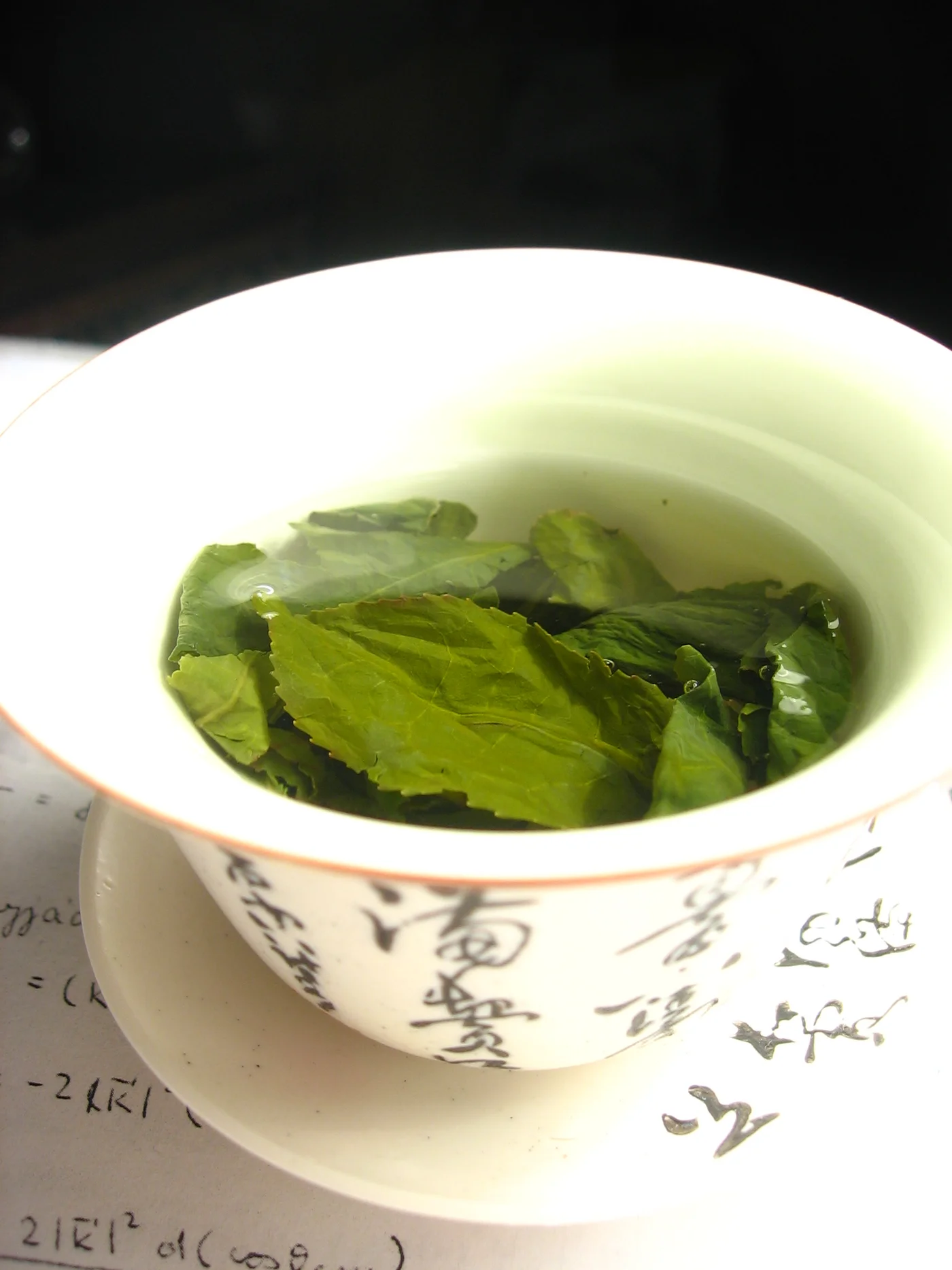
Beginner Selection Guide
Start From Taste Preferences, Not Jargon
Prefer crisp floral/fruity clarity, low bitterness
- · Baihao Yinzhen / White Peony (White)
- · Light Tieguanyin / Four Seasons (Light Oolong)
- · Huangshan Maofeng (Green)
Orchid, gardenia, white peach, and soft sweet broth.
Avoid boiling green tea for minutes—start with 80–85°C short infusions.
Enjoy coffee or bold body; prefer caramel, cocoa, and roast
- · Keemun / Dianhong (Chinese Black)
- · Lapsang Souchong
- · Medium-roast Wuyi Rock Oolong
Roasted sweet potato, cacao, dried fruit, and charcoal warmth; works neat or with milk.
Freshly charcoal-roasted oolong can taste harsh; resting sealed for 1–3 months mellows it.
Gentle on an empty stomach; mellow everyday stamina
- · Ripe (Shu) Pu-erh / Anhua Dark Tea
- · Huoshan Huangya (Yellow Tea)
- · Aged Shoumei White Tea (3+ yrs)
Jujube, warm wood, sticky rice broth, and sweet corn with minimal astringency.
Give compressed ripe pu-erh one 5-second hot rinse to open tightly pressed leaves.
Seeking focused clarity, marine umami, or tactile ritual
- · Uji Matcha / Gyokuro / Sencha (Steamed Green)
- · Enshi Yulu (Chinese Steamed Green)
Savory broth rich in L-theanine umami, fresh nori, and sweet green depth.
Shaded steamed teas oxidize quickly in light and heat—seal tightly in cool storage and drink within 1–2 months.
Reference Brewing Parameters Across the Six Families
| Family | Temp | Gongfu Ratio / 1st Steep | Mug / Teapot | Key Tip |
|---|---|---|---|---|
| Green Tea | 75–85°C | 3g : 100ml (or open glass) · 15–25 sec | 2g : 200ml · 1.5–2.5 min | Never cover delicate buds with boiling water; prevents stewed bitterness. |
| White Tea | 85–95°C (95–100°C for aged cakes) | 5g : 110ml · 20–30 sec | 2.5g : 200ml · 3–4 min | Pour along the cup wall to wet buoyant downy buds; aged cakes shine when simmered. |
| Yellow Tea | 80–85°C | 3–4g : 110ml · 20–30 sec | 2g : 200ml · 2–3 min | Clear glass highlights rising and settling buds; naturally smoother than green tea. |
| Oolong Tea | 90–100°C | 6–8g : 110ml (high leaf ratio) · 10–20 sec (flash pour) | 3g : 200ml · 2.5–3.5 min | Near-boiling water unlocks deep aromatic oils; use generous leaf with short pours. |
| Black Tea | 88–98°C | 4–5g : 110ml · 10–15 sec | 2.5g : 200ml · 3–4 min | Lower to ~90°C for tender buds; full 98°C for robust Assam or milk blends. |
| Dark Tea (inc. Ripe Pu-erh) | 95–100°C | 6–8g : 110ml · 5s quick rinse, then 10–15 sec | 3g : 250ml · 3–5 min | Full boiling water is essential to open aged microbial depth; also great simmered. |
Gaiwan, Teapot, Glass, or Simple Office Mug
White Porcelain Gaiwan (100–120ml)
Non-porous vitrified porcelain
Oolong, white, black, and comparative tasting—the single best first investment.
Yixing Zisha / Ceramic Teapot (120–180ml)
Unglazed porous stoneware or glazed ceramic
Pu-erh, aged dark tea, roasted Wuyi rock oolong, or single-tea dedication.
Borosilicate Tall Glass
Thermal-shock-resistant clear glass
Longjing, Biluochun, Maofeng, yellow buds, and cold brew.
Office Mug with Deep Basket Infuser
Ceramic mug with wide stainless steel basket
Desk-side brewing of black, white, oolong, or everyday green tea.
Matcha Whisking Basics
Five Steps to Smooth Whisked Matcha
- 01. Warm and Dry the Bowl10 sec whisk soak
Rinse the chawan and soak the bamboo whisk tines in warm water, then empty and wipe the bowl completely dry so powder never clumps.
- 02. Sift Matcha Powder2g (~1 tsp) sifted
Static causes fine stone-milled powder to clump. Push ~2g (two chashaku scoops) through a fine mesh sieve into the dry bowl.
- 03. Add 75–80°C Water60–70ml at 75–80°C
Pour 60–70ml of 75–80°C water gently down the side. Boiling water extracts harsh bitterness and dulls bright green chlorophyll.
- 04. Brisk 'W/M' Wrist Whisking15–20 sec rapid stroke
Move only your wrist rapidly back-and-forth in tight 'W' or 'M' strokes (not slow circles), keeping tines just above the bowl floor.
- 05. Smooth Micro-Foam & LiftDrink immediately; rinse whisk
Slow down near the surface to pop large bubbles, trace a gentle spiral, and lift straight out from the center for creamy jade micro-foam.
Cold-Brew Science & Steps
Low-Astringency Sweetness With Cold Water
Cold brewing exploits differential solubility: sweet, savory amino acids (L-theanine) dissolve readily in cold water, whereas bitter catechins and caffeine extract much more slowly—yielding naturally sweet, low-astringency tea.
Best teas: White Peony / Silver Needle · Green Teas (Longjing, Sencha) · Aromatic Oolongs (Oriental Beauty, Dancong) · Fruity Black Teas (Darjeeling, Honey Black)
Use 10g loose leaf per 1 liter of filtered cold or room-temperature water (5g per 500ml bottle). Compressed cakes need ~20% more leaf or a brief warm rinse.
Green and light oolongs peak at 6–8 hours in the fridge; white and black teas shine at 8–12 hours. Strain out leaves once balanced.
Always use potable filtered water, steep inside a 4°C refrigerator rather than warm rooms, and finish within 24–48 hours.
Tea Storage Essentials
Guard Against the Five Enemies
Dry leaves act like sponges for moisture and kitchen odors. UV light bleaches chlorophyll, heat and oxygen dissipate delicate top notes, and humidity invites mold.
Store in opaque, airtight tins or foil-lined pouches away from stoves, sunlight, and aromatic spices.
Fresh Consumption vs. Intentional Aging
Green, matcha, fresh oolong, and most black teas are perishable seasonal produce—drink within a year. Only pu-erh, dark teas, white cakes, and well-roasted oolongs benefit from multi-year aging.
Refrigerate sealed green tea/matcha (let come to room temperature before opening to prevent condensation); keep aging pu-erh/white cakes in dry (<65% RH), odor-free room storage.
Split Large Tins into Weekly Portions
Opening a large canister daily exposes the entire stash to humid air—rapidly flattening spring green tea aroma.
Decant one week's supply into a small tin and keep the main pouch tightly sealed.
Six Common Tea Myths Examined
Myth 1: 'Black tea is fermented like yogurt or wine'
False — It is endogenous enzymatic oxidation
Historically mislabeled 'fermentation,' black and oolong processing is driven by the leaf's own polyphenol oxidase enzymes reacting with oxygen—no microbes involved. Only dark teas (such as ripe pu-erh) undergo true microbial fermentation.
Myth 2: 'A 5-second hot rinse removes most caffeine'
False — Removes under ~10% of caffeine
Caffeine diffuses out gradually over minutes, not seconds. Laboratory measurements show a brief 5–10 second rinse strips less than ~10–15% of total caffeine while washing away delicate spring top notes. Rinsing exists to hydrate tightly rolled or compressed aged leaves.
Myth 3: 'Light-colored white tea has no caffeine; dark tea has the most'
False — Liquor color does not predict caffeine
Tea plants concentrate caffeine in tender buds as a natural insect deterrent. Bud-heavy white teas (Silver Needle) and shaded matcha often match or exceed mature-leaf black teas in caffeine per dry gram.
Myth 4: 'All quality teas improve with age'
False — Only specific tea families age well
Green, yellow, and fragrant light oolongs rely on volatile floral alcohols and fresh chlorophyll that fade within 12–18 months. Multi-year aging applies selectively to pu-erh, dark teas, white tea cakes, and heavy-roast oolongs.
Myth 5: 'Ancient-tree tea is always superior to cultivated garden tea'
Oversimplified — Processing and ecology matter equally
Deep-rooted old trees in biodiverse forests can yield complex mineral depth, yet poor fixation or sloppy storage ruins any leaf. Well-tended highland terraces regularly produce world-class green, oolong, and black teas.
Myth 6: 'All teabags contain low-grade floor sweepings'
Partially outdated — Cut-grade dust vs. whole-leaf pyramid sachets
Traditional flat paper bags filled with CTC dust prioritize rapid strength for milk and sugar. However, modern specialty producers also pack whole leaves in spacious pyramid sachets for convenience—though avoiding microplastic-shedding nylon meshes remains advisable.
Caffeine, L-Theanine & Timing
Caffeine + L-Theanine Synergy
A 200ml cup typically holds 20–60 mg caffeine (roughly one-third to half of brewed coffee) paired with 5–25 mg L-theanine.
L-theanine crosses the blood-brain barrier and modulates jitteriness, producing calm, sustained alertness rather than a sharp spike-and-crash.
Metabolic Half-Life & Evening Cutoff
Average caffeine half-life in healthy adults is roughly 4–6 hours (varying with CYP1A2 genetics).
If sleeping at 11 PM and caffeine-sensitive, shift after 3–4 PM to cold-brewed infusions, aged coarse-leaf teas, or true caffeine-free herbal tisanes.
Why Strong Tea Irritates an Empty Stomach
Unfixed/unoxidized green teas pack high catechin levels alongside caffeine, stimulating gastric acid on an empty stomach.
Pair morning green tea or matcha with breakfast, or opt for mellow ripe pu-erh, black tea, or yellow tea when fasting.
Polyphenols & Non-Heme Iron Absorption
Tea polyphenols bind plant-based non-heme iron, temporarily reducing absorption if drunk directly alongside iron-rich meals.
If iron-deficient or vegetarian, simply space tea 45–60 minutes away from iron-rich meals or supplements.
Personal Tea Shelf (Local Browser)
Your Bookmarked Teas & Brew Parameters
No teas saved yet. Bookmark teas from Gallery II or the 30-Second Tea Finder to keep their temperatures and origins handy here.
Local Tasting Notebook
Record Your Own Cups (Stored Locally in Browser)
No entries saved yet. Whether loose-leaf or teabag, recording temperature and your first sip is the best place to start.
Museum Dispatch & Quick Reference
Get the Six-Family Brewing & Pitfall Cheat Sheet
Download the printable plain-text brewing reference immediately, or leave your email for occasional new tea profiles and essays (zero spam).