Skip to content
中文

GALLERY V · Trade & Global Capitalism

Scholarly Interpretation

Tea and Empire

Silver, Opium, Plantations, and Modern Supply Chains

China's late-19th-century loss of Western market dominance cannot be reduced to one botanist or single invention—it emerged from colonial finance, penal labor regimes, steamships, mass branding, and competing forms of labor discipline.

Chronological Tea Trade & Botanical Transfer Atlas

Radiating from Sichuan & Yunnan across the Tibetan Plateau and East China Sea

c. 700–1300 CE
Chengdu / Ya'anPu'er / YunnanLhasaNingbo (Mingzhou)Kyoto / Uji
Overland CorridorMaritime TradeBotanical & Craft Transfer
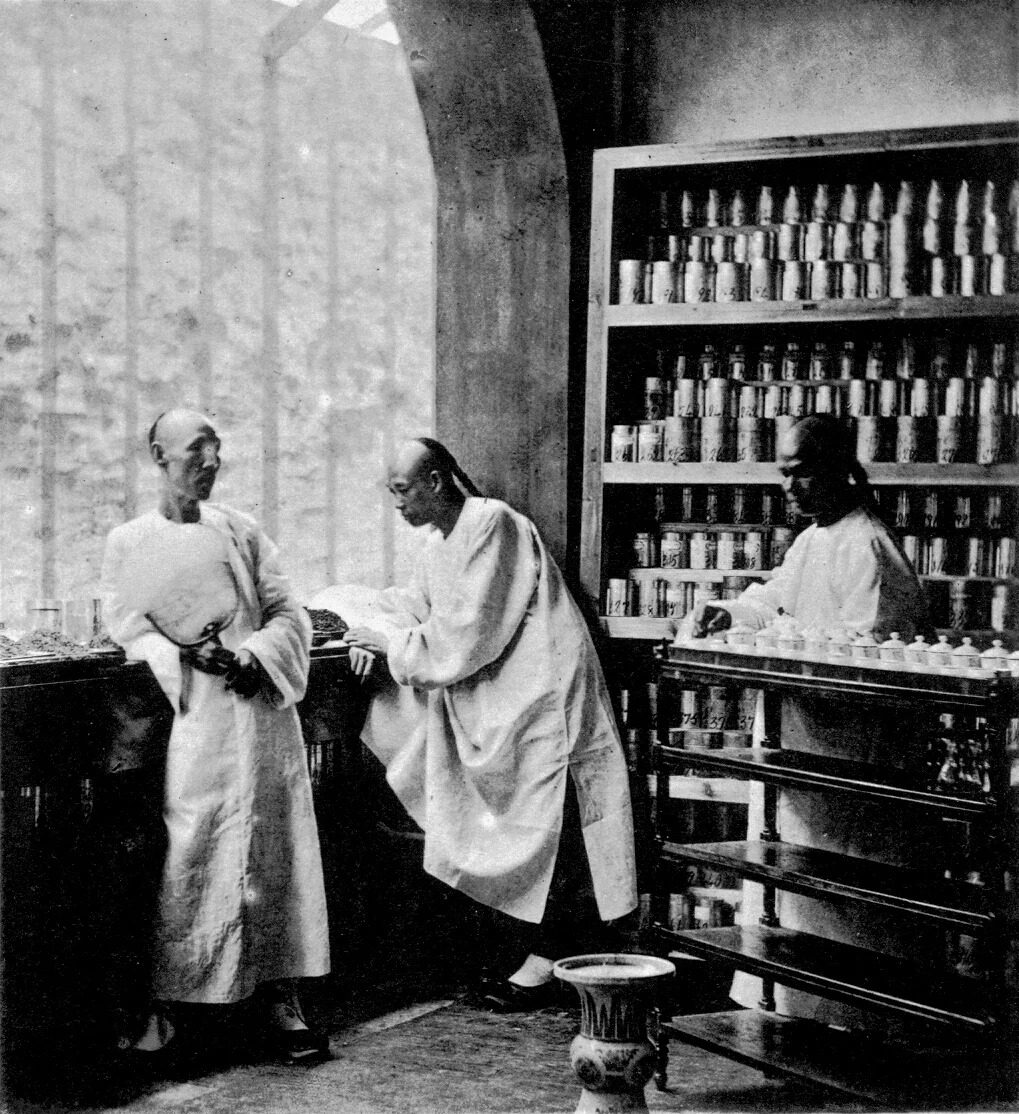
19th-century historical photograph of a tea-tasting room in Canton by John Thomson
Museum Open Access · CC0 · Wikimedia Commons
Archival Photograph (c. 1870, John Thomson): Canton tea-tasting room lined with tasting cups and export tea chests.John Thomson · Wikimedia Commons (Public Domain) · Source
Rigging of the 1869 British tea clipper Cutty Sark
CC BY-SA 4.0 · Wikimedia Commons
Cutty Sark (1869): built for the high-stakes ocean tea races carrying China's new-season crop to London.Ermell · Wikimedia Commons (CC BY-SA 4.0) · Source
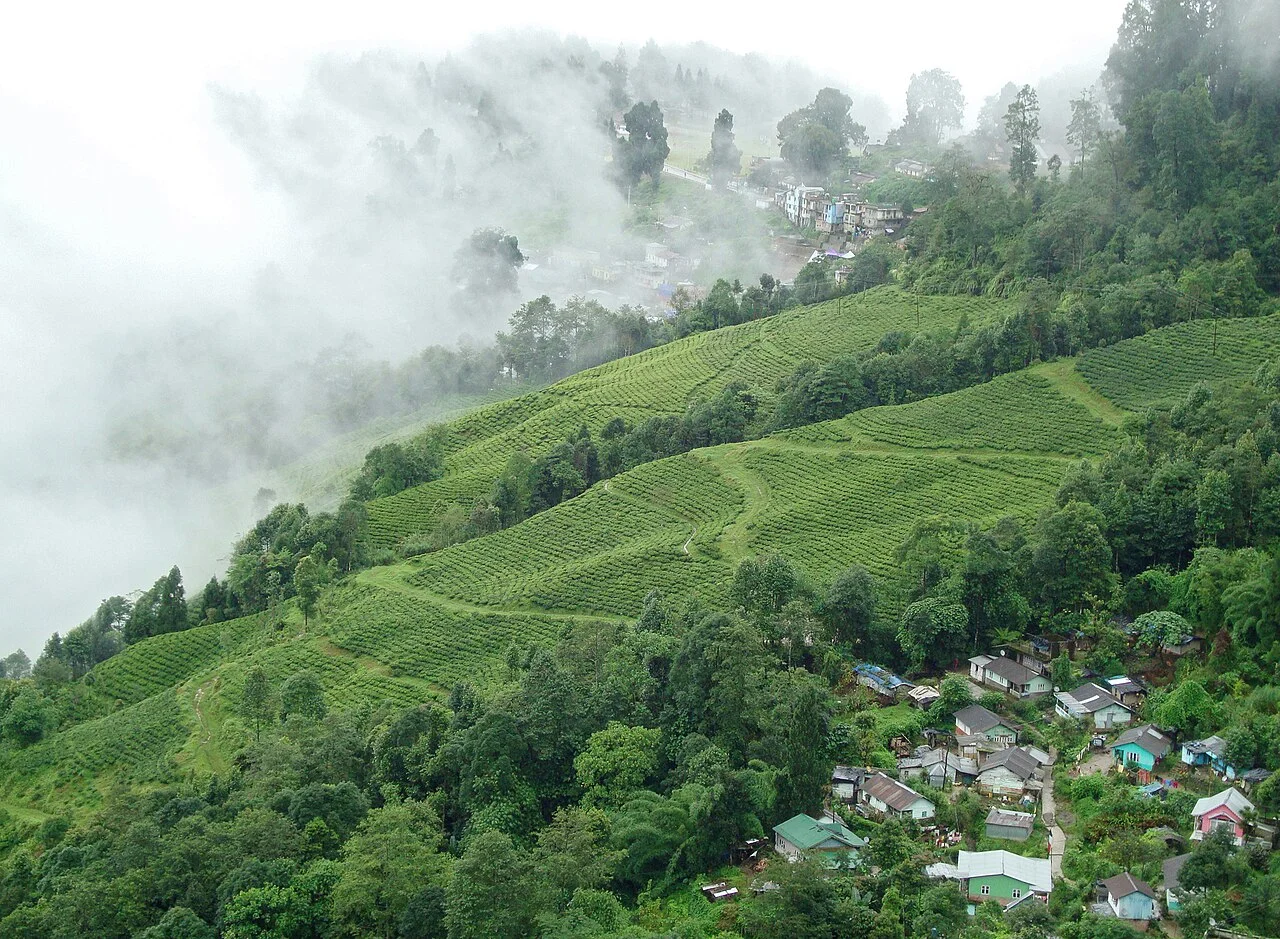
Misty terraced hillside tea plantation in Darjeeling, India
CC BY-SA 3.0 · Wikimedia Commons
Himalayan Plantation Landscape: 19th-century colonial tea estates reshaped highland ecology and labor systems.Joydeep · Wikimedia Commons (CC BY-SA 3.0) · Source
CHAPTER IHistorical Record

The Canton System, Silver Outflows, and the East India Company

As tea drinking became a British staple in the 18th century, the East India Company relied almost exclusively on Canton, paying overwhelmingly in silver bullion.

Under Qing single-port regulation after 1757, Wuyi bohea, Songluo green, and Congou black teas traveled over mountain passes to Canton's Cohong merchants. By the late 1700s, tea dominated East India Company imports and provided crucial British customs revenue.

Alarmed by silver outflows, British merchants triangulated trade by smuggling Bengal-grown opium into coastal China to generate silver for tea purchases—an asymmetric circuit that fueled tensions leading to the First Opium War (1839–1842).

CHAPTER IIHistorical Record

Indigenous Assam Tea and Robert Fortune's Botanical Espionage

Breaking China's tea monopoly was not a single heroic espionage coup: it combined the 1823–1830s recognition of wild Assam trees, Kew's botanical network, Wardian glass cases, and Robert Fortune's 1848–1851 plant-and-artisan transfers.

Indigenous large-leaf tea (var. assamica) had already been identified in Assam in the 1820s through local Singpho leaders. Yet early British estates struggled with mismatched processing methods and heavy seedling losses.

In 1848 the East India Company hired Scottish botanist Robert Fortune to enter restricted tea districts in Anhui, Zhejiang, and Wuyi. Using sealed glass Wardian cases, he shipped thousands of plants and recruited experienced Chinese tea makers to northern India. Crucially, however, Assam and Ceylon ultimately triumphed commercially not through Fortune's small-leaf Chinese cultivars, but through native Assamica hybrids suited to tropical estates.

CHAPTER IIIScholarly Interpretation

Indentured Plantations and 'Tea War' Labor Discipline

Historian Andrew B. Liu ('Tea War') overturns the cliché of 'modern India vs. stagnant China,' revealing how both relied on intense labor discipline to accumulate capital under global price pressure.

Facing acute labor shortages, Assam's London-financed sterling plantations used colonial penal indenture laws (such as the Inland Emigration Act) to bind migrant workers from central India at depressed wages under strict physical supervision.

Meanwhile, workshops in Huizhou and Wuyi were far from static: Chinese merchants adopted strict piece-rate pay and time-measured task division resembling early Taylorism. Yet fragmented smallholder networks still lost dominant Western black tea share to subsidized British-imperial plantations by the late 1880s.

CHAPTER IVScholarly Interpretation

Manufacturing Empire Taste: Branding and Vertical Integration

Historian Erika Rappaport ('A Thirst for Empire') shows British drinkers did not naturally prefer strong South Asian black teas; mass taste was engineered through advertising, temperance politics, and imperial branding.

To combat rampant retail adulteration of bulk tea chests, Thomas Lipton pioneered vertical integration—buying Ceylon estates, blending standardized flavor profiles, and selling sealed, branded cartons directly to working-class grocers.

Backed by industry-funded propaganda framing Ceylon and Indian teas as pure and patriotic, standardized branding transformed an exotic luxury into an industrial everyday staple—laying the blueprint for the modern teabag and global FMCG supply chains.

Verified References & Provenance

  1. [01] 2017Source

    A Thirst for Empire: How Tea Shaped the Modern World

    Erika Rappaport · ISBN 9780691167114

    Princeton University Press study demonstrating how temperance movements, imperial propaganda, branding, and corporate integration (such as Lipton) manufactured British imperial tea taste.

  2. [02] 2020Source

    Tea War: A History of Capitalism in China and India

    Andrew B. Liu · 10.12987/yale/9780300243734.001.0001

    Yale University Press comparative history of Huizhou, Wuyi, and Assam, showing how both colonial penal indenture and Chinese piece-rate time discipline constituted dynamic Asian capitalist accumulation.

  3. [03] 2003Source

    Tea: Addiction, Exploitation, and Empire

    Roy Moxham

    Historical synthesis by a former tea planter tracing Britain's tea dependency, opium triangulation, and harsh plantation labor conditions across Assam, Ceylon, and Africa.

  4. [04] 2009Source

    For All the Tea in China: How England Stole the World's Favorite Drink and Changed History

    Sarah Rose

    Narrative account of Scottish botanist Robert Fortune's 1848 East India Company expedition into Anhui and Fujian to transfer Camellia sinensis germplasm, Wardian-case specimens, and skilled workers to India.

  5. [05] 2021Source

    Royal Botanic Gardens, Kew: The History of Tea from China to India

    Royal Botanic Gardens, Kew

    Traces botanical classification of Camellia sinensis var. assamica, Wardian-case plant transport, and Kew's role in colonial botanical networks.

  6. [06] 2009Source

    The True History of Tea

    Victor H. Mair & Erling Hoh

    Philological and historical synthesis tracing tea from southwest China/Southeast Asia across overland 'cha' and maritime 'te' linguistic and trade corridors.