Skip to content
中文

GALLERY III · History & Archaeology

Historical Record

A History Steeped in Time

Separating Legend, Archaeology, Texts, and Visual Reconstructions

Tea's history is not a flat progression from mythical origins, but a series of material revolutions—from Han burial pits and Tang cake decoction to Ming loose-leaf steeping and modern globalization.

Source Hygiene Note: Every milestone below displays its epistemic tier (Folk Legend, Archaeological Evidence, Historical Record, or Scholarly Interpretation). Authentic CC0 museum objects carry accession numbers, while AI-generated historical scenes are explicitly labeled as imaginative reconstructions.
01 · Mythic Attribution · Shennong Era (Trad. c. 2737 BCE)Folk Legend

The Shennong Legend: A Later Literary Myth of Tea's Medicinal Discovery

The famous tale of the Divine Farmer Shennong encountering seventy-two toxins and finding tea as an antidote is a later Han-to-Tang literary attribution—not a contemporaneous historical record from 2737 BCE.

Texts such as the Eastern Han Shennong Bencaojing (Divine Farmer's Materia Medica) and passages quoted in Lu Yu's Tang-era Chajing attribute tea's discovery to the culture hero Shennong, later embellished into tales of wild leaves blowing into a simmering cauldron. Historians note that the frequently cited date '2737 BCE' is a retrospective calendrical reconstruction rather than an archaeologically attested event. Even as myth, however, the tradition illuminates how early Chinese literate culture conceptualized Camellia sinensis primarily as a bitter medicinal herb ('tu') before it became a widespread recreational beverage.

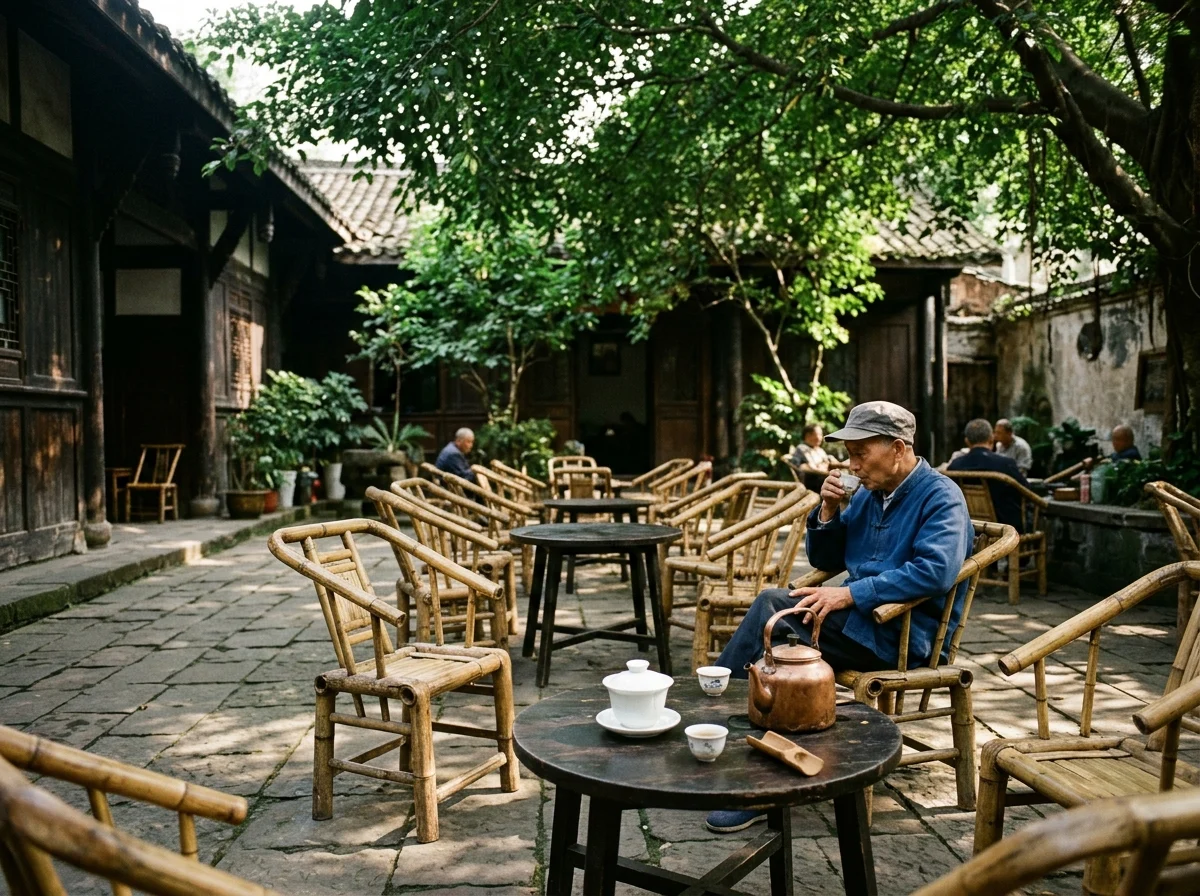
Traditional Sichuan courtyard teahouse with bamboo chairs, white porcelain gaiwan, and copper kettle
Curatorial Visual (AI Generated)
Sichuan Courtyard Teahouse: bamboo armchairs and lidded gaiwan bowls anchor everyday civic sociability.Curatorial Cultural Scene (AI Generated)
02 · Western Han & Western Tibet · c. 141 BCE & 2nd–3rd c. CEArchaeological Evidence

Han Yangling Mausoleum & Gurgyam Cemetery: Biomolecular Proof of Early Tea

A landmark 2016 Scientific Reports study (Lu et al., srep18955) used phytoliths, caffeine, and L-theanine mass spectrometry to verify tea buds in Emperor Jing's c. 141 BCE tomb and a 2nd–3rd c. CE cemetery in western Tibet.

Until 2016, historians debated how early tea reached northern imperial courts and high-altitude Tibet. Publishing in Scientific Reports (10.1038/srep18955), Houyuan Lu and colleagues analyzed desiccated plant buds excavated from Emperor Han Jingdi's Yangling Mausoleum near Xi'an (buried c. 141 BCE) and the Gurgyam Cemetery in Ngari, western Tibet (2nd–3rd c. CE). Combining calcium phytolith micromorphology with UPLC-MS detection of diagnostic caffeine and L-theanine markers, the study established both the earliest physical tea remains in an imperial Chinese tomb and a trans-Tibetan trade corridor operating centuries before Tang dynasty records.

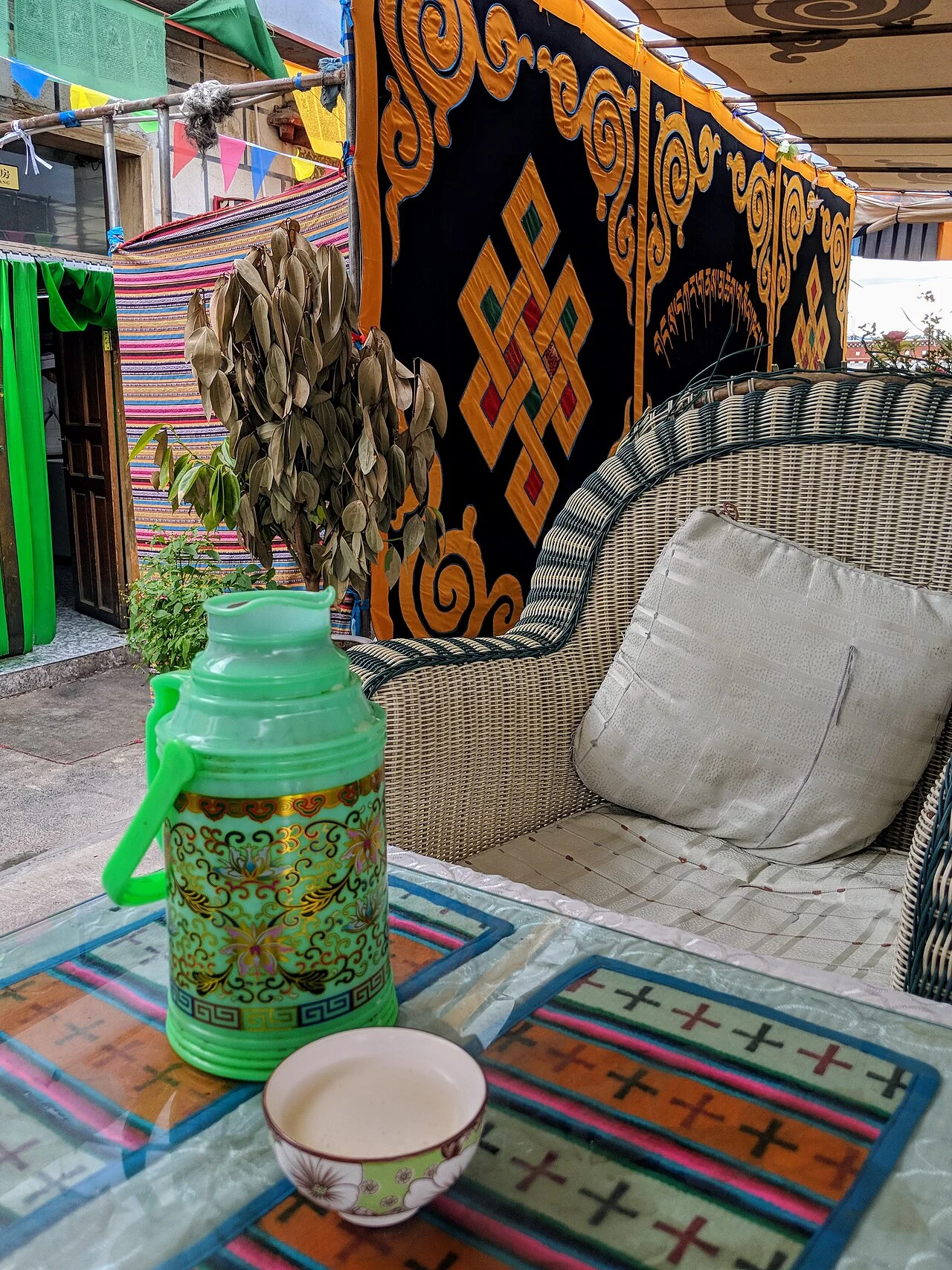
Tibetan butter tea bowl and thermos in a traditional teahouse
CC BY-SA 4.0 · Wikimedia Commons
Tibetan Butter Tea: boiled dark brick tea churned with yak butter and salt—vital warmth and lipids at high altitude.Jpatokal · Wikimedia Commons (CC BY-SA 4.0) · Source
03 · Pre-Qin to Western Han · By 59 BCEHistorical Record

Southwest Botanical Origins & Ba-Shu Records: Hua Yang Guo Zhi and Tong Yue (59 BCE)

Wild Camellia sinensis evolved in the montane belt of southwest China; while the Jin-era Hua Yang Guo Zhi recalls ancient Ba-Shu tea tribute, Wang Bao's 59 BCE contract Tong Yue is the earliest firmly dated record of buying and boiling tea.

Phylogeographic research locates the richest genetic diversity of Camellia section Thea across Yunnan, Guizhou, and southern Sichuan. In textual history, Chang Qu's 4th-century CE Hua Yang Guo Zhi records that ancient Ba and Shu communities cultivated garden tea and presented tea and honey in early Zhou tribute. Crucially, the Western Han writer Wang Bao's humorous servant contract Tong Yue, firmly dated to 59 BCE in Sichuan, instructs a servant to 'boil tea and arrange all utensils' and 'buy tea at Wuyang'—confirming both dedicated teaware and commercial tea markets in southwest China by the 1st century BCE.

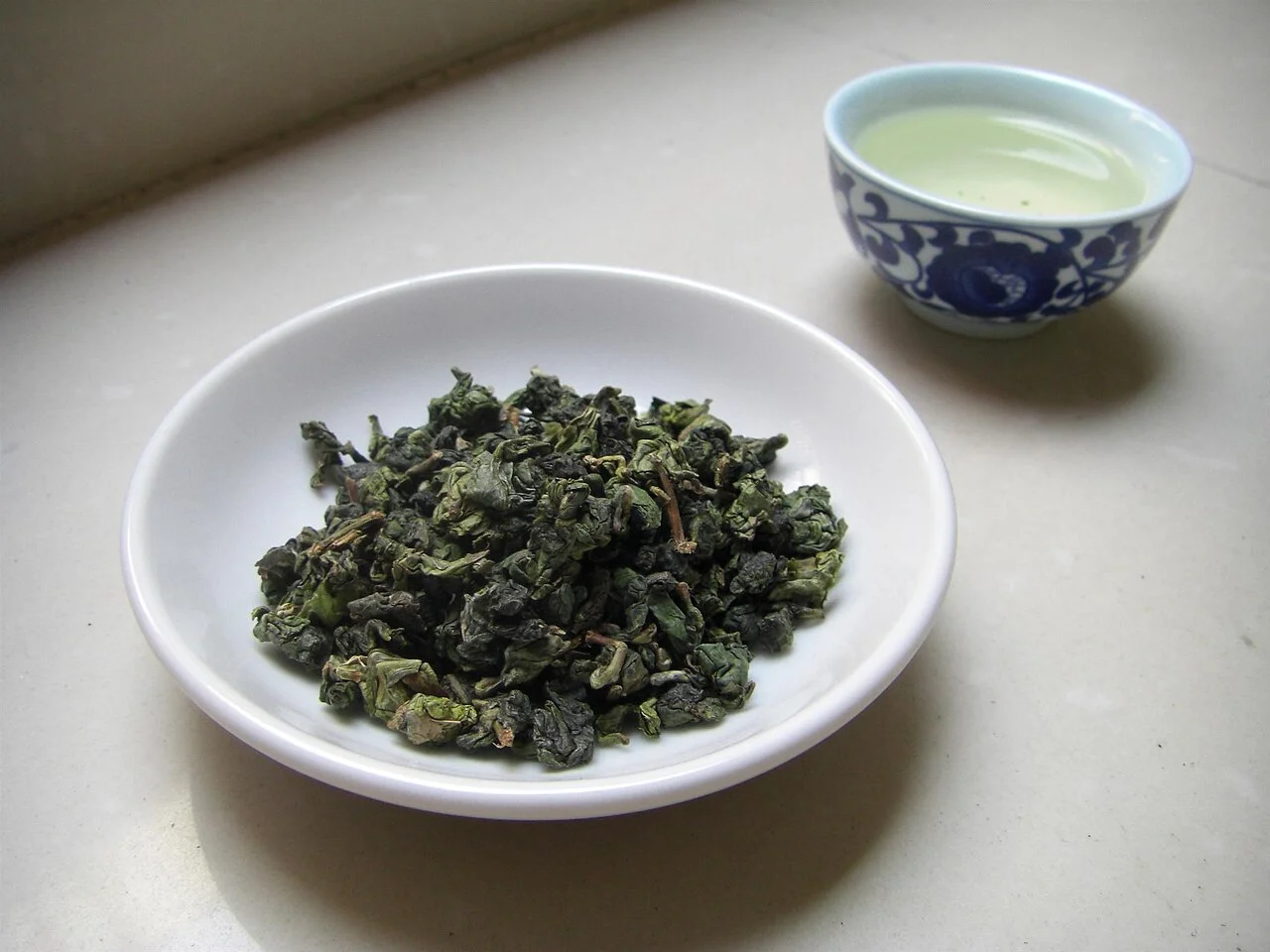
Tightly rolled Anxi Tieguanyin oolong tea leaves photograph
Museum Open Access · CC0 · Wikimedia Commons
Oolong Specimen (Tieguanyin): partially oxidized, cloth-rolled into dense olive-green spheres.Quelcrime · Wikimedia Commons (Public Domain) · Source
04 · High to Late Tang · c. 760–874 CEHistorical Record

Lu Yu's Chajing, Boiled Cake Tea (Jiancha), and Famen Temple Imperial Vessels

Lu Yu's Chajing (c. 760–780 CE) systematized tea cultivation, processing, and salted boiled cake tea (jiancha), while the 874 CE Famen Temple crypt yielded gold-and-silver royal tea sets and prized Yue celadon.

During the Tang dynasty, tea shifted from regional medicinal infusion to a universal cultural practice linked with Chan monasteries and literati life. Around 760–780 CE, Lu Yu authored the ten-chapter Chajing (The Classic of Tea), standardizing steamed-and-pounded cake tea and detailing jiancha—roasting the cake, grinding it into powder, sieving it, and boiling it in a cauldron with a pinch of salt. Lu Yu famously praised Yue celadon bowls for lending green-jade luster to tea liquor. The 1987 discovery of the Famen Temple underground crypt (sealed 874 CE) uncovered Emperor Xizong's gilded-silver tea grinder, sifter, brazier, salt stand, and mise celadon bowls, physically corroborating Lu Yu's ritual apparatus.

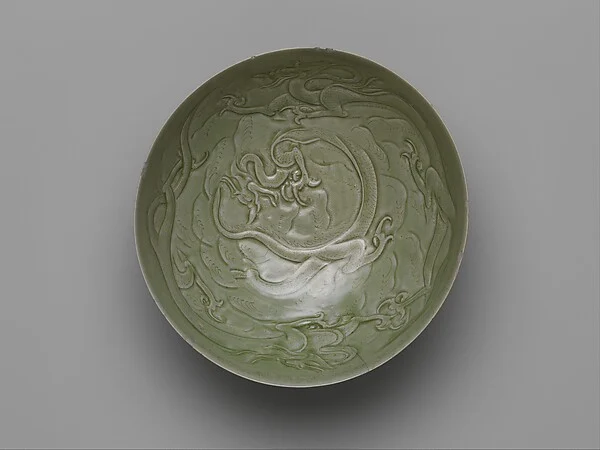
Five Dynasties to Northern Song Yue ware celadon bowl with incised waves (The Met)
Museum Open Access · CC0 · The Met
Yue celadon praised by Lu Yu in Chajing as 'ice and jade,' ideal for illuminating golden-green boiled Tang tea.The Metropolitan Museum of Art (CC0 Open Access) · Accession: Met 39649 · Source
05 · Mid-Tang to Song · 793 CE Tea Tax & State Monopoly (Quecha)Historical Record

Tang–Song Tea Taxation & State Monopolies: Tea as Imperial Fiscal Pillar

Beginning with Zhang Pang's 10% tea levy in 793 CE and culminating in the Song state monopoly (quecha), tea rose from everyday commodity to a fiscal pillar alongside salt and iron.

Strained after the An Lushan Rebellion, the Tang court enacted Zhang Pang's 793 CE proposal for a nationwide 10% ad valorem tea tax—establishing tea as a permanent imperial revenue stream. Under the Northern and Southern Song, the state expanded controls through quecha monopolies and licensed tea vouchers (chayin) across Jiangnan, Hunan, and Sichuan, channeling tea profits directly into frontier defense and horse procurement while sparking lively debates over state control versus merchant enterprise.

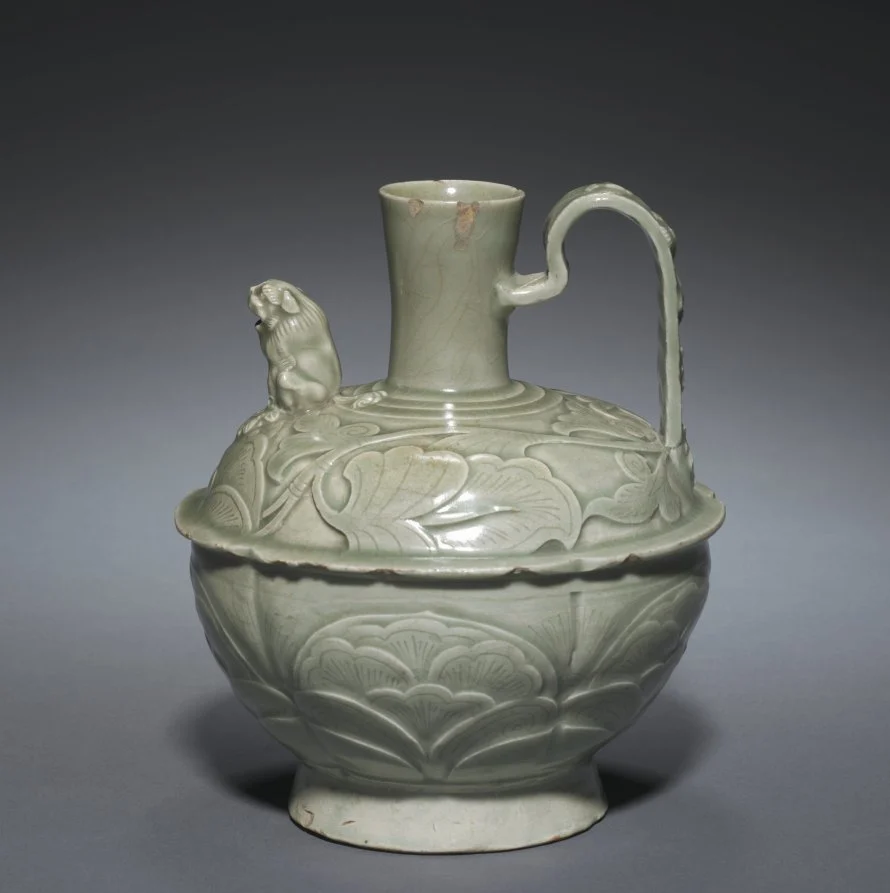
10th–11th century Yue ware celadon ewer with lion-shaped spout (Cleveland Museum of Art)
Museum Open Access · CC0 · Cleveland Museum of Art
10th–11th c. Yue celadon ewer reflecting refined coastal Zhejiang kiln glazes used in medieval tea service.The Cleveland Museum of Art (CC0 Open Access) · Accession: CMA 1948.220 · Source
06 · Northern Song to Ming · From 1074 CEHistorical Record

The Song–Ming Tea-Horse Trade (Chama Hushi) & Tibetan Plateau Exchange

Short of cavalry mounts while Tibetan pastoralists relied on compressed tea, the Song court institutionalized the Tea-Horse Agency in 1074, linking Sichuan and Yunnan tea districts to plateau trade through Ming times.

Across the Tibetan Plateau, compressed dark and brick teas supplied crucial micronutrients, digestive support, and warmth alongside barley and dairy diets. Recognizing this strategic complementarity, the Northern Song state formalized the Tea-Horse Agency (Chama Si) in 1074 CE, channeling Sichuan tea taxes directly into cavalry procurement from Tibetan and Tangut horse traders at border markets such as Yazhou (Ya'an) and Qinzhou. Sustained and adapted under the Ming, the Chama Hushi ('Tea-Horse Mutual Market') turned rugged Sichuan–Tibet and Yunnan–Tibet mule paths into enduring arteries of multi-ethnic economic and cultural interdependence.

Tibetan butter tea bowl and thermos in a traditional teahouse
CC BY-SA 4.0 · Wikimedia Commons
Tibetan Butter Tea: boiled dark brick tea churned with yak butter and salt—vital warmth and lipids at high altitude.Jpatokal · Wikimedia Commons (CC BY-SA 4.0) · Source
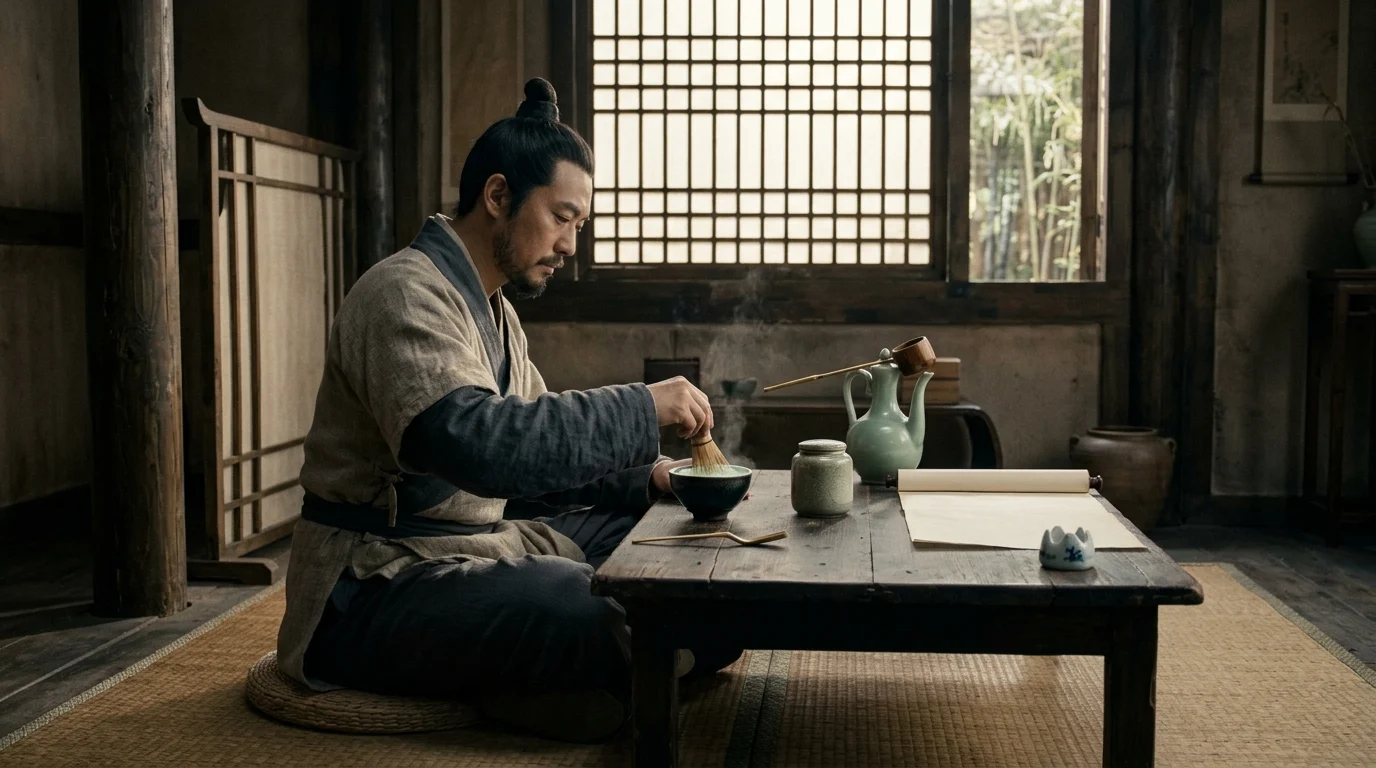
07 · Song Dynasty · 1107 CE (Daguan Chalun)Historical RecordIncludes AI Reconstruction

Song Diancha Whisking, Tea Contests (Doucha), Jian Ware, and Huizong's Treatise

Song tea shifted from cauldron boiling to bowl whisking (diancha): finely milled white-foam powder whipped with a bamboo whisk inside dark iron-glazed Jian ware bowls to heighten contrast—codified in Emperor Huizong's 1107 Daguan Chalun.

Replacing Tang cauldron boiling, Song connoisseurs developed diancha (whisked tea). Tribute compressed cakes from Beiyuan (Fujian) were ground into ultra-fine powder, placed into pre-warmed bowls, and whisked vigorously with a split-bamboo chasen while pouring thin streams from a spouted ewer. In competitive doucha ('tea battles'), judges prized pure white froth clinging longest to the rim without separating ('biting the bowl'). To maximize visual contrast and heat retention, potters in Jianyang fired thick-walled iron-rich Jian ware (hare's fur and oil-spot glazes). In 1107, Emperor Huizong authored the Daguan Chalun, famously detailing the seven-pour whisking method and praising rare Song 'white tea' (natural albino-leaf bushes, distinct from modern Fuding white tea).

Imaginative historical reconstruction of a Song dynasty scholar whisking tea in a Jian bowl
AI Historical Reconstruction (Not Primary Evidence)
[AI Historical Reconstruction] Imaginative visual reconstruction of Song-dynasty whisked tea (diancha) informed by period art and treatises; not primary archival evidence.Imaginative Historical Reconstruction (AI Generated)
08 · Kamakura Japan · 1211 CEHistorical Record

Eisai's Kissa Yōjōki (1211) & the Localization of Japanese Tea Culture

Returning from Song China with tea seeds and Chan monastic whisked-tea rules, Zen monk Myōan Eisai authored Japan's first tea treatise, Kissa Yōjōki (1211), seeding cultivation in Kyoto's Uji hills and samurai culture.

Although 9th-century envoys briefly introduced Tang cake tea to Heian courts, it remained confined to elite circles. After studying in Song China, Zen master Myōan Eisai returned in 1191 with fresh tea seeds—planted in Kyushu and gifted to Myōe Shōnin, who established Uji's famed gardens—and Song-style whisked tea etiquette. In 1211, Eisai wrote Kissa Yōjōki ('Drinking Tea for Health'), famously opening: 'Tea is the ultimate mental and medical remedy and has the ability to make one's life more full and complete.' After presenting tea and the text to Shogun Minamoto no Sanetomo in 1214, tea spread rapidly across Zen monasteries and warrior houses, preserving Song powdered whisking in Japan even after China later abandoned it.

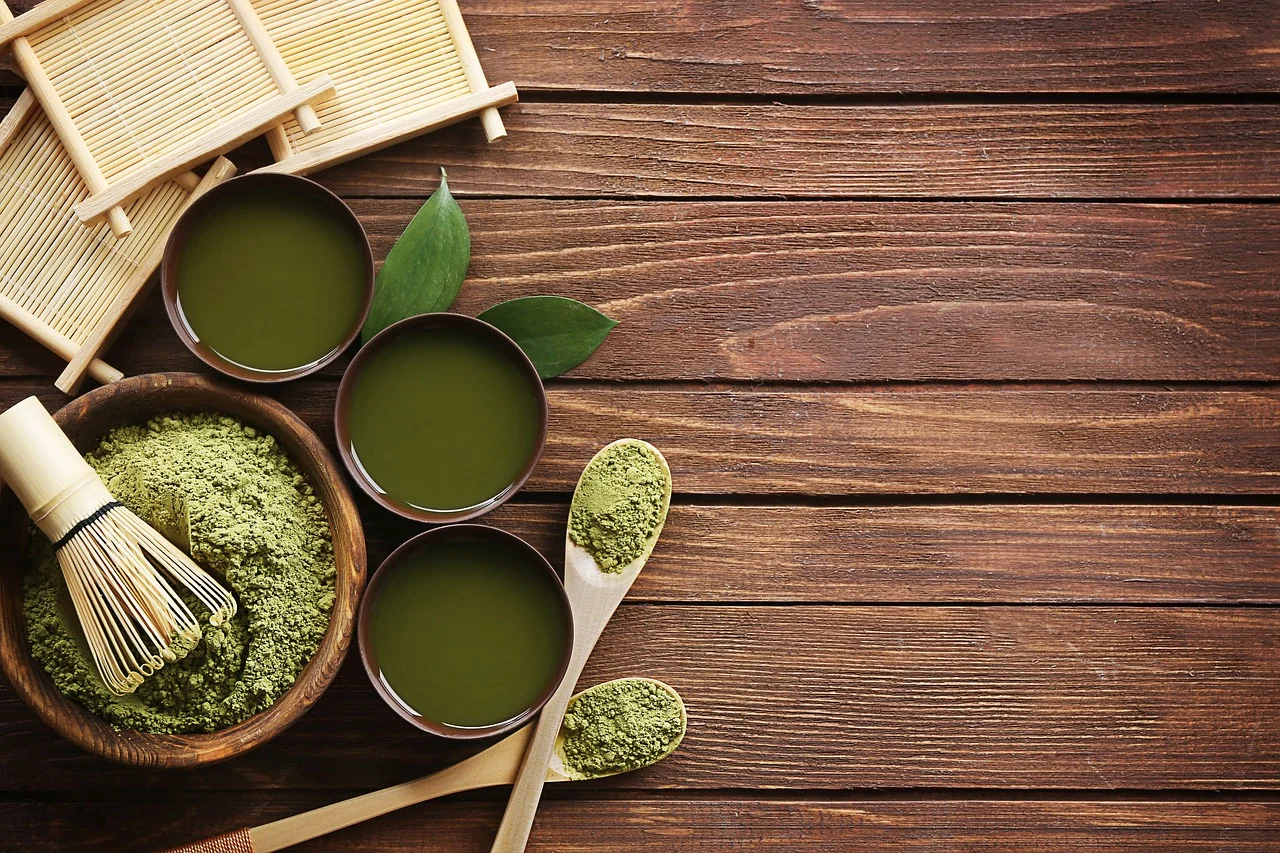
Vibrant green stone-milled Japanese matcha powder
Museum Open Access · CC0 · Wikimedia Commons
Special-Craft Green Tea · Matcha: shaded tencha deveined and stone-milled into suspension powder.dungthuyvunguyen · Wikimedia Commons (CC0) · Source
09 · Ming Dynasty · 1391 CEHistorical Record

The 1391 Hongwu Edict: Abolishing Tribute Cakes for Loose-Leaf Steeping & Yixing Stoneware

Building on loose-leaf trends already widespread among Song–Yuan civilians, Emperor Hongwu's 1391 decree abolished labor-intensive imperial Dragon-Phoenix tribute cakes in favor of whole-leaf buds (sancha), cementing hot-water steeping and catalyzing Yixing stoneware.

In 1391, Ming founder Zhu Yuanzhang (Emperor Hongwu) decreed the end of laborious imperial Dragon-Phoenix cake production—citing the heavy burden on tea farmers—and ordered tribute to be paid in whole-leaf buds (sancha). Historians emphasize that loose-leaf drinking had already spread widely in Song–Yuan civilian society; the imperial edict ratified and accelerated this shift. Freed from steaming, pounding, and molding into bricks, artisans perfected pan-firing (chaoqing), paving the way for the late-Ming and early-Qing emergence of oolong, white, yellow, and black teas, while Yixing potters refined unglazed zisha teapots for direct infusion.

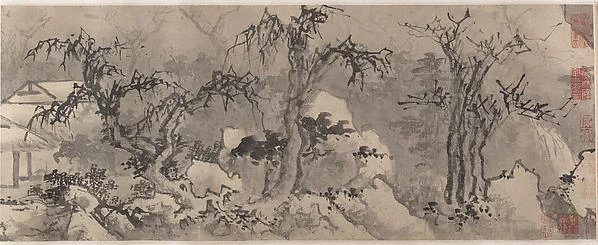
First half of 16th-century Ming dynasty landscape handscroll (The Met)
Museum Open Access · CC0 · The Met
Ming landscape handscroll (CC0): coinciding with Ming loose-leaf steeping and literati appreciation of mountain tea.The Metropolitan Museum of Art (CC0 Open Access) · Accession: Met 45680 · Source
10 · 17th–18th c. · 1610 Maritime Arrival to 1757 Canton SystemHistorical Record

VOC & East India Company Maritime Tea Trade and the Qing Canton System

Dutch VOC ships carried tea to Europe by 1610, followed by Britain's East India Company; Qing single-port regulation at Canton (1757) funneled global silver into Chinese coffers for over a century.

Around 1610, Dutch East India Company (VOC) merchants brought the earliest maritime shipments of tea to Amsterdam—transmitting the coastal Hokkien pronunciation 'tê' into Western European languages (tea, thé, tee), distinct from overland 'cha' (with Portuguese 'chá' via Cantonese Macau as the famous maritime exception). Over the 18th century, the English East India Company turned tea into Britain's premier import and vital customs revenue source, sourcing Wuyi bohea, Congou, and Songluo green teas alongside export porcelain and Yixing stoneware. From 1757, Qing policy restricted European maritime trade to Canton's Cohong guild on a silver-bullion basis, generating massive silver outflows that Western empires soon sought to reverse.

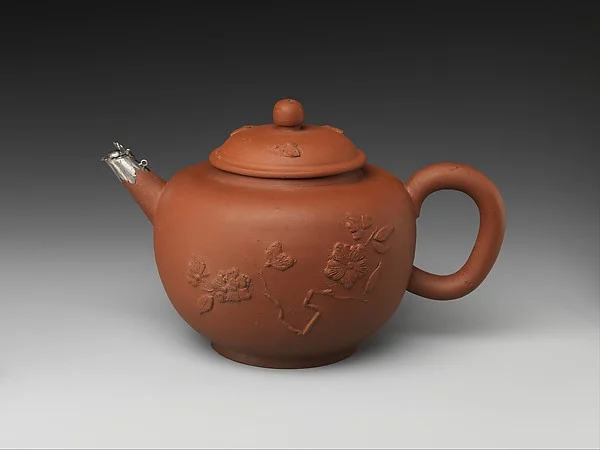
1671–1708 Yixing red stoneware teapot with European silver mounts (The Met)
Museum Open Access · CC0 · The Met
Material proof of East–West trade: an unglazed Yixing teapot fitted with European silver chains and mounts.The Metropolitan Museum of Art (CC0 Open Access) · Accession: Met 200756 · Source
11 · December 1773 · Boston HarborHistorical Record

The 1773 Boston Tea Party: Chinese Tea as Spark of Atlantic Revolution

Parliament's Tea Act of 1773 granted the East India Company direct monopoly sales in North America to clear surplus Chinese cargoes—prompting colonists to dump 342 chests into Boston Harbor and igniting revolution.

By the 1770s, North American colonists drank vast quantities of Chinese tea, much of it smuggled via Dutch channels to evade British Townshend duties. To rescue the debt-laden East India Company, London passed the Tea Act of 1773, allowing direct shipments of surplus Canton tea—mostly Wuyi Bohea alongside Congou and green teas—at prices undercut only by a retained three-pence colonial tax. On December 16, 1773, Sons of Liberty activists dumped 342 chests into Boston Harbor, triggering punitive British decrees and catalyzing the American Revolution.

Rigging of the 1869 British tea clipper Cutty Sark
CC BY-SA 4.0 · Wikimedia Commons
Cutty Sark (1869): built for the high-stakes ocean tea races carrying China's new-season crop to London.Ermell · Wikimedia Commons (CC BY-SA 4.0) · Source
12 · Mid-19th Century · 1820s–1851Historical Record

Opium Triangulation, Wild Assam Tea, and Robert Fortune's 1848 Botanical Transfer

To offset silver drains, British merchants triangulated Bengal opium into China; meanwhile, recognizing wild Assam tea and dispatching botanist Robert Fortune in 1848 to transfer Chinese plants and artisans laid India's estate foundation.

By the 1820s–1830s, British traders resolved Canton's silver drain by smuggling Bengal opium into coastal China to finance tea cargoes—a volatile circuit culminating in the First Opium War (1839–1842). Simultaneously, Britain sought tea independence inside India. After Singpho leaders showed wild Camellia sinensis var. assamica to Robert Bruce in the 1820s, early colonial estates faltered without processing expertise. In 1848, the East India Company commissioned Scottish botanist Robert Fortune to infiltrate closed tea districts in Anhui, Zhejiang, and Fujian; using sealed Wardian glass cases, he shipped thousands of seedlings and recruited eight Chinese tea makers to northern India, though tropical Assamica hybrids ultimately drove South Asia's commercial triumph.

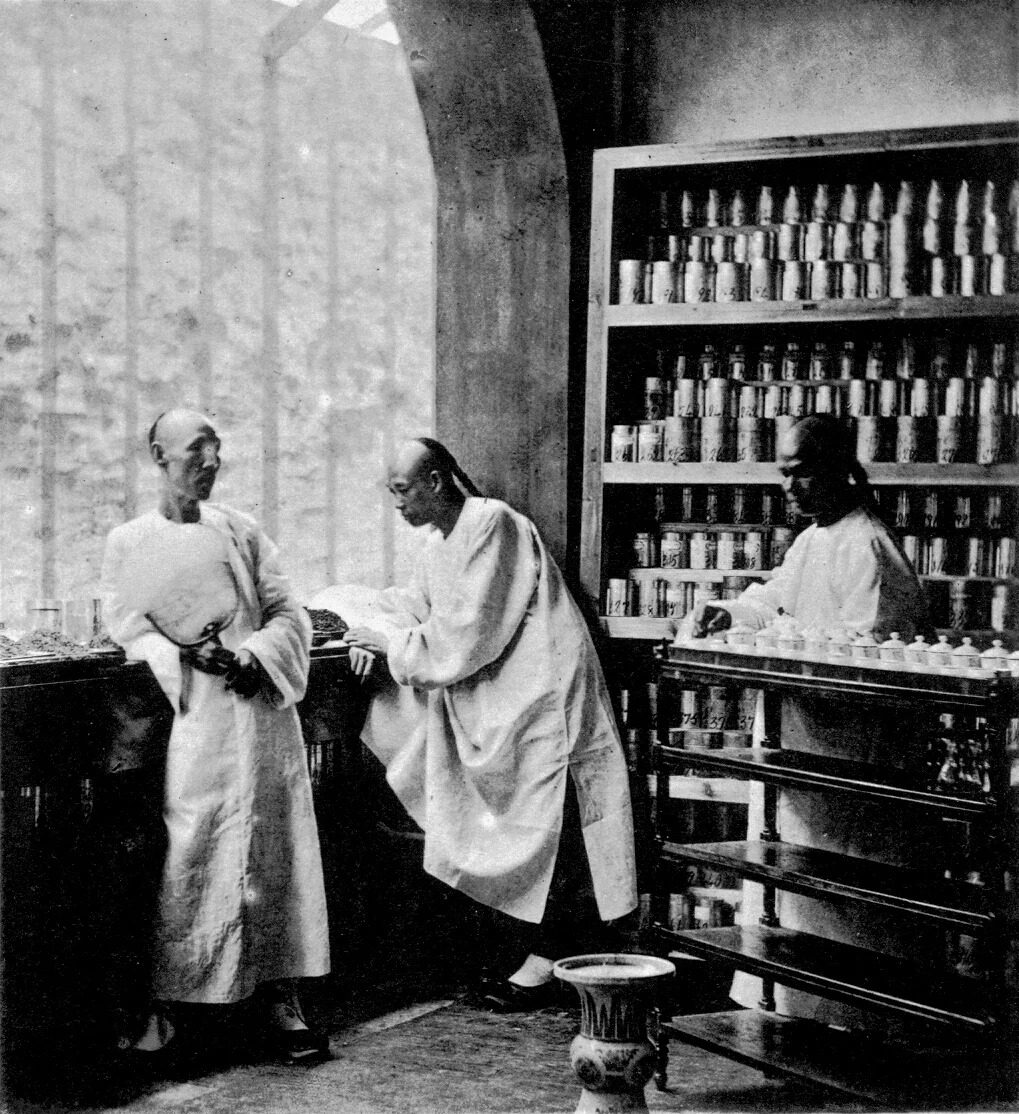
19th-century historical photograph of a tea-tasting room in Canton by John Thomson
Museum Open Access · CC0 · Wikimedia Commons
Archival Photograph (c. 1870, John Thomson): Canton tea-tasting room lined with tasting cups and export tea chests.John Thomson · Wikimedia Commons (Public Domain) · Source
13 · 1867–1880s · Colonial Ceylon (Sri Lanka)Historical Record

1867 Ceylon Tea & Coffee Rust: How Leaf Blight Transformed an Island Economy

In 1867, James Taylor planted Ceylon's first commercial tea estate at Loolecondera; when coffee leaf rust devastated the island's cash crop after 1869, planters pivoted wholesale to what became world-famous Ceylon tea.

In 1867, Scottish planter James Taylor cleared nineteen acres at Loolecondera Estate near Kandy to establish Ceylon's first commercial tea garden. Barely two years later, the fungal coffee leaf rust (Hemileia vastatrix) swept across the island's booming coffee estates, wiping out plantations within a decade. Planters backed by imperial credit and South Indian Tamil estate labor rapidly replanted central highlands from Nuwara Eliya to Uva with tea bushes—laying the foundation for Sri Lanka's enduring leadership in orthodox whole-leaf exports.

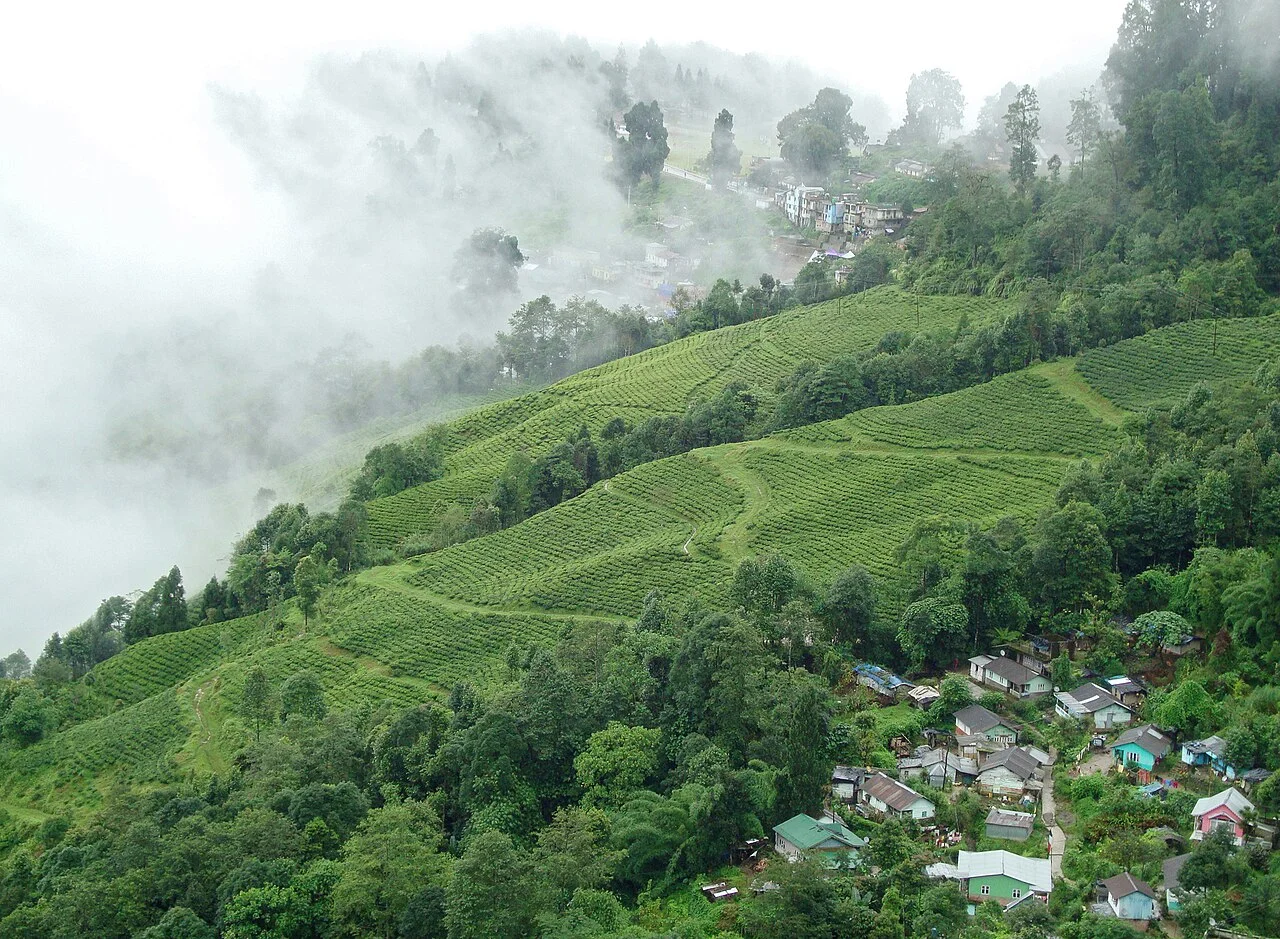
Misty terraced hillside tea plantation in Darjeeling, India
CC BY-SA 3.0 · Wikimedia Commons
Himalayan Plantation Landscape: 19th-century colonial tea estates reshaped highland ecology and labor systems.Joydeep · Wikimedia Commons (CC BY-SA 3.0) · Source
14 · 1880s–1930sHistorical Record

Colonial Plantation Labor, CTC Mechanization, and Lipton's Vertical Branding

Powered by steamships, penal indenture labor in Assam, Thomas Lipton's vertically integrated branded cartons, and 1930s CTC rolling-cutting machines, British imperial plantations eclipsed China in Western black tea markets.

By the late 1880s, Assam and coffee-blight-converted Ceylon overtook China in London auctions. Historian Andrew B. Liu demonstrates that Assam estates used penal indenture statutes restricting worker mobility alongside fierce price competition from piece-rate Chinese workshops. Meanwhile, Erika Rappaport shows how Thomas Lipton bought Ceylon estates in the 1890s, paired vertical integration with sealed branded cartons, and harnessed temperance and imperial advertising to manufacture mass taste. In 1930–1931, William McKercher's invention of the CTC (Crush-Tear-Curl) machine in Assam enabled rapid, uniform, fast-infusing black tea ideal for milk and teabags—a model soon transplanted to British Kenya.

Misty terraced hillside tea plantation in Darjeeling, India
CC BY-SA 3.0 · Wikimedia Commons
Himalayan Plantation Landscape: 19th-century colonial tea estates reshaped highland ecology and labor systems.Joydeep · Wikimedia Commons (CC BY-SA 3.0) · Source
15 · 1906 · Published in New YorkHistorical Record

Okakura Kakuzō's The Book of Tea (1906): Translating East Asian Tea Aesthetics

Written in English by Boston MFA curator Okakura Kakuzō in 1906, The Book of Tea introduced 'Teaism,' Taoist/Zen aesthetics, and the chashitsu tearoom to Western audiences, becoming a classic bridge of cross-cultural criticism.

Drafted in Boston amid Meiji-era debates over Asian cultural identity, Okakura Kakuzō's seven-chapter English essay collection The Book of Tea (1906) defined 'Teaism' as 'a religion of the art of life'—the worship of beauty amid everyday imperfection. Tracing tea's arc through Tang boiling, Song whisking, Daoist emptiness, Zen discipline, the modest chashitsu, flower masters, and Sen no Rikyū's death, Okakura challenged Western industrial hubris on philosophical grounds. Modern scholars read the work carefully for its idealization and Meiji-era nationalism, yet it remains a foundational text in global comparative aesthetics and architectural modernism.

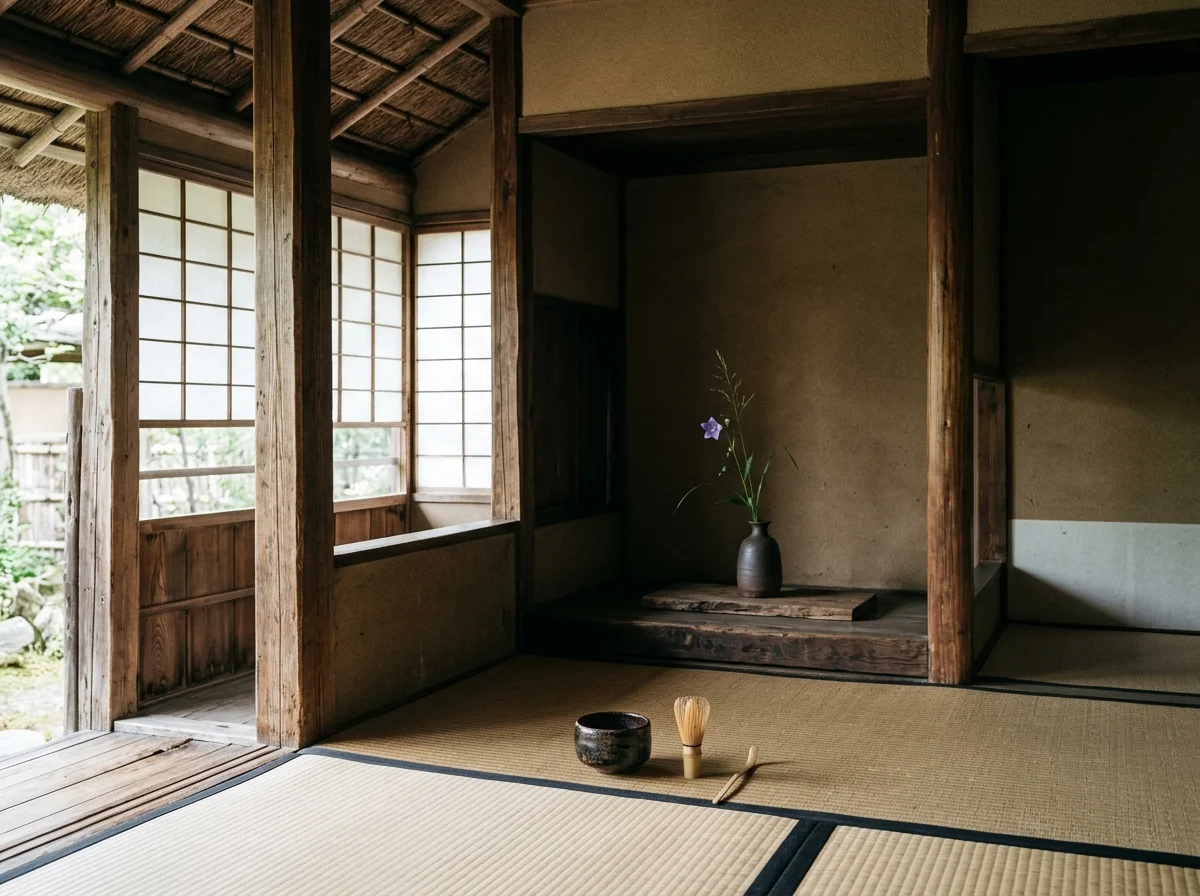
Traditional Japanese chashitsu tea room with tatami, shoji paper screens, chabana, and matcha bowl
Curatorial Visual (AI Generated)
Japanese Chashitsu: diffused shoji light, single-stem chabana, and handmade chawan define wabi proportion.Curatorial Architectural Study (AI Generated)
16 · Early 20th Century · 1904 St. Louis & 1908 New YorkHistorical Record

1904 Iced Tea & 1908 Teabags: Standardizing Tea for Modern Convenience

At the 1904 St. Louis World's Fair, Richard Blechynden chilled black tea over ice for sweltering crowds; around 1908, New York merchant Thomas Sullivan's silk sample pouches sparked the teabag revolution.

For most of its history, tea meant hot infusions from loose leaf or powder. Two early-twentieth-century American shifts upended those habits: during the sweltering 1904 St. Louis World's Fair, tea promoter Richard Blechynden poured black tea through iced coils, turning regional sweet iced tea into a nationwide American staple (today over 80% of U.S. tea is drunk iced). Around 1908, New York wholesaler Thomas Sullivan mailed tea samples in small sewn silk bags; customers steeped the pouches whole, prompting demand for heat-sealed paper teabags and fast-infusing broken-leaf and CTC blends.

Whole tea leaves unfolding freely in a clear steeping vessel
CC BY-SA 3.0 · Wikimedia Commons
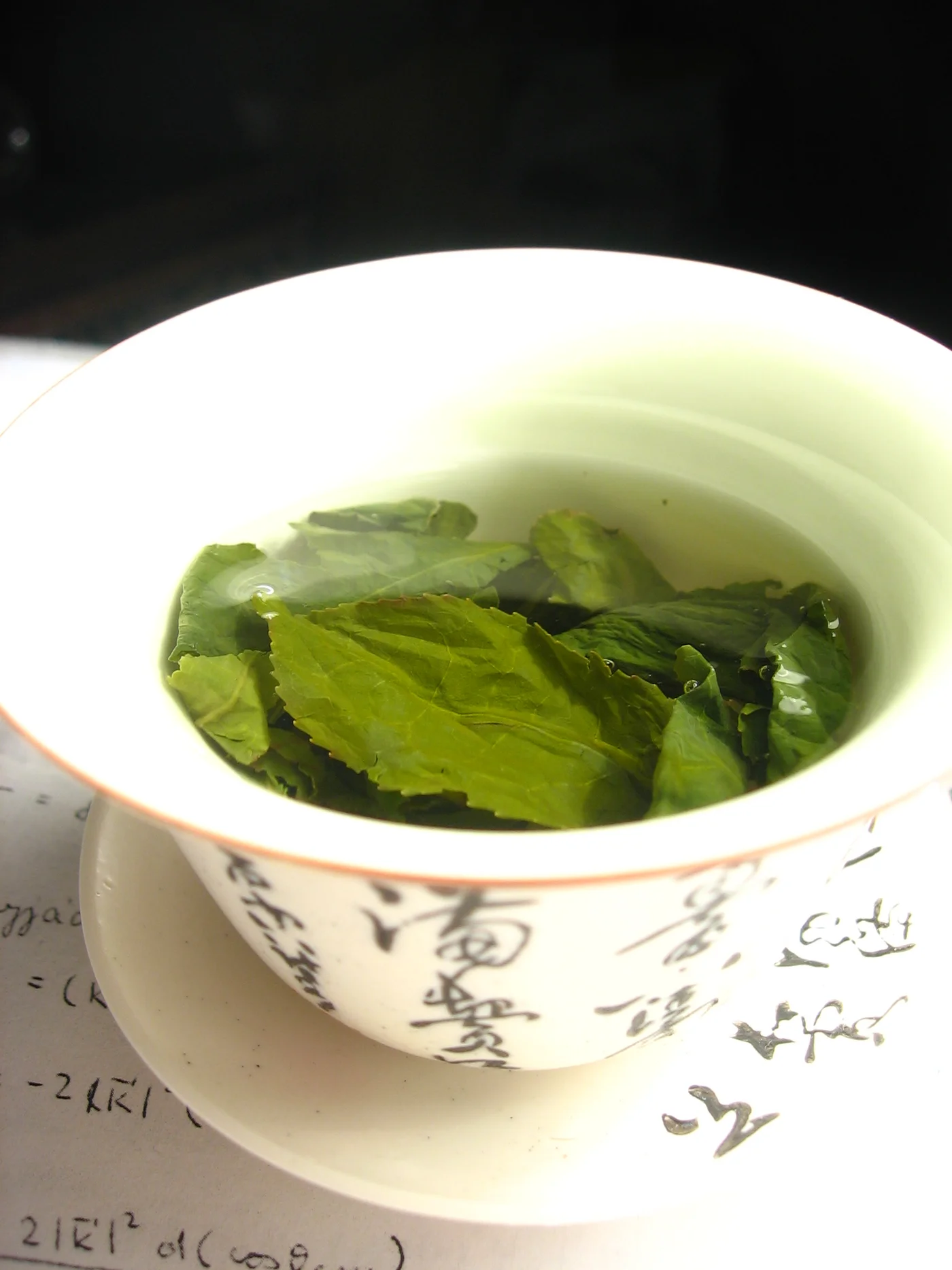
Everyday Simplicity: even an ordinary glass cup lets you watch whole leaves unfurl without expensive hardware.Wikimol · Wikimedia Commons (CC BY-SA 3.0) · Source
17 · 1973–1990s · Three Modern East Asian Tea RevolutionsHistorical Record

1973–1990s Turning Points: Ripe Pu-erh, Taiwanese Bubble Tea & Japanese Canned RTD Tea

Late twentieth-century East Asia birthed three transformative tea innovations: Yunnan's 1973–75 ripe Pu-erh wet-piling, Taiwan's 1980s shaken milk and boba teas, and Japan's unsweetened ready-to-drink bottled green tea.

Between the 1970s and 1990s, East Asian tea makers reinvented both fermentation and convenience. From 1973 to 1975, Yunnan factories perfected controlled microbial wet-piling to launch modern Ripe (Shu) Pu-erh. In the 1980s, Taiwanese tea shops combined cocktail-shaker aeration with black tea, milk, and tapioca pearls to ignite global bubble-tea culture—the direct ancestor of today's fresh-tea chains. Meanwhile, Japanese beverage engineers pioneered unsweetened canned oolong and stabilized bottled green tea (solving chlorophyll oxidation for supermarket shelves), bringing pure brewed leaf into 24-hour vending machines.

Unwrapped compressed Yunnan Pu-erh tea cake
CC BY-SA 4.0 · Wikimedia Commons
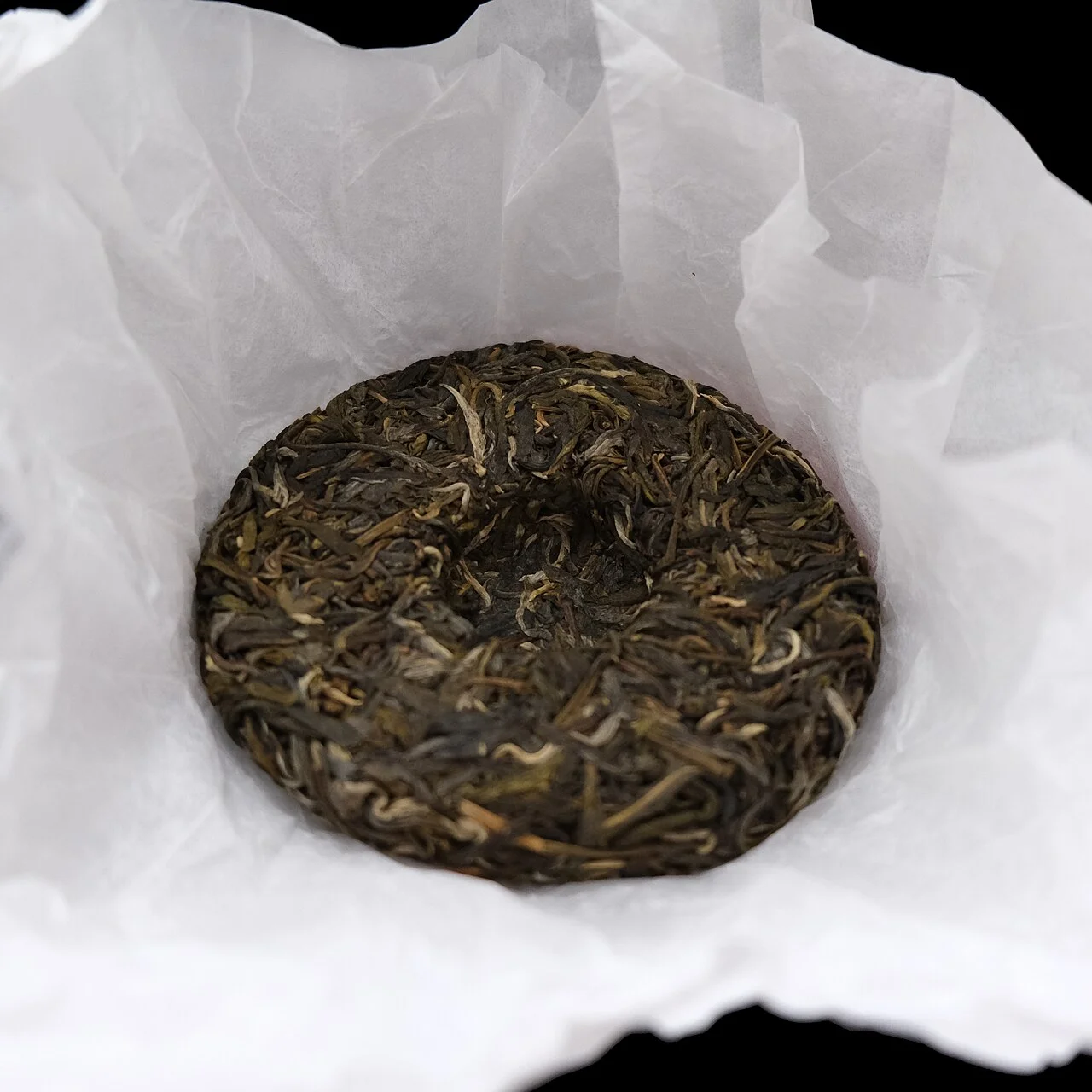
Regional Specialty · Yunnan Pu-erh Cake: sun-dried large-leaf tea steamed into discs; raw and wet-piled ripe forms diverge chemically.Ash Crow · Wikimedia Commons (CC BY-SA 4.0) · Source
18 · November 2022 · UNESCO ICHHistorical Record

UNESCO Inscription of Traditional Chinese Tea Processing & Social Practices (01884)

Inscribed in 2022 under Nomination File No. 01884, UNESCO recognized China's six tea processing traditions alongside community rituals—from Gongfu cha hospitality to ethnic minority tea customs—as living intangible heritage.

On November 29, 2022, UNESCO inscribed 'Traditional tea processing techniques and associated social practices in China' (Nomination File No. 01884) onto the Representative List of the Intangible Cultural Heritage of Humanity. Uniting 44 national heritage elements across 15 provinces and municipalities, the dossier honors artisanal mastery across all six tea categories plus scented teas—such as pan-firing, rolling, bruising, yellowing, and microbial piling—while affirming that craftsmanship is inseparable from daily social rituals including Chaoshan Gongfu tea, ethnic Yao oil tea, Bai Three-Course tea, and neighborhood teahouse conviviality.

Chaoshan Gongfu tea tray with small red clay teapot, three thin porcelain cups, and rising steam
Curatorial Visual (AI Generated)
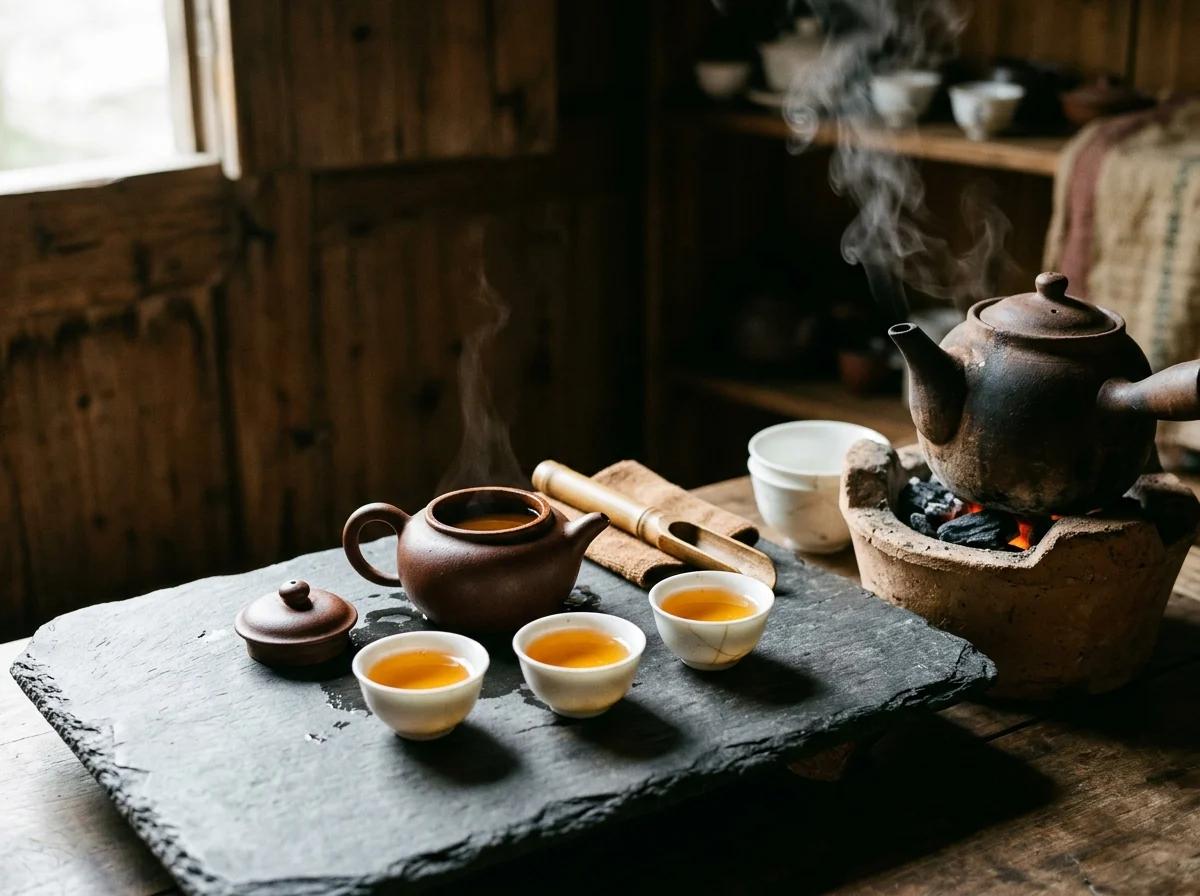
Chaoshan Gongfu Tea: high leaf-to-water ratio and three delicate porcelain cups turn precision into hospitality.Curatorial Cultural Scene (AI Generated)
19 · 2025 · Contemporary Global WaveIndustry Data

The 2025 Wave: Japan's ¥72.1B Matcha Surge, China's 418.8k t Exports & >¥300B Fresh-Tea Evolution

In 2025, Japanese green tea exports surged to ¥72.1B JPY (~84% powdered matcha), while China shipped 418,800 tonnes abroad and saw domestic freshly-made tea drinks surpass RMB 300B—even as smallholders still produce >60% of global leaf.

Official 2025 figures reveal a striking divergence between traditional origin agriculture and urban beverage innovation. Japan's Ministry of Agriculture, Forestry and Fisheries (MAFF) reported record 2025 green tea exports of ¥72.1 billion JPY (+98.2% YoY, 12,612 tonnes), roughly 84% driven by powdered teas led by matcha for global cafes. In China, CTMA and customs statistics recorded 3.6403M tonnes of dry rough tea output and 418,800 tonnes of exports (+11.93% YoY, USD 1.546B; 88.11% green tea), while domestic freshly-made tea beverage retail surpassed RMB 300 billion alongside RMB 309.93 billion in traditional loose-leaf sales. Yet FAO and IISD emphasize that over 60% of global tea still comes from climate-exposed smallholders capturing a narrow share of retail value.

Mechanized rolling and sorting machinery inside a tea processing factory
CC BY 4.0 · Wikimedia Commons
Industrial Processing: mechanized rolling and sorting lower cost and stabilize supply, sharpening tensions with terroir diversity.N. Vivekananthamoorthy · Wikimedia Commons (CC BY 4.0) · Source

Verified References & Provenance

  1. [01] c. 760–780Source

    The Classic of Tea (Chajing) by Lu Yu

    Lu Yu (c. 760–780 CE)

    The earliest surviving systematic monograph on tea, organized into ten chapters covering origins, tools, processing, vessels, boiling, drinking, historical anecdotes, regions, omissions, and scroll diagrams.

  2. [02] 2009Source

    The True History of Tea

    Victor H. Mair & Erling Hoh

    Philological and historical synthesis tracing tea from southwest China/Southeast Asia across overland 'cha' and maritime 'te' linguistic and trade corridors.

  3. [03] 1979Source

    Chen Chuan's Six-Category Tea Classification (1979) & Camellia sinensis Phylogeography

    Chen Chuan (1979) / Chen Zongmao (ed., China Tea Classic)

    Chen Chuan (1979) established the modern scientific taxonomy of six tea families based on processing mechanisms (enzyme inactivation, withering, yellowing, semi-oxidation, full oxidation, microbial piling) rather than linear fermentation; Chen Zongmao's China Tea Classic synthesizes modern agronomy and tea chemistry.

  4. [04] 2016Source

    Earliest tea as evidence for one branch of the Silk Road across the Tibetan Plateau

    Houyuan Lu, Jianping Zhang, Yimin Yang, Dorian Q. Fuller et al. · 10.1038/srep18955

    Uses calcium phytolith micromorphology and UPLC-MS/GC-MS detection of caffeine and L-theanine to verify tea buds in Han Yangling Mausoleum (c. 141 BCE) and Gurgyam Cemetery, western Tibet (2nd–3rd c. CE).

  5. [05] 2026Source

    The Metropolitan Museum of Art Open Access Collection (CC0)

    The Metropolitan Museum of Art

    Provides CC0 Public Domain imagery and provenance data for Jian ware, Yue ware, Yixing stoneware, Raku chawan, and Georgian silver teapots.

  6. [06] 2026Source

    The Cleveland Museum of Art Open Access Collection (CC0)

    Cleveland Museum of Art

    Provides CC0 Public Domain metadata and imagery for Song Jian ware, Yue ware ewers, and Muromachi iron kama kettles.

  7. [07] 1211Source

    Kissa Yōjōki (Drinking Tea for Health, 1211) by Myōan Eisai

    Myōan Eisai (1141–1215)

    Japan's earliest extant tea treatise (1211), introducing Song-style powdered tea cultivation and preparation alongside Zen monastic practice.

  8. [08] 2024Source

    Urasenke Official Introduction to Chado (The Way of Tea)

    Urasenke Foundation

    Authoritative overview of Chado lineage from Sen no Rikyū, the four principles Wa-Kei-Sei-Jaku, and modern tea gathering choreography.

  9. [09] 2023Source

    The Metropolitan Museum of Art: The Japanese Tea Ceremony

    The Metropolitan Museum of Art

    Heilbrunn Timeline essay examining the transition from prized Chinese karamono utensils to wabi-cha Raku wares and bamboo scoops.

  10. [10] 2017Source

    A Thirst for Empire: How Tea Shaped the Modern World

    Erika Rappaport · ISBN 9780691167114

    Princeton University Press study demonstrating how temperance movements, imperial propaganda, branding, and corporate integration (such as Lipton) manufactured British imperial tea taste.

  11. [11] 2009Source

    For All the Tea in China: How England Stole the World's Favorite Drink and Changed History

    Sarah Rose

    Narrative account of Scottish botanist Robert Fortune's 1848 East India Company expedition into Anhui and Fujian to transfer Camellia sinensis germplasm, Wardian-case specimens, and skilled workers to India.

  12. [12] 2021Source

    Royal Botanic Gardens, Kew: The History of Tea from China to India

    Royal Botanic Gardens, Kew

    Traces botanical classification of Camellia sinensis var. assamica, Wardian-case plant transport, and Kew's role in colonial botanical networks.

  13. [13] 2003Source

    Tea: Addiction, Exploitation, and Empire

    Roy Moxham

    Historical synthesis by a former tea planter tracing Britain's tea dependency, opium triangulation, and harsh plantation labor conditions across Assam, Ceylon, and Africa.

  14. [14] 2020Source

    Tea War: A History of Capitalism in China and India

    Andrew B. Liu · 10.12987/yale/9780300243734.001.0001

    Yale University Press comparative history of Huizhou, Wuyi, and Assam, showing how both colonial penal indenture and Chinese piece-rate time discipline constituted dynamic Asian capitalist accumulation.

  15. [15] 1906Source

    The Book of Tea

    Okakura Kakuzō · Project Gutenberg #769

    Published in English in 1906 across seven chapters while Okakura curated Asian art at the Museum of Fine Arts, Boston; interprets Teaism, Taoist/Zen aesthetics, the chashitsu, and tea masters.

  16. [16] 2022Source

    Traditional tea processing techniques and associated social practices in China

    UNESCO Intangible Cultural Heritage · Nomination File No. 01884

    Inscribed in 2022; documents the six core Chinese tea categories, reprocessed teas, and their embedded social rituals across 44 national heritage items.

  17. [17] 2026Source

    Japan Ministry of Agriculture, Forestry and Fisheries (MAFF) 2025 Green Tea Export Statistics

    Ministry of Agriculture, Forestry and Fisheries of Japan (MAFF)

    Documents record 2025 Japanese green tea exports of JPY 72.1 billion (+98.2% YoY) and 12,612 tonnes, with powdered green tea (led by matcha) representing ~84% of export value.

  18. [18] 2026Source

    2025 China Tea Import and Export Briefing

    China Tea Marketing Association (CTMA)

    Based on China Customs data: 2025 tea exports reached 418,800 tonnes (+11.93% YoY), USD 1.546 billion (+8.91%), avg price USD 3.69/kg (-2.70%); green tea accounted for 88.11% of volume.

  19. [19] 2026Source

    2025 China Tea Production-Sales Analysis & 2026 Industry Transformation Report

    China Tea Marketing Association (CTMA)

    Reports 2025 dry rough tea output of 3.6403M tonnes (RMB 333.19B), traditional domestic sales of 2.3777M tonnes (RMB 309.93B, avg RMB 130.35/kg), and newly-made tea retail market exceeding RMB 300B.

  20. [20] 2025Source

    FAO Beverages: Tea Markets & Trade Overview & International Tea Day Address

    Food and Agriculture Organization of the United Nations (FAO)

    Notes in 2025 International Tea Day materials that over 60% of global tea is produced by smallholders; FAO IGG on Tea tracks processed made-tea output and uneven farm-gate price transmission.

  21. [21] 2025Source

    International Tea Committee (ITC) & National Tea Boards (Kenya, India, Sri Lanka) 2024–2025 Export Data

    ITC / Tea Board of Kenya / Sri Lanka Tea Board / Tea Board India

    Aggregates 2024–2025 national export benchmarks: Kenya ~652.8k t (~$2.20–$2.27/kg bulk CTC); Sri Lanka ~258k t (~$5.50–$5.83/kg orthodox/value-added); India ~257.9k t (~$3.40/kg).