Core Research Question
Are East Asian tea rituals preserving mindfulness and aesthetic care in modern cities, or are they drifting into costly performances dependent on rare vessels, studio real estate, and leisure privilege?
1. Historical Context
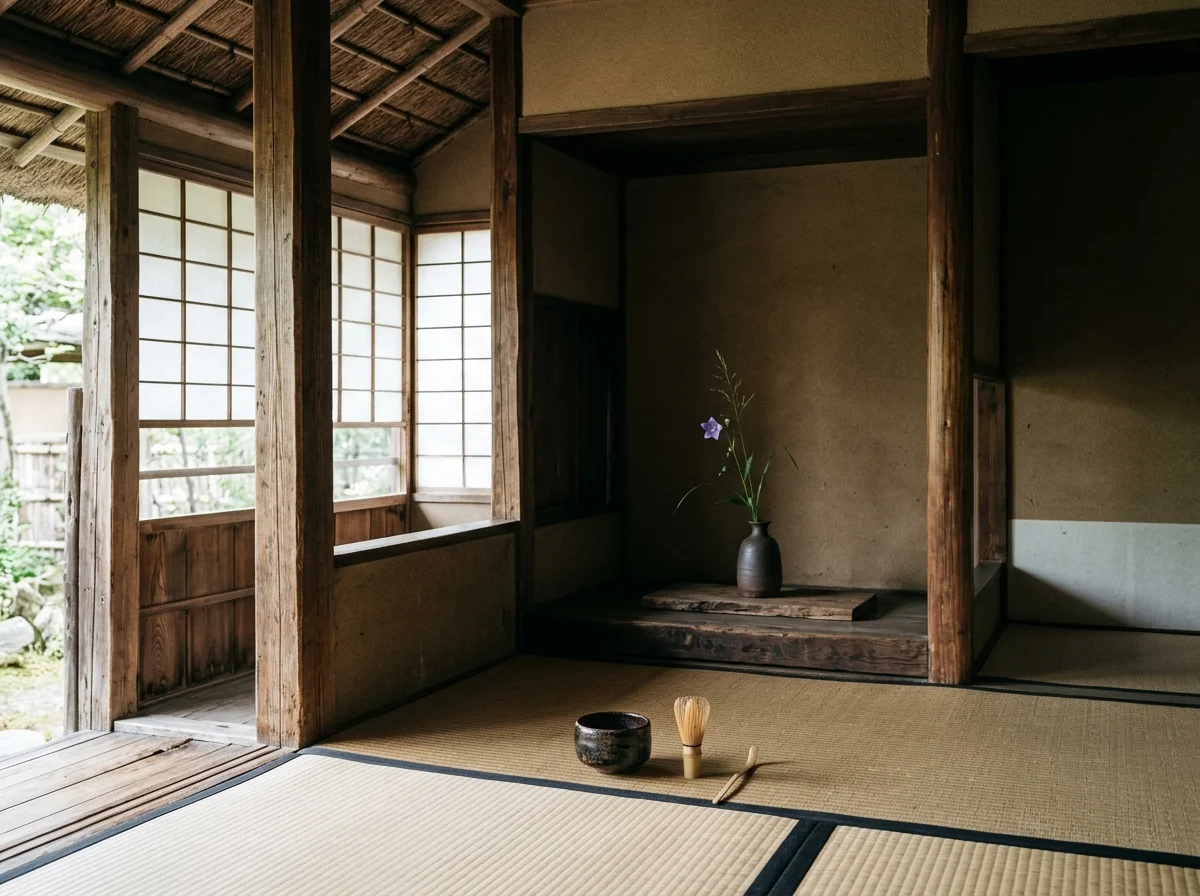
East Asian tea rituals have oscillated for centuries between elite ostentation and egalitarian austerity. When 16th-century Japanese masters from Murata Jukō to Sen no Rikyū pioneered wabi-cha, they actively rebelled against shogunal displays of priceless imported Chinese karamono wares—shrinking the chashitsu into a humble thatched hut and elevating rough local Raku bowls and bamboo scoops.
In 1906, Okakura Kakuzō's The Book of Tea framed Teaism for Western readers as 'a cult founded on the adoration of the beautiful among the sordid facts of everyday existence.' Meanwhile, in China, bamboo-chair Chengdu teahouses, Cantonese yum cha, and Chaozhou gongfu tea embedded tea deeply in everyday neighborhood life.
Yet in contemporary cities, the boom in luxury tea salons, Song-style whisking workshops, collectible teaware, and ticketed 'aesthetic gatherings' has widened the gulf between casually drinking tea and performing tea culture.
2. Verified Facts & Empirical Data
As documented by Urasenke and Metropolitan Museum of Art curatorial studies, formal chadō requires sustained apprenticeship, seasonal utensil mastery, and architectural etiquette—factors that translate into substantial tuition, space, and time commitments in modern cities.
By contrast, CTMA 2025 data show where mass everyday consumption actually lives: alongside 2.3777M tonnes of traditional leaf sales (RMB 309.93B, spanning humble desk mugs to private salons), China's >400,000 new-style tea shops (>RMB 300B) and ~22M tonnes of RTD bottled tea (>RMB 100B) absorb the bulk of daily urban frequency.
Commercial reality thus splits the tea world: stripped-down convenience captures mass daily habits, while formal tea spaces—pressured by urban commercial rents—often survive by positioning themselves as high-ticket sanctuary experiences.
Verified Quantitative Observatory
Export Structure, Matcha Surge & Value-Chain Distribution
2025 China Tea Production Mix & Market Segments
2025 · % (Total dry rough tea: 3.6403M tonnes)55.69% of traditional domestic sales (1.324M t)
393.8k t domestic sales
317.2k t domestic sales
246.4k t domestic sales
72.8k t domestic sales
23.5k t domestic sales
3. Multi-Stakeholder Perspectives
Tea Farmers & Craftspeople
Growers themselves drink simply from large bowls; they appreciate spaces that honor good leaf, yet worry excessive utensil fetishism obscures the agricultural craft behind the cup.
Chadō Instructors & Ceramicists
Discipline is an antidote to digital distraction, not pretension. Wood-fired bowls and hand-carved scoops take months to make; tuition and space fees simply cover real studio and craft costs.
Urban Tea Salons & Hospitality Hosts
Under prime urban rents, selling simple RMB 10 pots of tea cannot sustain payroll; shifting toward reservation-only rituals and teaware retail is often an economic survival strategy.
Young Professionals & Newcomers
Drawn to tea's calm, many newcomers nevertheless hesitate at formal teahouse doors for fear of etiquette mistakes or high-pressure utensil sales, opting for desk mugs and cold-brew bottles.
4. Dialectical Clash: Pro vs. Strongest Rebuttal
Supporting Argument
Thesis: Contemporary Tea Rituals Are Stratifying Into Pricey Lifestyle Theater
- Consumer inversion of wabi-sabi: motifs born from deliberate frugality are repackaged as luxury 'Eastern serenity', elevating vessel prices and photo-ready staging over the tea itself.
- Etiquette anxiety deters newcomers: rigid rules around posture, jargon, and requisite tools build higher social barriers than pour-over coffee.
- Real-estate economics: high per-seat minimums turn quiet tea drinking from an everyday neighborhood habit into an occasional status indulgence.
Strongest Counter-Argument
Counter-Thesis: Formal Ritual Protects Deep Attention Without Monopolizing Daily Tea
- Paid curation is not elitism: like concert halls or culinary schools, paying for quiet architecture, dedicated instruction, and artisan ceramics sustains specialized cultural ecosystems.
- Tools serve sensory precision: clay porosity, wall thickness, and pouring rhythm measurably shape heat retention and aroma release—not empty theatrics.
- Daily tea remains free of gatekeeping: desk infusers, cold-brew bottles, and family teapots thrive alongside formal chashitsu, which function like a reference library rather than the only way to drink.
5. Unresolved Questions & Provisional Conclusion
Unresolved Questions
- Between a five-minute commuter tea and a two-hour formal ceremony, can affordable neighborhood teahouses thrive in high-rent cities?
- After discovering Song-style whisking or wabi-sabi rooms on social media, how many young viewers transition into lifelong daily tea drinkers?
- How can traditional lineages maintain rigorous standards while remaining accessible to working people with limited time and budgets?
Evidence-Based Provisional Conclusion
The Way of Tea has not inherently betrayed everyday life; rather, urban real estate, curated visual consumption, and status signaling have priced certain rooms out of reach. From Rikyū's bamboo scoop to a plastic street-side gongfu tray, tea's deepest resilience lies in holding both simplicity and discipline—so long as we never mistake expensive props for the ticket to genuine appreciation.
Verified References & Provenance
- [01] 2024Source
Urasenke Official Introduction to Chado (The Way of Tea)
Urasenke Foundation
Authoritative overview of Chado lineage from Sen no Rikyū, the four principles Wa-Kei-Sei-Jaku, and modern tea gathering choreography.
- [02] 2023Source
The Metropolitan Museum of Art: The Japanese Tea Ceremony
The Metropolitan Museum of Art
Heilbrunn Timeline essay examining the transition from prized Chinese karamono utensils to wabi-cha Raku wares and bamboo scoops.
- [03] 1906Source
The Book of Tea
Okakura Kakuzō · Project Gutenberg #769
Published in English in 1906 across seven chapters while Okakura curated Asian art at the Museum of Fine Arts, Boston; interprets Teaism, Taoist/Zen aesthetics, the chashitsu, and tea masters.
- [04] 1211Source
Kissa Yōjōki (Drinking Tea for Health, 1211) by Myōan Eisai
Myōan Eisai (1141–1215)
Japan's earliest extant tea treatise (1211), introducing Song-style powdered tea cultivation and preparation alongside Zen monastic practice.
- [05] 2026Source
2025 China Tea Production-Sales Analysis & 2026 Industry Transformation Report
China Tea Marketing Association (CTMA)
Reports 2025 dry rough tea output of 3.6403M tonnes (RMB 333.19B), traditional domestic sales of 2.3777M tonnes (RMB 309.93B, avg RMB 130.35/kg), and newly-made tea retail market exceeding RMB 300B.
Further Reading in Gallery VII