Anhua Fuzhuan Brick Tea (Golden Flower Dark Tea)
安化黑茶·茯砖
Anhua County, Zijiang River Basin, Hunan
100°C
1:20–1:25 (6–8 g per 150 ml, or 1:100 simmered)
20–30 s after rinse, or simmer gently 3–5 min
Yixing clay pot, gaiwan, or simmering clay kettle (10+)
History & Provenance
Historically pressed during midsummer in Jingyang, Shaanxi from Hunan Anhua dark rough tea along northwestern trade routes, Fuzhuan production moved directly to Anhua in the 1950s. Its defining internal golden specks are beneficial colonies of Eurotium cristatum ('golden flowers').
Cultivar & Raw Leaf
Anhua dark rough tea made from mature shoots of local Yuntaishan cultivars—heat-fixed, rolled, wet-piled, and dried over traditional pine-wood seven-star hearths.
Processing Craft
Steamed and pressed into dense bricks, then incubated for 15–20 days under controlled warmth and humidity ('blooming') so Eurotium cristatum grows through the brick interior, transforming harsh polyphenols into mellow sweetness.
Dry Leaf Appearance
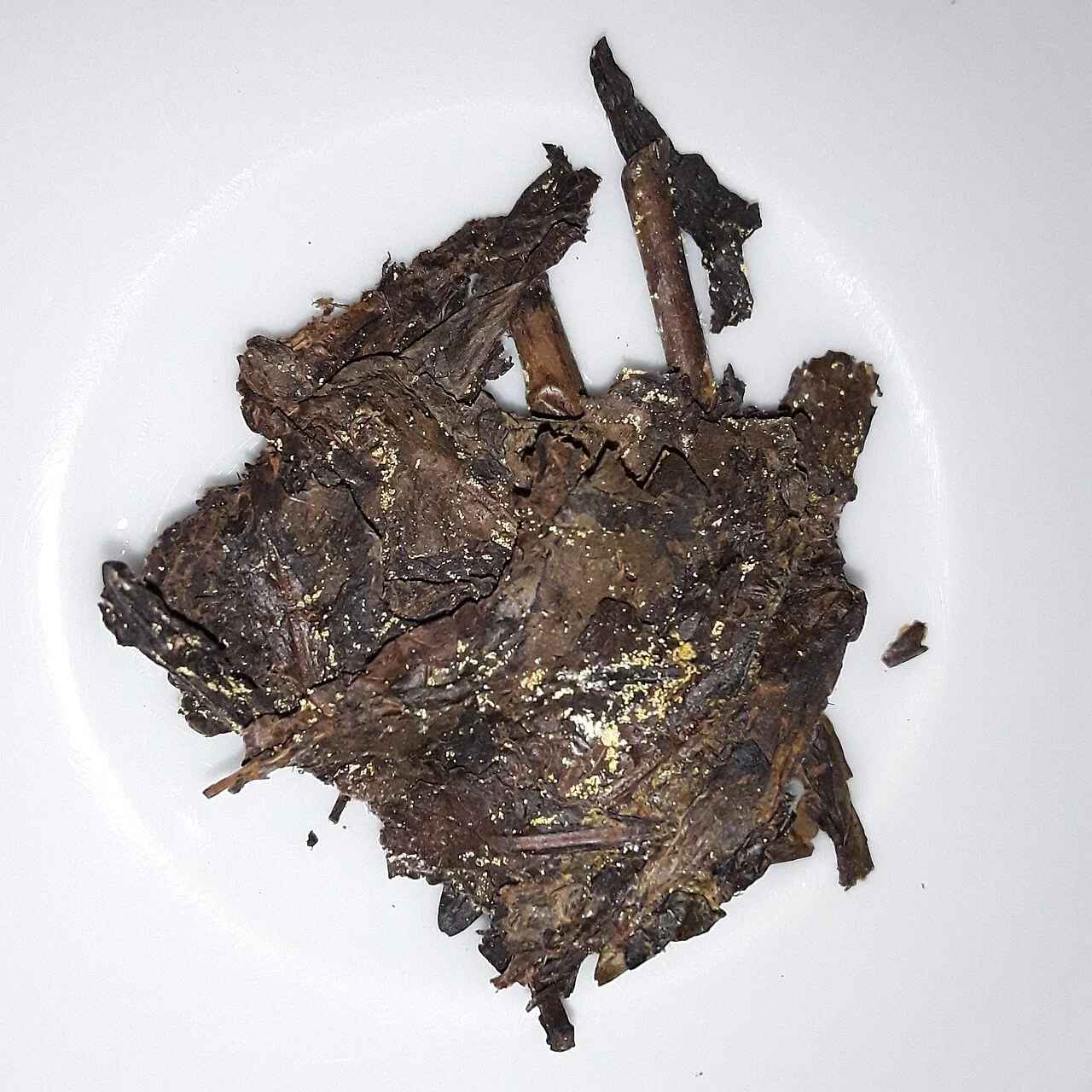
Compact dark-brown brick; breaking the interior reveals abundant, even flecks of bright golden Eurotium spores.
Brewed Liquor Color
Clear burnt-orange to rich amber-red.
Aroma & Palate Profile
Characteristic 'golden-flower' aroma—resembling sweet dried chrysanthemum, warm cedar, and subtle pine hearth smoke. — Velvety, sweet, and remarkably digestible; microbial enzymes tame coarse leaf astringency into a comforting, rounded broth.
Practical Buyer & Drinker Guide
Price Benchmarks, Authenticity Tips & Storage
Reference Price Range
Heritage everyday bricks/baskets ~$14–$40/500g; clean 8+ yr aged dark teas ~$60–$220+/500g
Authenticity & Buying Tips
Cleanliness comes first: welcome bright golden Eurotium specks in Fuzhuan, but reject fuzzy grey/green mold or acrid cellar mustiness.
Home Storage Advice
Age at room temperature inside clean breathable cartons or unglazed jars, well away from dampness and cooking odors.
Related Teas in This Category
Signature cooling 'betel-nut' spice alongside aged cedar, faint pine smoke, herbal ginseng hints, and sweet jujube.
Clean aged wood, toasted caramel, and cooked red date—remaining pure even during prolonged boiling.
Grounded aged oak, toasted grain sweetness, and faint herbal freshness.
Verified References & Provenance
- [01] 1979Source
Chen Chuan's Six-Category Tea Classification (1979) & Camellia sinensis Phylogeography
Chen Chuan (1979) / Chen Zongmao (ed., China Tea Classic)
Chen Chuan (1979) established the modern scientific taxonomy of six tea families based on processing mechanisms (enzyme inactivation, withering, yellowing, semi-oxidation, full oxidation, microbial piling) rather than linear fermentation; Chen Zongmao's China Tea Classic synthesizes modern agronomy and tea chemistry.
- [02] 2022Source
Traditional tea processing techniques and associated social practices in China
UNESCO Intangible Cultural Heritage · Nomination File No. 01884
Inscribed in 2022; documents the six core Chinese tea categories, reprocessed teas, and their embedded social rituals across 44 national heritage items.