Ya'an Kangzhuan (Sichuan Tibetan Dark Brick Tea)
雅安藏茶·康砖
Ya'an (Starting Hub of the Sichuan-Tibet Tea-Horse Road), Sichuan
100°C
1:20 steeped; 1:100 simmered (10 g per liter)
30–60 s steep or 5–10 min gentle boil
Simmering clay kettle, Yixing pot, or thermos (12+)
History & Provenance
Carried for centuries by porters and mule caravans from Ya'an over Erlang Mountain into Kangding and Tibet, Sichuan border dark tea forms the indispensable base of Tibetan butter tea and plain boiled tea. Named after the Kham (Kang) trading hub, Kangzhuan undergoes unusually thorough microbial fermentation.
Cultivar & Raw Leaf
Mature summer and autumn harvests including red shoots and tender stems, providing abundant polysaccharides for deep microbial conversion.
Processing Craft
Alternating pan-fixation and rolling lead into prolonged multi-stage wet-piling lasting a month or longer, followed by steaming and compression into rounded bricks.
Dry Leaf Appearance
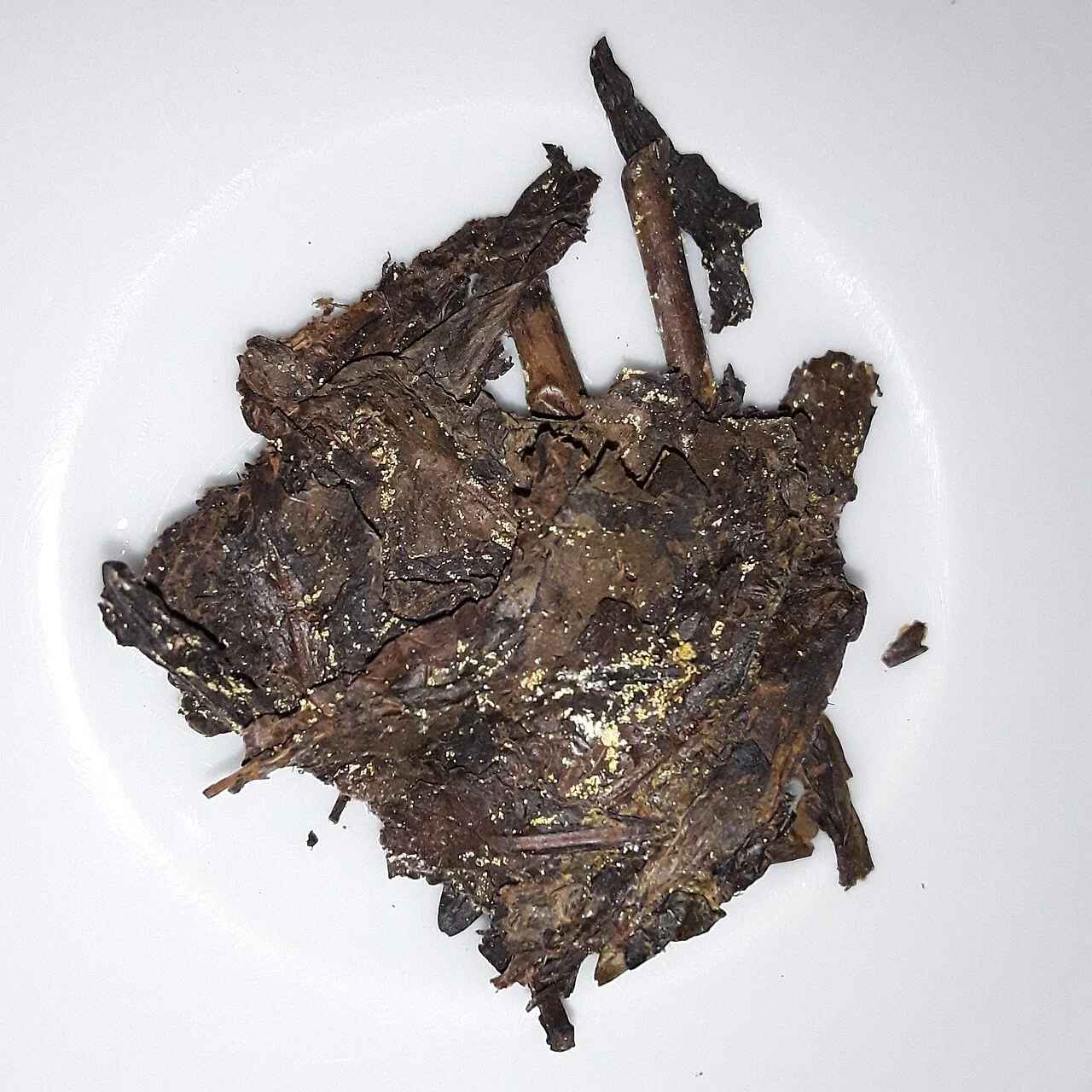
Tightly compressed deep-brown brick showing interwoven mature leaves and woody stems.
Brewed Liquor Color
Deep, clear mahogany-red like concentrated jujube broth.
Aroma & Palate Profile
Clean aged wood, toasted caramel, and cooked red date—remaining pure even during prolonged boiling. — Exceptionally soft, sweet, and zero-astringency; equally suited to plain boiling or simmering with butter, milk, and salt.
Practical Buyer & Drinker Guide
Price Benchmarks, Authenticity Tips & Storage
Reference Price Range
Heritage everyday bricks/baskets ~$14–$40/500g; clean 8+ yr aged dark teas ~$60–$220+/500g
Authenticity & Buying Tips
Cleanliness comes first: welcome bright golden Eurotium specks in Fuzhuan, but reject fuzzy grey/green mold or acrid cellar mustiness.
Home Storage Advice
Age at room temperature inside clean breathable cartons or unglazed jars, well away from dampness and cooking odors.
Related Teas in This Category
Characteristic 'golden-flower' aroma—resembling sweet dried chrysanthemum, warm cedar, and subtle pine hearth smoke.
Signature cooling 'betel-nut' spice alongside aged cedar, faint pine smoke, herbal ginseng hints, and sweet jujube.
Grounded aged oak, toasted grain sweetness, and faint herbal freshness.
Verified References & Provenance
- [01] 1979Source
Chen Chuan's Six-Category Tea Classification (1979) & Camellia sinensis Phylogeography
Chen Chuan (1979) / Chen Zongmao (ed., China Tea Classic)
Chen Chuan (1979) established the modern scientific taxonomy of six tea families based on processing mechanisms (enzyme inactivation, withering, yellowing, semi-oxidation, full oxidation, microbial piling) rather than linear fermentation; Chen Zongmao's China Tea Classic synthesizes modern agronomy and tea chemistry.
- [02] 2022Source
Traditional tea processing techniques and associated social practices in China
UNESCO Intangible Cultural Heritage · Nomination File No. 01884
Inscribed in 2022; documents the six core Chinese tea categories, reprocessed teas, and their embedded social rituals across 44 national heritage items.
- [03] 2009Source
The True History of Tea
Victor H. Mair & Erling Hoh
Philological and historical synthesis tracing tea from southwest China/Southeast Asia across overland 'cha' and maritime 'te' linguistic and trade corridors.