Hubei Qingzhuan Brick Tea
湖北青砖
Chibi (Yangloudong Historic Tea Town), Hubei
100°C
1:20 steeped; 1:100 simmered
30–45 s steep; 5–8 min simmer
Clay pot, ceramic kettle, or simmering pot (10+)
History & Provenance
Yangloudong in Chibi served as a major southern staging town of the Ten-Thousand-Li Tea Road. Shanxi and Russian merchants pressed coarse Hubei dark tea into standardized rectangular bricks shipped via Hankou, Zhangjiakou, and Kyakhta across the Mongolian steppe to Moscow.
Cultivar & Raw Leaf
Mature mid-to-late-season shoots and leaves from the Mufu foothills, traditionally stratified into finer surface leaf and coarser interior leaf.
Processing Craft
Heat-fixed, rolled, and sun-dried rough leaf undergoes moistening and solid-state microbial piling, aging, sorting, steaming, and heavy mechanical pressing into iconic rectangular bricks.
Dry Leaf Appearance
Smooth dark olive-brown rectangular brick stamped with traditional trade marks, dense and firm.
Brewed Liquor Color
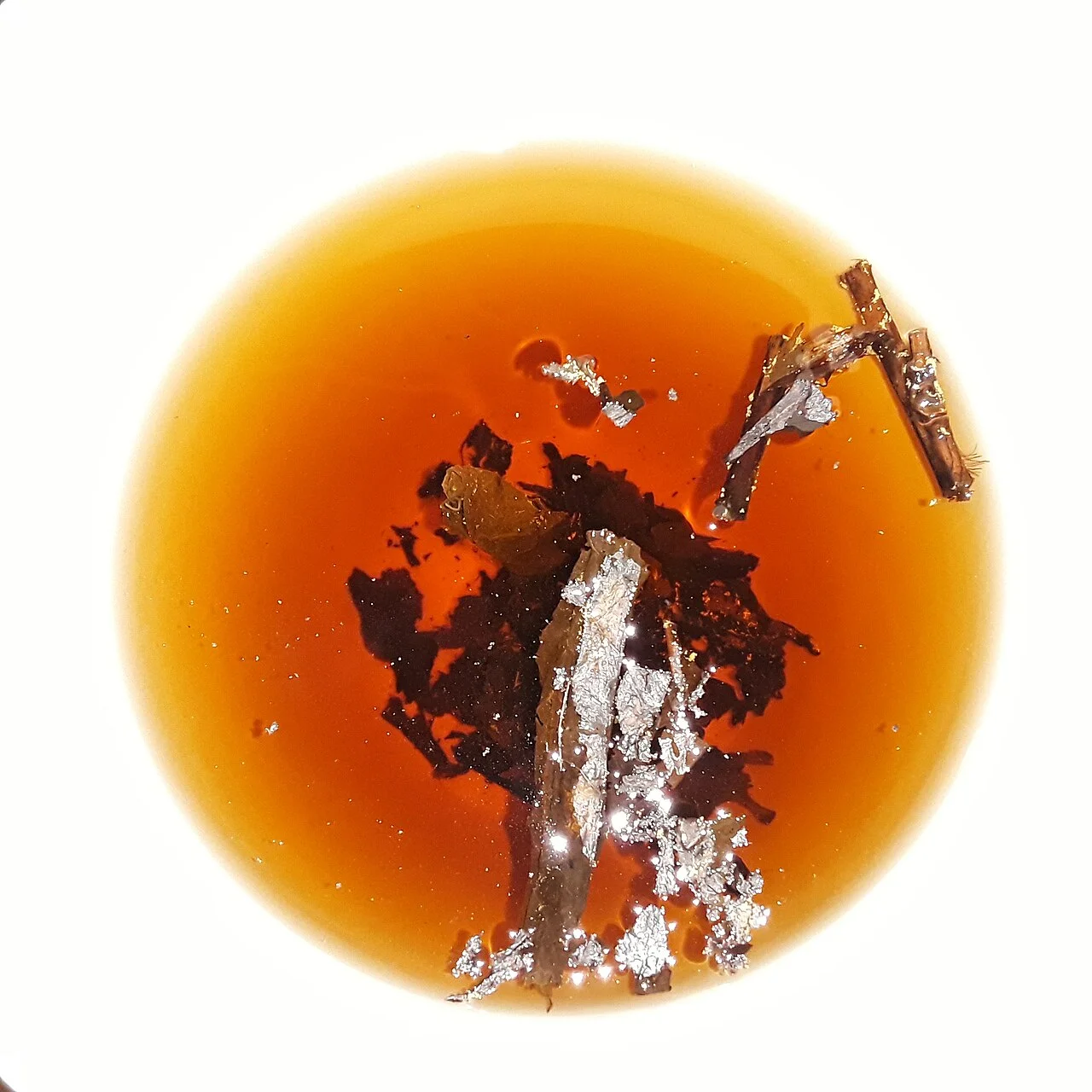
Clear bright orange-red to deep chestnut-amber.
Aroma & Palate Profile
Grounded aged oak, toasted grain sweetness, and faint herbal freshness. — Hearty, smooth, and lingeringly sweet—prized both plain and simmered with milk across steppe tea traditions.
Practical Buyer & Drinker Guide
Price Benchmarks, Authenticity Tips & Storage
Reference Price Range
Heritage everyday bricks/baskets ~$14–$40/500g; clean 8+ yr aged dark teas ~$60–$220+/500g
Authenticity & Buying Tips
Cleanliness comes first: welcome bright golden Eurotium specks in Fuzhuan, but reject fuzzy grey/green mold or acrid cellar mustiness.
Home Storage Advice
Age at room temperature inside clean breathable cartons or unglazed jars, well away from dampness and cooking odors.
Related Teas in This Category
Characteristic 'golden-flower' aroma—resembling sweet dried chrysanthemum, warm cedar, and subtle pine hearth smoke.
Signature cooling 'betel-nut' spice alongside aged cedar, faint pine smoke, herbal ginseng hints, and sweet jujube.
Clean aged wood, toasted caramel, and cooked red date—remaining pure even during prolonged boiling.
Verified References & Provenance
- [01] 1979Source
Chen Chuan's Six-Category Tea Classification (1979) & Camellia sinensis Phylogeography
Chen Chuan (1979) / Chen Zongmao (ed., China Tea Classic)
Chen Chuan (1979) established the modern scientific taxonomy of six tea families based on processing mechanisms (enzyme inactivation, withering, yellowing, semi-oxidation, full oxidation, microbial piling) rather than linear fermentation; Chen Zongmao's China Tea Classic synthesizes modern agronomy and tea chemistry.
- [02] 2022Source
Traditional tea processing techniques and associated social practices in China
UNESCO Intangible Cultural Heritage · Nomination File No. 01884
Inscribed in 2022; documents the six core Chinese tea categories, reprocessed teas, and their embedded social rituals across 44 national heritage items.
- [03] 2009Source
The True History of Tea
Victor H. Mair & Erling Hoh
Philological and historical synthesis tracing tea from southwest China/Southeast Asia across overland 'cha' and maritime 'te' linguistic and trade corridors.