Anhua Qianliang Tea (Thousand-Tael Pillar)
安化千两茶(花卷茶)
Anhua County, Zijiang River Basin, Hunan
100°C
1:20 steeped; 1:100 simmered
20–30 s after rinse; excels when simmered 5 min
Yixing pot, simmering kettle, or porcelain gaiwan (12+)
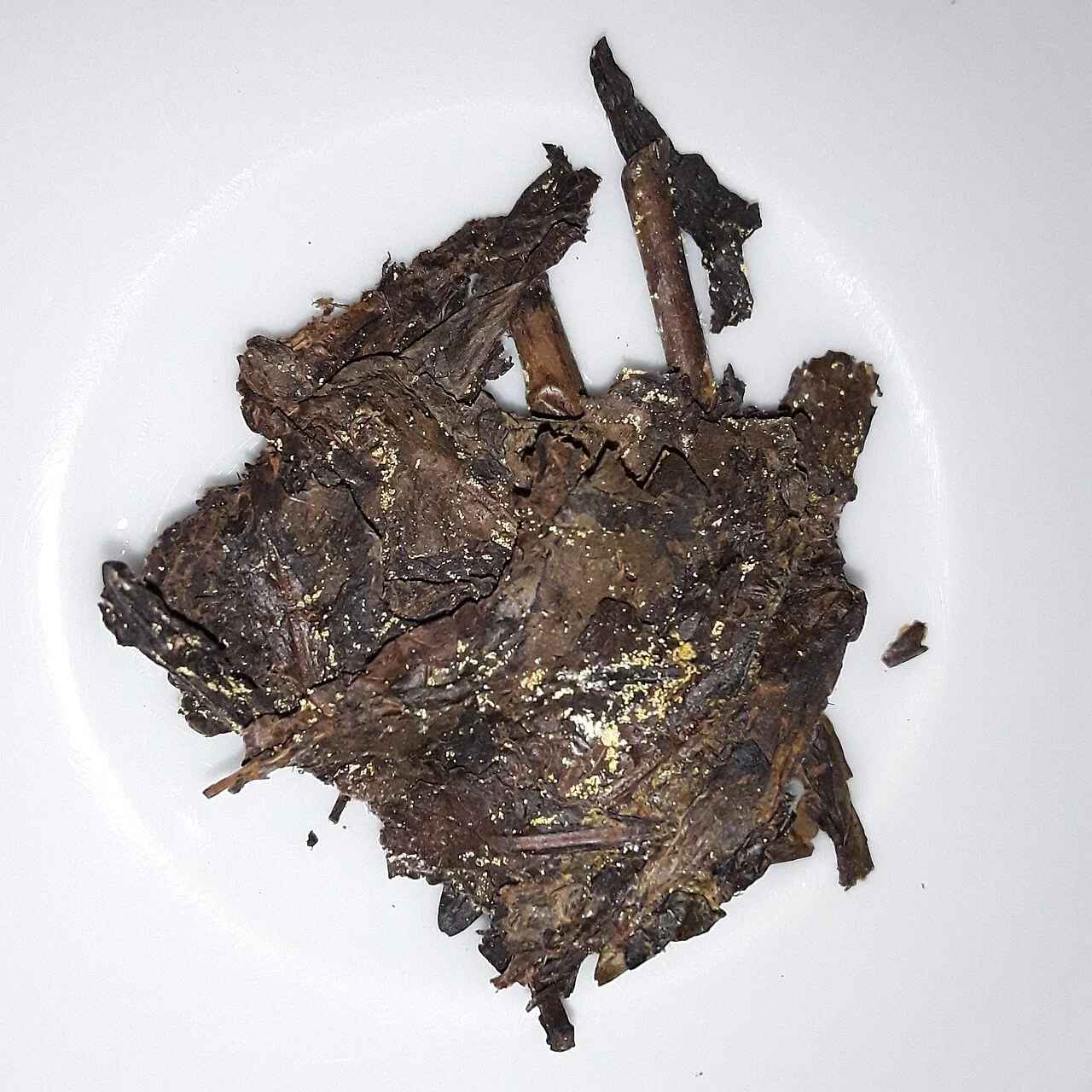
History & Provenance
Created in Qing-era Anhua to streamline caravan and river transport, Qianliang ('Thousand-Tael') tea packs 36.25 kg of black-tea rough leaf into towering 1.5-meter cylinders wrapped in bamboo strips, palm bark, and indocalamus leaves—celebrated today in UNESCO's intangible heritage dossier.
Cultivar & Raw Leaf
Select Anhua dark rough tea made from mature shoots, heat-fixed, rolled, piled, and pine-hearth dried.
Processing Craft
Steamed rough tea is packed inside woven bamboo cages lined with broad leaves, compressed by teams of artisans tightening wooden levers and rolling the giant cylinder underfoot, then cured outdoors for weeks of sun-and-dew slow maturation.
Dry Leaf Appearance
Saw-cut into dense dark mahogany rounds rimmed with subtle bamboo and leaf wrapping fragrance.
Brewed Liquor Color
Rich, luminous amber-crimson.
Aroma & Palate Profile
Subtle pine hearth warmth, dried bamboo-leaf freshness, aged cedar, and cooked red date. — Structured yet smooth and pectin-rich; youthful lots show crisp vigor that melts after five years into deep, sweet mellowness.
Practical Buyer & Drinker Guide
Price Benchmarks, Authenticity Tips & Storage
Reference Price Range
Saw-cut 500g slices ~$25–$60; 10-yr dry-aged lots ~$90–$220+/500g
Authenticity & Buying Tips
Buy pre-cut slices for home brewing (whole 36 kg logs require a band saw); aged slices must smell clean and woody, never musty.
Home Storage Advice
Keep wrapped in breathable kraft paper in a dry, odor-free room for gradual aging.
Related Teas in This Category
Characteristic 'golden-flower' aroma—resembling sweet dried chrysanthemum, warm cedar, and subtle pine hearth smoke.
Signature cooling 'betel-nut' spice alongside aged cedar, faint pine smoke, herbal ginseng hints, and sweet jujube.
Clean aged wood, toasted caramel, and cooked red date—remaining pure even during prolonged boiling.
Verified References & Provenance
- [01] 1979Source
Chen Chuan's Six-Category Tea Classification (1979) & Camellia sinensis Phylogeography
Chen Chuan (1979) / Chen Zongmao (ed., China Tea Classic)
Chen Chuan (1979) established the modern scientific taxonomy of six tea families based on processing mechanisms (enzyme inactivation, withering, yellowing, semi-oxidation, full oxidation, microbial piling) rather than linear fermentation; Chen Zongmao's China Tea Classic synthesizes modern agronomy and tea chemistry.
- [02] 2022Source
Traditional tea processing techniques and associated social practices in China
UNESCO Intangible Cultural Heritage · Nomination File No. 01884
Inscribed in 2022; documents the six core Chinese tea categories, reprocessed teas, and their embedded social rituals across 44 national heritage items.