Anxi Tieguanyin (Iron Goddess of Mercy)
安溪铁观音
Anxi County (Xiping, Xianghua, Gande), Fujian
95–100°C
1:18 (approx. 7–8 g per 130–150 ml)
20–30 s first steep, +10 s per infusion
Porcelain gaiwan or small Zhuni clay teapot (7–9)
History & Provenance
Originating in eighteenth-century Anxi (preserved through dual folk traditions around Wei Yin and Wang Shirang), Tieguanyin combines the distinct Red-Heart Tieguanyin cultivar with rhythmic bruising and cloth-ball rolling, branching into bright green-style and roasted traditional styles.
Cultivar & Raw Leaf
Mature 'open-face' shoots (two to three leaves with a dormant apical bud) of the Red-Heart Tieguanyin cultivar.
Processing Craft
Sun- and indoor-withering precede multi-cycle tossing (zuoqing) to bruise leaf margins; fixation locks floral terpenes before repeated cloth-ball rolling shapes tight pearls, finished by light drying or deeper roasting.
Dry Leaf Appearance
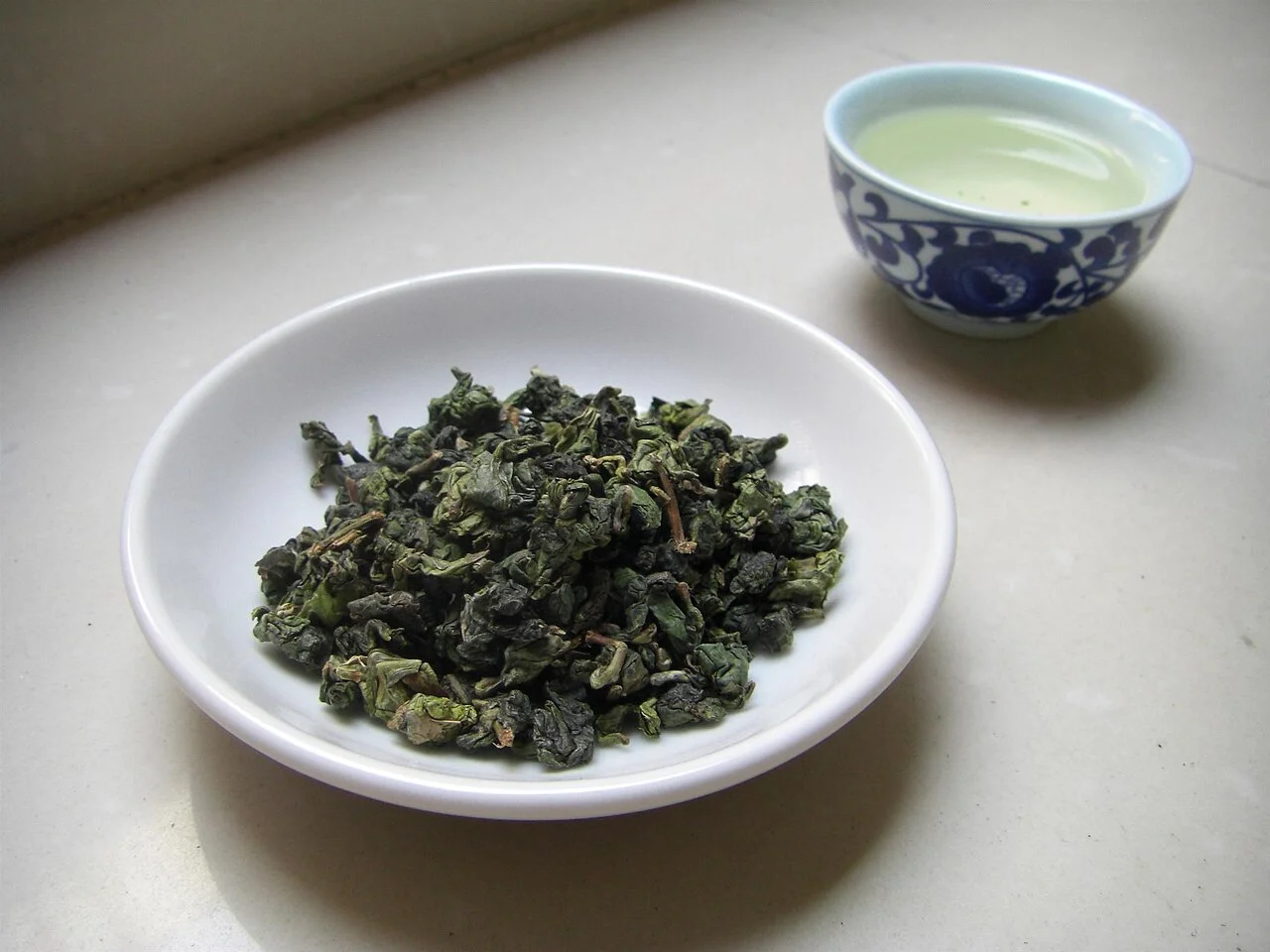
Dense, heavy rolled pearls ('dragonfly heads') in deep emerald-jade (light style) or dark roasted bronze (traditional style).
Brewed Liquor Color
Luminous golden-yellow in light-roast lots; rich amber-gold in roasted traditional lots.
Aroma & Palate Profile
Unmistakable high-note orchid perfume ('Guanyin rhyme'), deepening to caramelized stone fruit and toasted grain when roasted. — Coating and vibrant with crisp mineral briskness, blooming into cooling sweetness deep in the throat.
Practical Buyer & Drinker Guide
Price Benchmarks, Authenticity Tips & Storage
Reference Price Range
Daily Tieguanyin ~$25–$60/500g; traditional roasted or high-mountain spring lots ~$90–$300+/500g
Authenticity & Buying Tips
Avoid hyper-perfumed light lots that turn watery by steep three; authentic batches show subtle red oxidized leaf edges or warming roasted depth.
Home Storage Advice
Refrigerate vacuum-sealed green-style Tieguanyin; store roasted traditional lots airtight at cool room temperature.
Related Teas in This Category
Layered charcoal-toast cacao, dried stone fruit, and spiced orchid over wet-stone minerality.
Explosively aromatic: intoxicating gardenia, ripe white peach, honeysuckle, or baked sweet-potato honey depending on the clone.
Toasted hazelnut and warm caramel sugar draped over soft orchid and poached pear.
Verified References & Provenance
- [01] 1979Source
Chen Chuan's Six-Category Tea Classification (1979) & Camellia sinensis Phylogeography
Chen Chuan (1979) / Chen Zongmao (ed., China Tea Classic)
Chen Chuan (1979) established the modern scientific taxonomy of six tea families based on processing mechanisms (enzyme inactivation, withering, yellowing, semi-oxidation, full oxidation, microbial piling) rather than linear fermentation; Chen Zongmao's China Tea Classic synthesizes modern agronomy and tea chemistry.
- [02] 2022Source
Traditional tea processing techniques and associated social practices in China
UNESCO Intangible Cultural Heritage · Nomination File No. 01884
Inscribed in 2022; documents the six core Chinese tea categories, reprocessed teas, and their embedded social rituals across 44 national heritage items.