Dongding Oolong (Frozen Summit)
冻顶乌龙
Lugu Township, Nantou (Dongding Ridge), Taiwan
92–96°C
1:18 (approx. 7 g per 130–150 ml)
35–45 s first steep, +10–15 s thereafter
Porcelain gaiwan or clay teapot (7–9)
History & Provenance
Taiwanese local records trace Lugu scholar Lin Fengchi's mid-nineteenth-century introduction of Qingxin Oolong cuttings from Fujian to Dongding Ridge. Blending Minnan ball-rolling with patient charcoal roasting, Dongding became Taiwan's archetype of medium-oxidized, warm-roasted oolong.
Cultivar & Raw Leaf
One bud with two to three misty-hillside leaves of the Qingxin Oolong cultivar.
Processing Craft
Sun-wilting and indoor tossing attain 25%–35% oxidation; after fixation and repeated cloth-wrapped ball-rolling, traditional lots undergo slow, patient roasting to marry bright orchid notes with warm caramel depth.
Dry Leaf Appearance
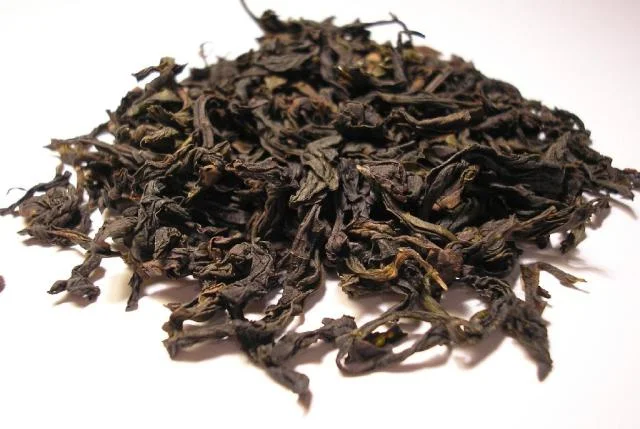
Tightly rolled dark olive-brown hemispheres with a warm roasted sheen.
Brewed Liquor Color
Clear honey-amber to warm golden topaz.
Aroma & Palate Profile
Toasted hazelnut and warm caramel sugar draped over soft orchid and poached pear. — Creamy, balanced, and deeply comforting—gentle roast sweetness softens any edge into a smooth, lingering throat feel.
Practical Buyer & Drinker Guide
Price Benchmarks, Authenticity Tips & Storage
Reference Price Range
Everyday oolongs ~$22–$65/500g; core alpine or Wuyi charcoal-roasted lots ~$90–$450+/500g
Authenticity & Buying Tips
Distinguish fresh green-style oolongs (drink within months) from roasted oolongs (which deepen with rest); great aroma lives inside the broth, not just on dry leaf.
Home Storage Advice
Refrigerate vacuum-packed light oolongs; store medium-to-heavy roasted oolongs airtight at room temperature.
Related Teas in This Category
Unmistakable high-note orchid perfume ('Guanyin rhyme'), deepening to caramelized stone fruit and toasted grain when roasted.
Layered charcoal-toast cacao, dried stone fruit, and spiced orchid over wet-stone minerality.
Explosively aromatic: intoxicating gardenia, ripe white peach, honeysuckle, or baked sweet-potato honey depending on the clone.
Verified References & Provenance
- [01] 1979Source
Chen Chuan's Six-Category Tea Classification (1979) & Camellia sinensis Phylogeography
Chen Chuan (1979) / Chen Zongmao (ed., China Tea Classic)
Chen Chuan (1979) established the modern scientific taxonomy of six tea families based on processing mechanisms (enzyme inactivation, withering, yellowing, semi-oxidation, full oxidation, microbial piling) rather than linear fermentation; Chen Zongmao's China Tea Classic synthesizes modern agronomy and tea chemistry.
- [02] 2022Source
Traditional tea processing techniques and associated social practices in China
UNESCO Intangible Cultural Heritage · Nomination File No. 01884
Inscribed in 2022; documents the six core Chinese tea categories, reprocessed teas, and their embedded social rituals across 44 national heritage items.