Wuyi Rougui (Cinnamon Rock Oolong)
武夷肉桂
Mount Wuyi Danxia Core (Matouyan, Niulankeng, Huiyuankeng), Fujian
98–100°C
1:15 (8 g per 120 ml boiling flash-pour)
5–10 s flash steeps initially
Porcelain gaiwan or thin Zhuni clay pot (8–12)
History & Provenance
Originally a century-old Wuyi heirloom bush called 'Jade Cassia,' Rougui rose since the 1980s to become Wuyi's foremost signature cultivar—captured in the connoisseur adage 'nothing out-aromatics Rougui; nothing out-mellows Shuixian.'
Cultivar & Raw Leaf
Spring mature three-to-four-leaf shoots of the Wuyi Rougui cultivar, naturally high in cinnamaldehyde-like spice terpenes.
Processing Craft
Sun-wilting, long bruising cycles, high-heat double fixation, sorting, and two to three charcoal roasting stages that lock spicy aromatics into deep mineral body.
Dry Leaf Appearance
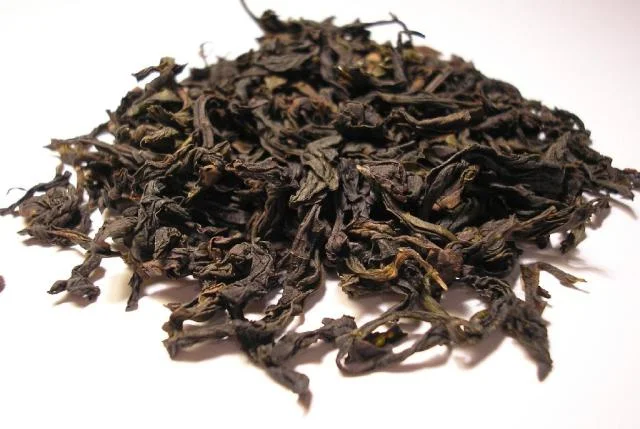
Moderately slender twisted charcoal-brown strips with subtle blistered roast texture.
Brewed Liquor Color
Luminous burnt orange to copper-amber.
Aroma & Palate Profile
Penetrating sweet cinnamon bark, ripe white peach, toasted cacao, and wet-stone minerality. — Electric, assertive, and fiercely aromatic—spicy lift hits the palate before yielding to crisp mineral grip and cooling sweet return.
Practical Buyer & Drinker Guide
Price Benchmarks, Authenticity Tips & Storage
Reference Price Range
Everyday outer-hill lots ~$30–$90/500g; core Zhengyan gorge lots ~$180–$700+/500g
Authenticity & Buying Tips
Beware inflated 'Niulankeng' labels; authentic rock tea carries dense mineral texture woven into the liquor rather than hollow surface fragrance.
Home Storage Advice
Allow freshly roasted lots 1–3 months to mellow; stores wonderfully for years in airtight dry tins.
Related Teas in This Category
Unmistakable high-note orchid perfume ('Guanyin rhyme'), deepening to caramelized stone fruit and toasted grain when roasted.
Layered charcoal-toast cacao, dried stone fruit, and spiced orchid over wet-stone minerality.
Explosively aromatic: intoxicating gardenia, ripe white peach, honeysuckle, or baked sweet-potato honey depending on the clone.
Verified References & Provenance
- [01] 1979Source
Chen Chuan's Six-Category Tea Classification (1979) & Camellia sinensis Phylogeography
Chen Chuan (1979) / Chen Zongmao (ed., China Tea Classic)
Chen Chuan (1979) established the modern scientific taxonomy of six tea families based on processing mechanisms (enzyme inactivation, withering, yellowing, semi-oxidation, full oxidation, microbial piling) rather than linear fermentation; Chen Zongmao's China Tea Classic synthesizes modern agronomy and tea chemistry.
- [02] 2022Source
Traditional tea processing techniques and associated social practices in China
UNESCO Intangible Cultural Heritage · Nomination File No. 01884
Inscribed in 2022; documents the six core Chinese tea categories, reprocessed teas, and their embedded social rituals across 44 national heritage items.