Wuyi Shuixian (Narcissus & Old-Bush Rock Oolong)
武夷水仙(含老枞水仙)
Wusandi, Huiyuankeng & Shuiliandong, Mount Wuyi, Fujian
98–100°C
1:15 (approx. 8 g per 120 ml)
10–15 s for first 3 steeps, extending gradually
Porcelain gaiwan or Yixing clay pot (10–12)
History & Provenance
Introduced to Mount Wuyi from Jianyang in the Qing era, Shuixian became northern Fujian's foundational large-leafed oolong. Harvests from vines over fifty years old—known as Old-Bush (Lao Cong) Shuixian—are revered for unmistakable moss, timber, and bamboo-leaf resonance.
Cultivar & Raw Leaf
Broad, fleshy three-to-four-leaf shoots of the Wuyi Shuixian cultivar rich in soluble pectins.
Processing Craft
Classic Wuyi withering, bruising, and double fixation followed by patient medium charcoal roasting to preserve silky mouthfeel and delicate woody aromatics.
Dry Leaf Appearance
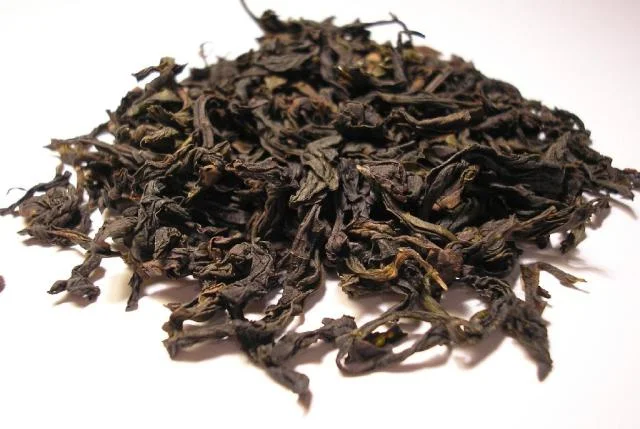
Bold, thick, muscular strips in warm roasted dark bronze.
Brewed Liquor Color
Luminous golden-orange to clear amber.
Aroma & Palate Profile
Serene orchid, fresh bamboo-leaf wrapping, and gentle toast—deepening in old-bush lots to forest moss and weathered cedar. — Velvety, rounded, and remarkably enduring—softer on the attack than Rougui yet effortlessly yielding ten or more smooth, mineral infusions.
Practical Buyer & Drinker Guide
Price Benchmarks, Authenticity Tips & Storage
Reference Price Range
Value daily Shuixian ~$25–$60/500g; true Zhengyan Old-Bush lots ~$120–$450+/500g
Authenticity & Buying Tips
Standard Shuixian is Wuyi's best value entry point; when paying extra for 'Old Bush,' verify thick velvety broth and clean mossy woodiness rather than marketing age claims.
Home Storage Advice
Store airtight away from light and odors; gains silky harmony over 1–2 years.
Related Teas in This Category
Unmistakable high-note orchid perfume ('Guanyin rhyme'), deepening to caramelized stone fruit and toasted grain when roasted.
Layered charcoal-toast cacao, dried stone fruit, and spiced orchid over wet-stone minerality.
Explosively aromatic: intoxicating gardenia, ripe white peach, honeysuckle, or baked sweet-potato honey depending on the clone.
Verified References & Provenance
- [01] 1979Source
Chen Chuan's Six-Category Tea Classification (1979) & Camellia sinensis Phylogeography
Chen Chuan (1979) / Chen Zongmao (ed., China Tea Classic)
Chen Chuan (1979) established the modern scientific taxonomy of six tea families based on processing mechanisms (enzyme inactivation, withering, yellowing, semi-oxidation, full oxidation, microbial piling) rather than linear fermentation; Chen Zongmao's China Tea Classic synthesizes modern agronomy and tea chemistry.
- [02] 2022Source
Traditional tea processing techniques and associated social practices in China
UNESCO Intangible Cultural Heritage · Nomination File No. 01884
Inscribed in 2022; documents the six core Chinese tea categories, reprocessed teas, and their embedded social rituals across 44 national heritage items.