Silver Needle (Baihao Yinzhen)
白毫银针
Fuding (Mount Taimu) & Zhenghe, Fujian
85–90°C
1:30 (approx. 4–5 g per 150 ml)
45–60 s first steep, +15–20 s thereafter
White porcelain gaiwan or glass pitcher (5–6)
History & Provenance
Developed in Fuding and Zhenghe between the late eighteenth and mid-nineteenth centuries using large-bud white-tea cultivars, Silver Needle entered European and American markets through Fuzhou treaty trade and remains the pinnacle expression of unrolled, unfixed white tea.
Cultivar & Raw Leaf
Exclusively plump spring terminal buds plucked from Fuding Dabai, Fuding Dahao, or Zhenghe Dabai cultivars, densely sheathed in silvery unicellular trichomes.
Processing Craft
Neither pan-fixed nor rolled: buds wither naturally on bamboo trays in sun and shade for 48–72 hours under mild autolysis and slight spontaneous oxidation, then finish with gentle low-heat drying.
Dry Leaf Appearance
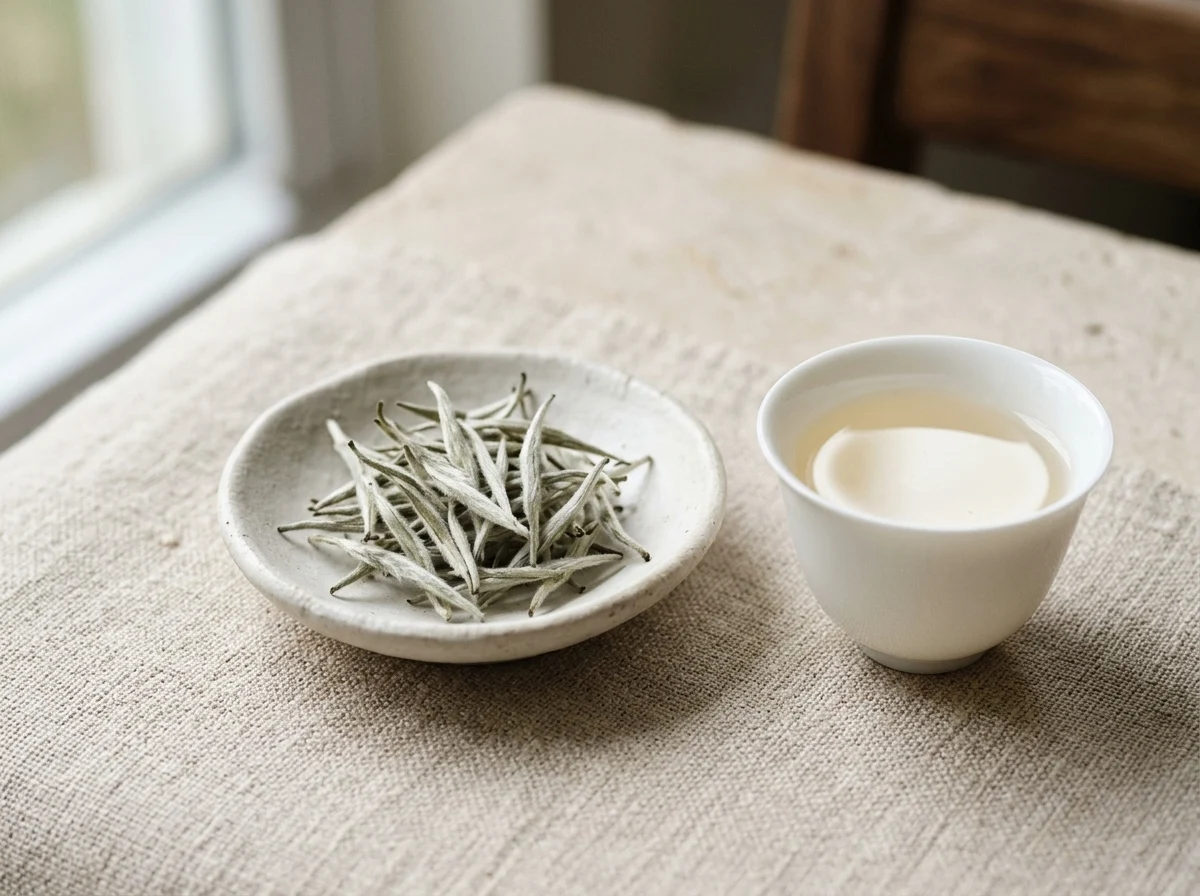
Plump, straight, needle-like buds uniformly cloaked in luminous silver-white down.
Brewed Liquor Color
Pale apricot-ivory to champagne gold, softly opalescent with suspended trichomes.
Aroma & Palate Profile
Pure pekoe down, sun-warmed meadow hay, and delicate wildflower honey; aged lots develop subtle warm herb and nectar notes. — Silky, viscous yet airy sweetness that glides across the tongue with negligible astringency.
Practical Buyer & Drinker Guide
Price Benchmarks, Authenticity Tips & Storage
Reference Price Range
Fresh current-year needles ~$75–$180/500g; high-mountain early harvests ~$220–$500+/500g
Authenticity & Buying Tips
Look for plump, straight buds with tight silvery fuzz; overly skinny needles shedding loose dust often signal baked imitation or excessive drying heat.
Home Storage Advice
Store airtight at dry, odor-free room temperature for graceful aging—never put loose white tea in a damp fridge.
Related Teas in This Category
Sweet pekoe layered with white blossom, ripe melon, and gentle sweet hay.
Toasted hay and orchard sweetness in youth, evolving with age into unmistakable dried red jujube, sweet herb, and warm timber.
Expressive wildflower honey, ripe peach, dried apricot, and subtle rose nectar.
Verified References & Provenance
- [01] 1979Source
Chen Chuan's Six-Category Tea Classification (1979) & Camellia sinensis Phylogeography
Chen Chuan (1979) / Chen Zongmao (ed., China Tea Classic)
Chen Chuan (1979) established the modern scientific taxonomy of six tea families based on processing mechanisms (enzyme inactivation, withering, yellowing, semi-oxidation, full oxidation, microbial piling) rather than linear fermentation; Chen Zongmao's China Tea Classic synthesizes modern agronomy and tea chemistry.
- [02] 2022Source
Traditional tea processing techniques and associated social practices in China
UNESCO Intangible Cultural Heritage · Nomination File No. 01884
Inscribed in 2022; documents the six core Chinese tea categories, reprocessed teas, and their embedded social rituals across 44 national heritage items.