Yunnan Moonlight White (Yueguangbai)
云南月光白
Jinggu (Pu'er), Lincang & Xishuangbanna, Yunnan
90–95°C
1:30 (approx. 5 g per 150 ml)
20–30 s first steep, gradually extending
Porcelain gaiwan or glass teapot (7–9)
History & Provenance
Rooted in shaded loft-drying traditions around Jinggu, Yunnan, Moonlight White gained modern popularity in the 2000s—named for the striking two-tone contrast between dark oxidized upper leaf surfaces and silvery-white downy undersides.
Cultivar & Raw Leaf
Stout one-bud-one-to-two-leaf shoots of Yunnan large-leaf var. assamica laden with long silvery trichomes.
Processing Craft
Unfixed and unrolled, shoots wither slowly in cool shaded lofts for days—allowing upper leaf surfaces to darken naturally while undersides remain snow-white—then finish with gentle low-heat drying.
Dry Leaf Appearance
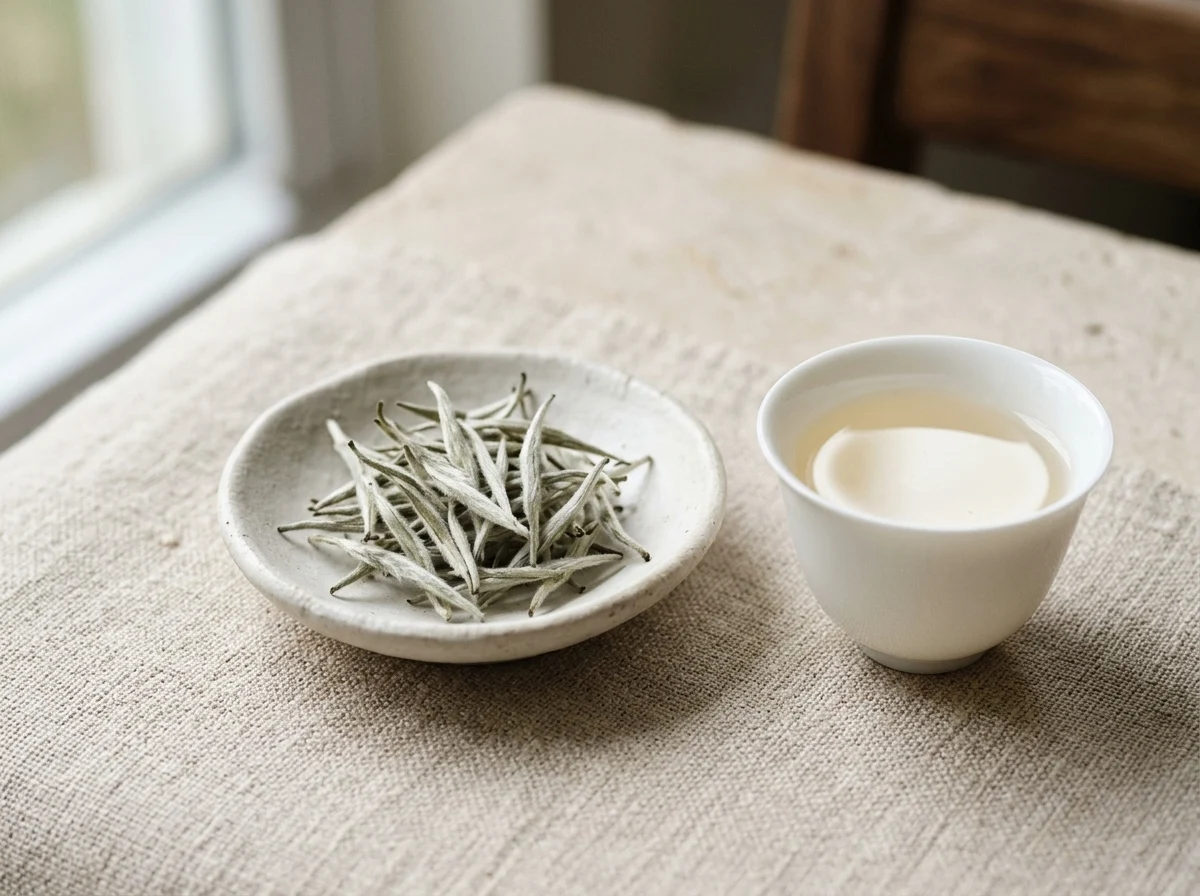
Dramatic bicolored leaves: glossy obsidian upper surfaces paired with luminous silver-white undersides.
Brewed Liquor Color
Bright apricot-gold when fresh, deepening into rich honey-amber.
Aroma & Palate Profile
Expressive wildflower honey, ripe peach, dried apricot, and subtle rose nectar. — Noticeably sweeter, thicker, and more nectar-like than coastal Fujian whites, bridging honeyed black tea warmth with white-tea silkiness.
Practical Buyer & Drinker Guide
Price Benchmarks, Authenticity Tips & Storage
Reference Price Range
Everyday lots ~$25–$60/500g; single-mountain old-arbor spring lots ~$90–$220+/500g
Authenticity & Buying Tips
Watch for rolled sun-dried black teas sold as Moonlight White—authentic leaves are unrolled, unbroken, and unmistakably two-toned.
Home Storage Advice
Delicious immediately for floral honey, or store sealed in a cool dry cabinet for 2–5 years for deeper dried-fruit richness.
Related Teas in This Category
Pure pekoe down, sun-warmed meadow hay, and delicate wildflower honey; aged lots develop subtle warm herb and nectar notes.
Sweet pekoe layered with white blossom, ripe melon, and gentle sweet hay.
Toasted hay and orchard sweetness in youth, evolving with age into unmistakable dried red jujube, sweet herb, and warm timber.
Verified References & Provenance
- [01] 1979Source
Chen Chuan's Six-Category Tea Classification (1979) & Camellia sinensis Phylogeography
Chen Chuan (1979) / Chen Zongmao (ed., China Tea Classic)
Chen Chuan (1979) established the modern scientific taxonomy of six tea families based on processing mechanisms (enzyme inactivation, withering, yellowing, semi-oxidation, full oxidation, microbial piling) rather than linear fermentation; Chen Zongmao's China Tea Classic synthesizes modern agronomy and tea chemistry.
- [02] 2022Source
Traditional tea processing techniques and associated social practices in China
UNESCO Intangible Cultural Heritage · Nomination File No. 01884
Inscribed in 2022; documents the six core Chinese tea categories, reprocessed teas, and their embedded social rituals across 44 national heritage items.