White Peony (Baimudan)
白牡丹
Fuding, Zhenghe, Jianyang & Songxi, Fujian
88–95°C
1:30 (approx. 5 g per 150 ml)
30–40 s first steep, gradually extending
White porcelain gaiwan (6–8)
History & Provenance
Standardized around the 1920s across Jianyang, Zhenghe, and Fuding, White Peony takes its name from paired green leaves cradling a silver bud like an opening blossom—balancing bud delicacy with leafy body.
Cultivar & Raw Leaf
One bud with one or two tender leaves ('two leaves embracing a silver core') from Fujian white-tea cultivars.
Processing Craft
Combined indoor and gentle solar withering for 40–60 hours followed by low-temperature drying, without fixation or rolling.
Dry Leaf Appearance
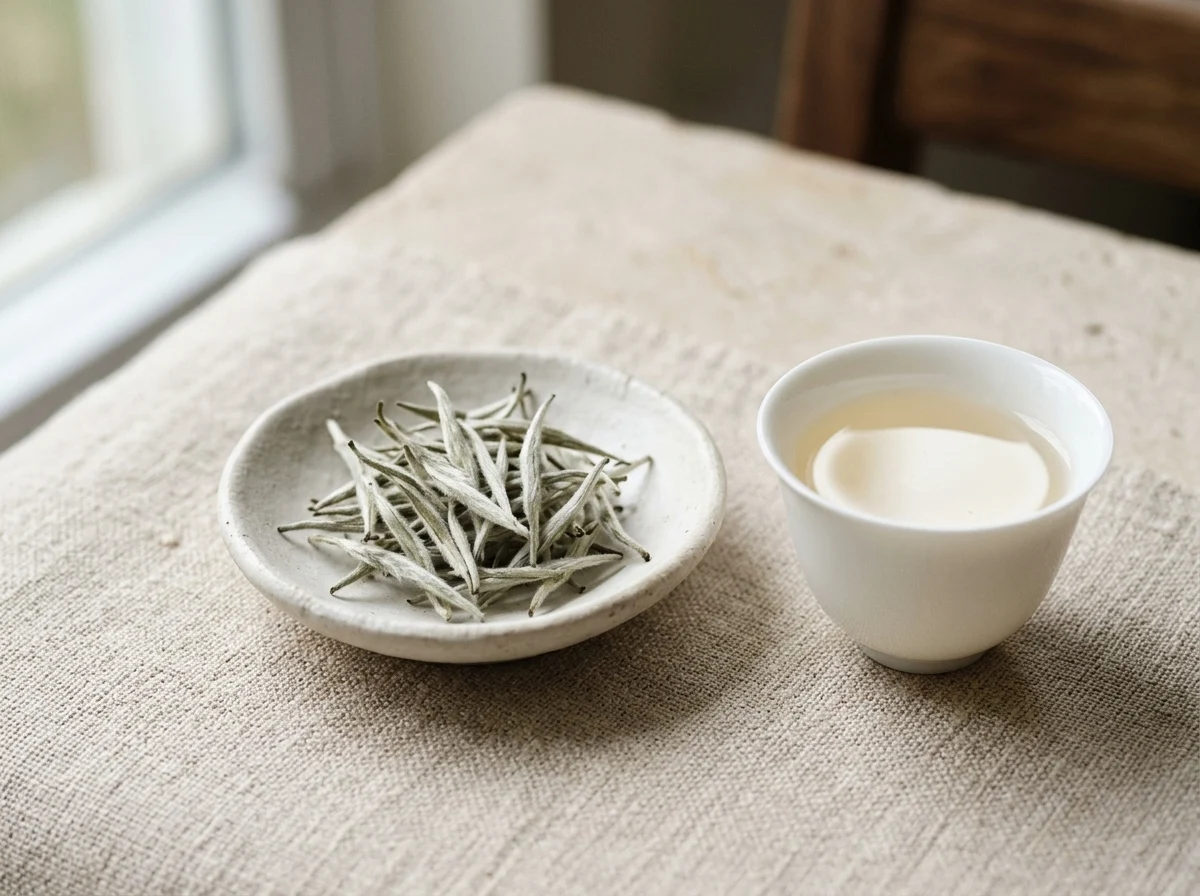
Sage-to-olive leaves hugging a silver-downy central bud, pale undersides glistening with fine hairs.
Brewed Liquor Color
Bright apricot-yellow when fresh, deepening to warm amber-gold after a few years.
Aroma & Palate Profile
Sweet pekoe layered with white blossom, ripe melon, and gentle sweet hay. — Fuller-bodied than Silver Needle, pairing bright floral sweetness upfront with round leaf structure and graceful aging potential.
Practical Buyer & Drinker Guide
Price Benchmarks, Authenticity Tips & Storage
Reference Price Range
Quality everyday Baimudan ~$30–$75/500g; early spring Mudanwang ~$90–$220/500g
Authenticity & Buying Tips
Offers better daily value than bud-only Silver Needle; seek natural mottled sage-and-silver leaves rather than dull scorched brown.
Home Storage Advice
Store airtight at dry, odor-free room temperature for graceful aging—never put loose white tea in a damp fridge.
Related Teas in This Category
Pure pekoe down, sun-warmed meadow hay, and delicate wildflower honey; aged lots develop subtle warm herb and nectar notes.
Toasted hay and orchard sweetness in youth, evolving with age into unmistakable dried red jujube, sweet herb, and warm timber.
Expressive wildflower honey, ripe peach, dried apricot, and subtle rose nectar.
Verified References & Provenance
- [01] 1979Source
Chen Chuan's Six-Category Tea Classification (1979) & Camellia sinensis Phylogeography
Chen Chuan (1979) / Chen Zongmao (ed., China Tea Classic)
Chen Chuan (1979) established the modern scientific taxonomy of six tea families based on processing mechanisms (enzyme inactivation, withering, yellowing, semi-oxidation, full oxidation, microbial piling) rather than linear fermentation; Chen Zongmao's China Tea Classic synthesizes modern agronomy and tea chemistry.
- [02] 2022Source
Traditional tea processing techniques and associated social practices in China
UNESCO Intangible Cultural Heritage · Nomination File No. 01884
Inscribed in 2022; documents the six core Chinese tea categories, reprocessed teas, and their embedded social rituals across 44 national heritage items.