Fuding Shoumei (Longevity Eyebrow)
福鼎寿眉
Fuding Coastal Hills & Mountain Valleys, Fujian
95–100°C
1:25–1:30 (approx. 5–6 g per 150 ml)
30 s initial steep, 8+ infusions or 3-min simmer
Porcelain gaiwan, clay pot, or simmering kettle (8–10+)
History & Provenance
Named for curved mature leaves likened to an elder's eyebrow, Shoumei historically drew from Fuding's local seed-grown landrace and today also uses late-spring and autumn Dabai shoots prized for aging into cakes.
Cultivar & Raw Leaf
Mature late-spring and autumn shoots (one bud with two to three leaves and tender stems), rich in pectins, polysaccharides, and glycosidic aroma precursors.
Processing Craft
Unfixed and unrolled, undergoing extended solar/indoor withering (reaching slightly higher mild oxidation than Silver Needle) and slow drying; sold loose or steamed into cakes for multi-year aging.
Dry Leaf Appearance
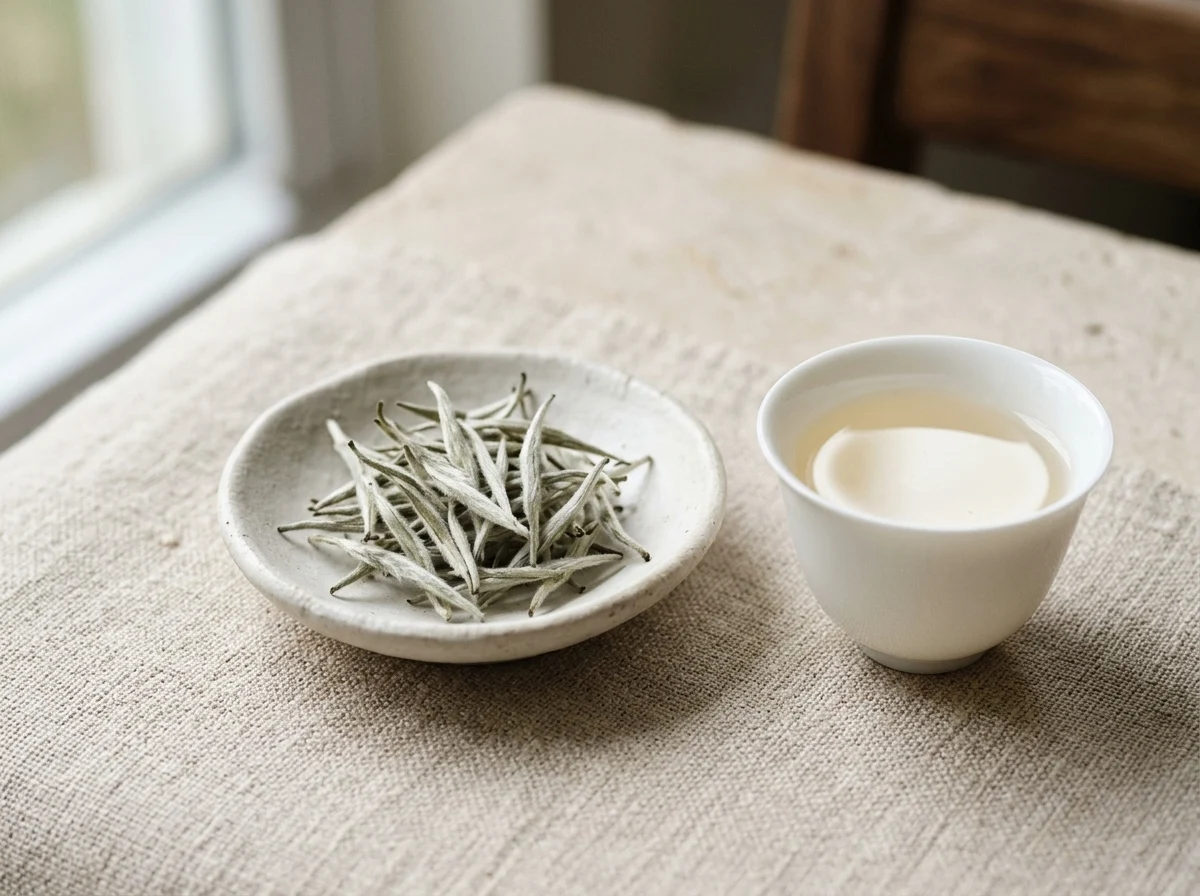
Broad, loosely curled leaves with woody stems in mottled sage, olive, and russet tones.
Brewed Liquor Color
Bright golden-orange when young, shifting to clear copper-amber with age.
Aroma & Palate Profile
Toasted hay and orchard sweetness in youth, evolving with age into unmistakable dried red jujube, sweet herb, and warm timber. — Pectin-rich, rounded, and soothingly sweet—robust enough for multiple gongfu infusions or gentle simmering.
Practical Buyer & Drinker Guide
Price Benchmarks, Authenticity Tips & Storage
Reference Price Range
Young lots ~$15–$45/500g; clean multi-year aged cakes ~$45–$140/500g
Authenticity & Buying Tips
Ideal everyday white tea for simmering or home cellaring; avoid dust-filled pressed bricks or artificially dark 'speed-aged' cakes.
Home Storage Advice
Store airtight at dry, odor-free room temperature for graceful aging—never put loose white tea in a damp fridge.
Related Teas in This Category
Pure pekoe down, sun-warmed meadow hay, and delicate wildflower honey; aged lots develop subtle warm herb and nectar notes.
Sweet pekoe layered with white blossom, ripe melon, and gentle sweet hay.
Expressive wildflower honey, ripe peach, dried apricot, and subtle rose nectar.
Verified References & Provenance
- [01] 1979Source
Chen Chuan's Six-Category Tea Classification (1979) & Camellia sinensis Phylogeography
Chen Chuan (1979) / Chen Zongmao (ed., China Tea Classic)
Chen Chuan (1979) established the modern scientific taxonomy of six tea families based on processing mechanisms (enzyme inactivation, withering, yellowing, semi-oxidation, full oxidation, microbial piling) rather than linear fermentation; Chen Zongmao's China Tea Classic synthesizes modern agronomy and tea chemistry.
- [02] 2022Source
Traditional tea processing techniques and associated social practices in China
UNESCO Intangible Cultural Heritage · Nomination File No. 01884
Inscribed in 2022; documents the six core Chinese tea categories, reprocessed teas, and their embedded social rituals across 44 national heritage items.