Dongting Biluochun (Green Snail Spring)
洞庭碧螺春
East & West Dongting Peninsulas, Lake Taihu, Suzhou
75–80°C
1:50 (pour water first, then sprinkle leaves)
40–60 s
Glass cup (top-drop method) or open porcelain bowl (3–4)
History & Provenance
Originally nicknamed 'Frighteningly Fragrant' in local lore, Qing records credit Emperor Kangxi with bestowing the name 'Green Snail Spring' during his 1699 southern tour. Grown beside loquat, waxberry, and apricot orchards around Lake Taihu, its ecology shapes a distinct floral-fruity signature.
Cultivar & Raw Leaf
Ultra-tender early spring buds and emerging one-bud-one-leaf shoots of the local Taihu small-leaf landrace, requiring tens of thousands of tips per half-kilogram.
Processing Craft
After brief withering, fixation, rolling, trichome-exposing curling, and final drying take place sequentially in one heated iron pan without breaking the delicate down.
Dry Leaf Appearance
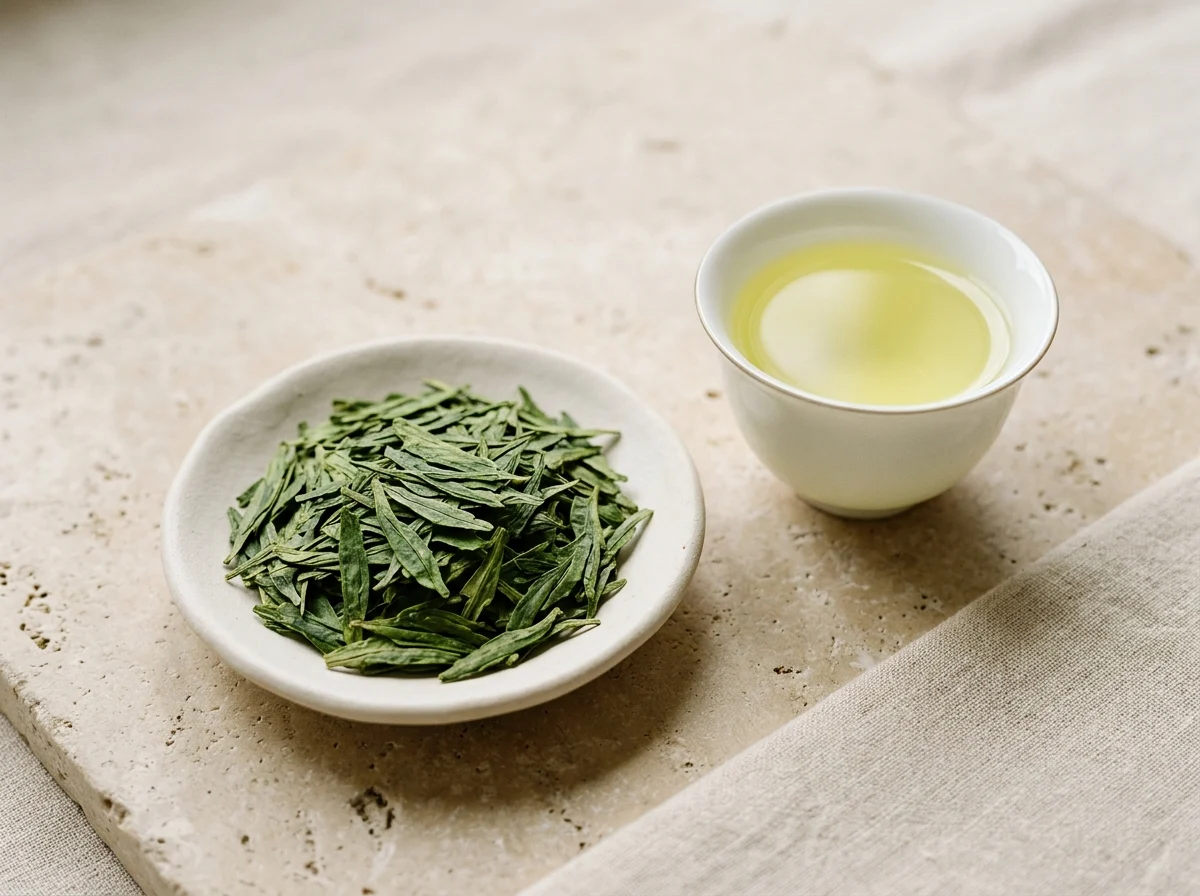
Tightly curled into tiny spiral snails, densely frosted with silvery-white trichomes over emerald green.
Brewed Liquor Color
Luminous pale green shimmering with suspended downy pekoe.
Aroma & Palate Profile
Expressive orchard blossom and stone-fruit fragrance lifted by sweet downy pekoe notes. — Velvety, high-amino-acid broth that coats the palate with brisk sweetness and virtually no harshness.
Practical Buyer & Drinker Guide
Price Benchmarks, Authenticity Tips & Storage
Reference Price Range
Out-of-region spirals ~$30–$65/500g; true Lake Taihu Dongting spring lots ~$220–$600+/500g
Authenticity & Buying Tips
True Dongting lots release delicate orchard fruit and spring blossom when sprinkled onto hot water, with clouds of silvery trichomes settling cleanly.
Home Storage Advice
Ultra-tender tips lose aroma fast—refrigerate sealed and drink within 3–6 months.
Related Teas in This Category
Clean toasted chestnut and warm bean aroma lifted by subtle spring orchid clarity in high-elevation lots.
Lifted wild mountain orchid fragrance backed by delicate downy sweetness.
Pronounced sweet chestnut aroma layered with crisp spring verdure and pekoe.
Verified References & Provenance
- [01] 1979Source
Chen Chuan's Six-Category Tea Classification (1979) & Camellia sinensis Phylogeography
Chen Chuan (1979) / Chen Zongmao (ed., China Tea Classic)
Chen Chuan (1979) established the modern scientific taxonomy of six tea families based on processing mechanisms (enzyme inactivation, withering, yellowing, semi-oxidation, full oxidation, microbial piling) rather than linear fermentation; Chen Zongmao's China Tea Classic synthesizes modern agronomy and tea chemistry.
- [02] 2022Source
Traditional tea processing techniques and associated social practices in China
UNESCO Intangible Cultural Heritage · Nomination File No. 01884
Inscribed in 2022; documents the six core Chinese tea categories, reprocessed teas, and their embedded social rituals across 44 national heritage items.