Xinyang Maojian
信阳毛尖
Northern Dabie Mountains, Xinyang (Five Clouds, Two Pools, One Peak)
80–85°C
1:50 (approx. 3 g per 150 ml)
40–55 s
Glass cup or porcelain gaiwan (3–4)
History & Provenance
Praised since Lu Yu's Classic of Tea ('Huainan tea, Guang Prefecture—historic Guangzhou in southern Henan, not Canton—is best'), Xinyang tea modernized around 1900 when local makers combined southern pan-firing with a signature twin-wok and slow-baking method, establishing northern China's premier green tea.
Cultivar & Raw Leaf
Spring single buds and one-bud-one-leaf shoots of the hardy Dabie Mountain landrace, thickened by cool northern latitude spring nights.
Processing Craft
Processed via the classic 'raw wok' (rapid fixation and shaping), 'cooked wok' (finger-rolling and tightening into fine needles), and gentle charcoal baking—bridging pan-fired aroma with baked clarity.
Dry Leaf Appearance
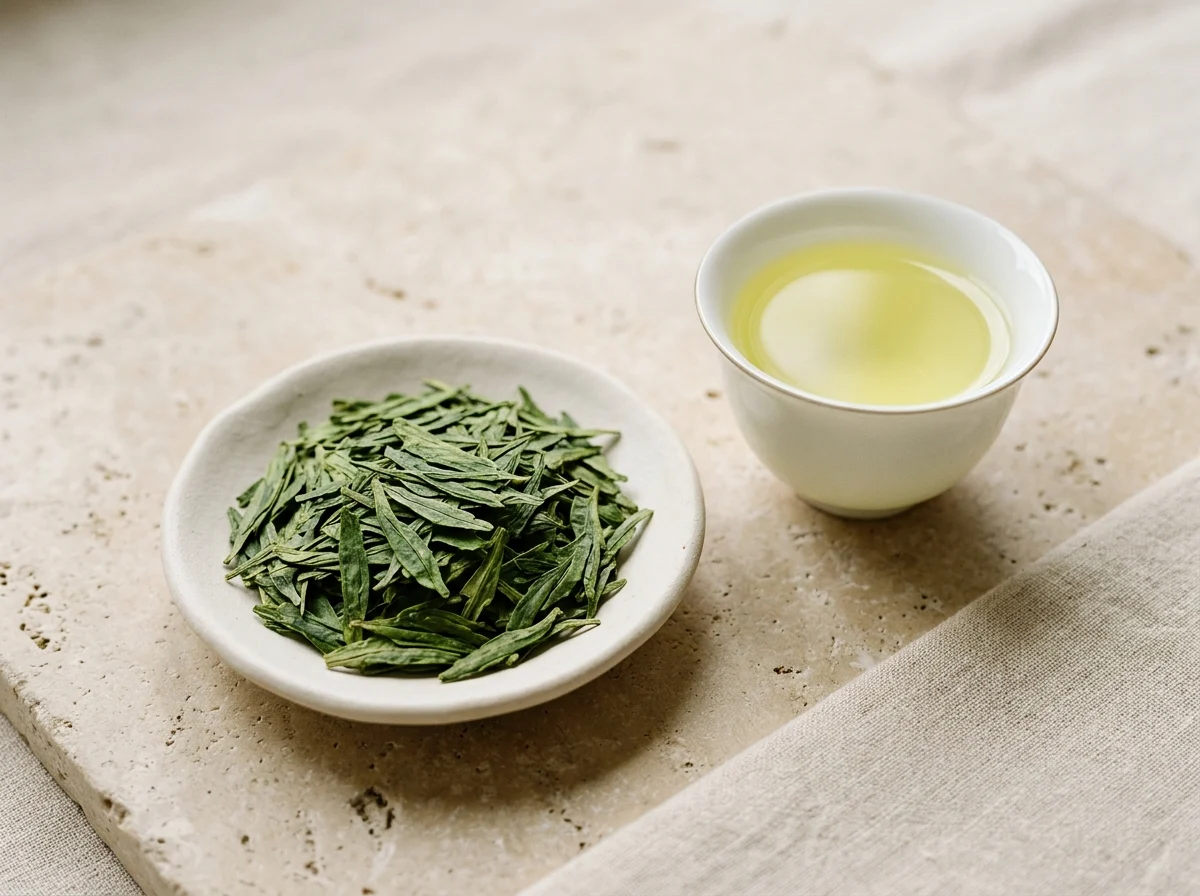
Slender, rounded, straight needles in deep glossy emerald dusted with fine silver tips.
Brewed Liquor Color
Bright, luminous tender green.
Aroma & Palate Profile
Pronounced sweet chestnut aroma layered with crisp spring verdure and pekoe. — Noticeably brisker and fuller-textured than delicate Jiangnan greens, delivering crisp vitality followed by rapid sweetness.
Practical Buyer & Drinker Guide
Price Benchmarks, Authenticity Tips & Storage
Reference Price Range
Everyday spring green tea ~$22–$65/500g; core GI pre-Qingming lots ~$90–$380+/500g
Authenticity & Buying Tips
Freshness matters most: current-year spring lots offer far better value than stale 'rare' tins; seek clean nutty or floral lift without scorched bitterness.
Home Storage Advice
Light, moisture, and heat ruin green tea—seal in opaque foil and refrigerate; let chilled tins warm to room temp before opening.
Related Teas in This Category
Clean toasted chestnut and warm bean aroma lifted by subtle spring orchid clarity in high-elevation lots.
Expressive orchard blossom and stone-fruit fragrance lifted by sweet downy pekoe notes.
Lifted wild mountain orchid fragrance backed by delicate downy sweetness.
Verified References & Provenance
- [01] 1979Source
Chen Chuan's Six-Category Tea Classification (1979) & Camellia sinensis Phylogeography
Chen Chuan (1979) / Chen Zongmao (ed., China Tea Classic)
Chen Chuan (1979) established the modern scientific taxonomy of six tea families based on processing mechanisms (enzyme inactivation, withering, yellowing, semi-oxidation, full oxidation, microbial piling) rather than linear fermentation; Chen Zongmao's China Tea Classic synthesizes modern agronomy and tea chemistry.
- [02] c. 760–780Source
The Classic of Tea (Chajing) by Lu Yu
Lu Yu (c. 760–780 CE)
The earliest surviving systematic monograph on tea, organized into ten chapters covering origins, tools, processing, vessels, boiling, drinking, historical anecdotes, regions, omissions, and scroll diagrams.
- [03] 2022Source
Traditional tea processing techniques and associated social practices in China
UNESCO Intangible Cultural Heritage · Nomination File No. 01884
Inscribed in 2022; documents the six core Chinese tea categories, reprocessed teas, and their embedded social rituals across 44 national heritage items.