Fuzhou Jasmine Tea
福州茉莉花茶
Minjiang River Alluvial Valleys & Surrounding Hills, Fuzhou, Fujian
85–90°C
1:45 (approx. 3.5 g per 150 ml)
35–45 s first steep, +10 s thereafter
White porcelain gaiwan or glass cup (5–6)
History & Provenance
Drawing on Song-dynasty scented tea traditions and flourishing along Fuzhou's sandy Minjiang riverbanks from the late imperial era onward, Fuzhou Jasmine Tea perfected nocturnal multi-round scenting—earning both FAO GIAHS agricultural heritage recognition and 2022 UNESCO inscription.
Cultivar & Raw Leaf
Porous spring baked green tea base (or silver-bud green base) paired with fresh Fuzhou jasmine buds harvested at midday and timed to open at night.
Processing Craft
Dry tea leaves are layered with opening evening blossoms, aerated to dissipate respiration heat, sifted clean of spent flowers, and gently re-dried—repeated four to nine times ('six to nine scentings') until jasmine locks deep inside the leaf.
Dry Leaf Appearance
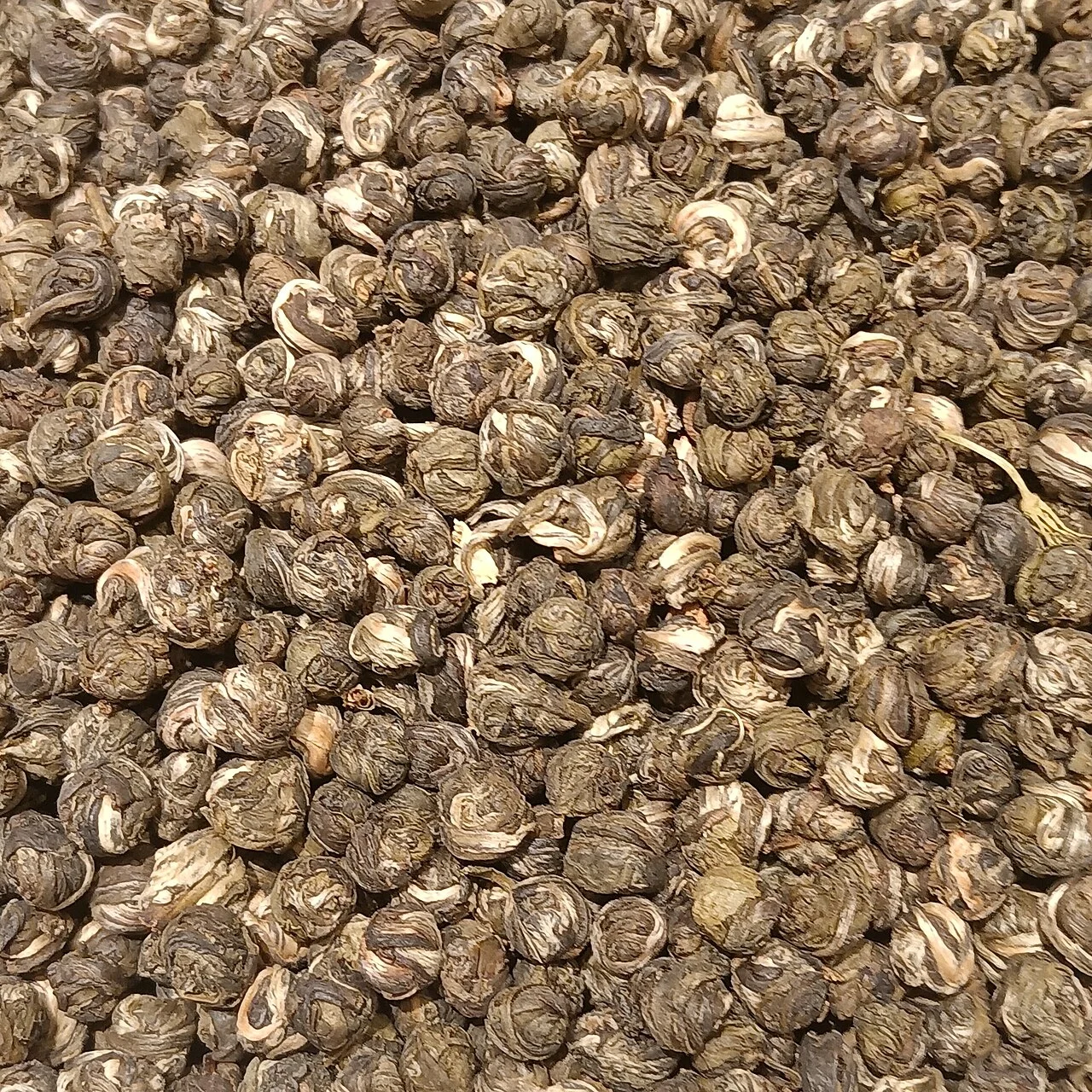
Slender, downy silver-jade green leaves cleanly sifted free of spent petals in top-grade lots.
Brewed Liquor Color
Clear golden-jade, bright and sparkling.
Aroma & Palate Profile
Fresh, cool, living jasmine blossom fused seamlessly with sweet green tea—never perfumey or synthetic. — Crisp rock-sugar sweetness carrying buoyant jasmine throughout the sip and long into the aftertaste.
Practical Buyer & Drinker Guide
Price Benchmarks, Authenticity Tips & Storage
Reference Price Range
4–5x scented daily jasmine ~$25–$55/500g; 7–9x silver-bud lots ~$90–$260/500g
Authenticity & Buying Tips
Fine scented Fuzhou jasmine sifts out spent petals—abundant dried flowers mixed in are usually cosmetic rather than true multi-round xunzhi.
Home Storage Advice
Refrigerate steamed greens & matcha airtight; store black, oolong, and aged dark teas sealed at dry room temperature.
Related Teas in This Category
Young lots exude wildflower honey, orchard fruit, and crisp forest sap; aged cakes unfold dried plum, camphor, medicinal herb, and cedar.
Cooked red jujube, sweet sticky rice, dark caramel, and warm timber once initial piling notes air out.
Intense sweet nori seaweed, steamed edamame, fresh cream, and bright spring verdure.
Verified References & Provenance
- [01] 2022Source
Traditional tea processing techniques and associated social practices in China
UNESCO Intangible Cultural Heritage · Nomination File No. 01884
Inscribed in 2022; documents the six core Chinese tea categories, reprocessed teas, and their embedded social rituals across 44 national heritage items.
- [02] 1979Source
Chen Chuan's Six-Category Tea Classification (1979) & Camellia sinensis Phylogeography
Chen Chuan (1979) / Chen Zongmao (ed., China Tea Classic)
Chen Chuan (1979) established the modern scientific taxonomy of six tea families based on processing mechanisms (enzyme inactivation, withering, yellowing, semi-oxidation, full oxidation, microbial piling) rather than linear fermentation; Chen Zongmao's China Tea Classic synthesizes modern agronomy and tea chemistry.