Raw Pu-erh (Sheng Pu-erh)
普洱生茶
Xishuangbanna (Menghai, Yiwu), Lincang & Pu'er, Yunnan
95–100°C
1:18 (approx. 7–8 g per 130–150 ml)
5–10 s flash infusions initially (avoid over-steeping young cakes)
Porcelain gaiwan or Yixing clay teapot (10–15)
History & Provenance
Sun-dried, compressed Yunnan teas have traveled the Tea-Horse Road toward Tibet and inland China for centuries, taking the name Pu'er from their historic Qing trading center in Simao. In the late twentieth century, un-piled compressed cakes became known as 'Raw' (Sheng) Pu-erh to distinguish them from artificially wet-piled 'Ripe' (Shu) Pu-erh.
Cultivar & Raw Leaf
One-bud-two-to-three-leaf shoots of Yunnan large-leaf tea (var. assamica), naturally high in polyphenols and extractives that sustain decades of maturation.
Processing Craft
Shoots undergo slightly gentler pan-fixation than standard green teas, followed by rolling and solar drying into maocha; leaves are then steamed and pressed into cakes, bowls (tuo), or bricks for slow multi-year storage.
Dry Leaf Appearance
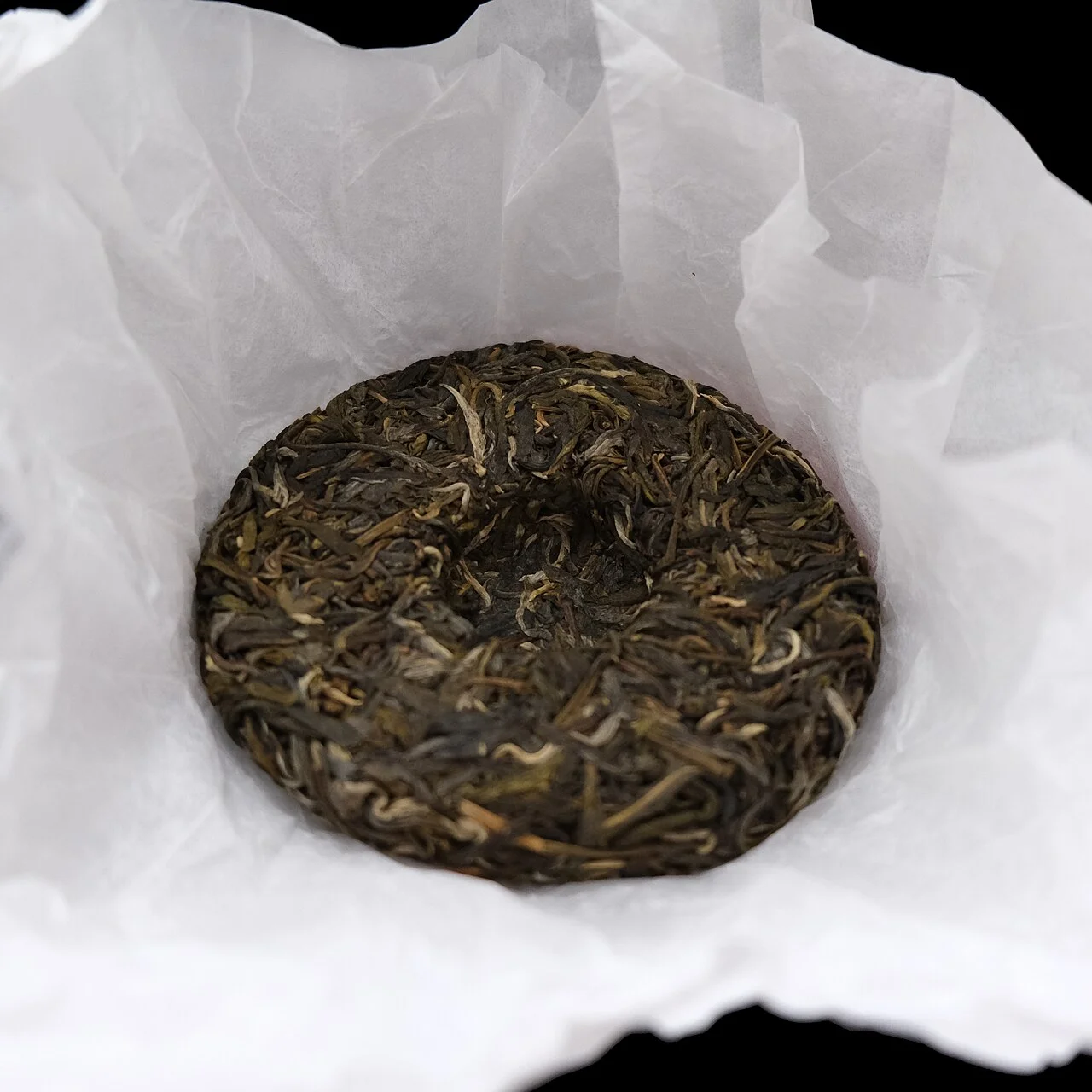
Thick, wiry compressed leaves with silver buds—slate-emerald when young, darkening toward burnished chestnut-brown over decades.
Brewed Liquor Color
Bright chartreuse in youth, shifting through luminous gold to clear garnet-amber with age.
Aroma & Palate Profile
Young lots exude wildflower honey, orchard fruit, and crisp forest sap; aged cakes unfold dried plum, camphor, medicinal herb, and cedar. — Brisk, mineral, and gripping when young with rapid sweet return; decades of aging melt edges into thick, supple broth.
Practical Buyer & Drinker Guide
Price Benchmarks, Authenticity Tips & Storage
Reference Price Range
Benchmark factory blends (357g) ~$25–$80; single-mountain old-arbor spring cakes ~$120–$700+
Authenticity & Buying Tips
Start with reliable heritage factory blends or 5–10 year dry-aged Sheng rather than bargain-priced 'Bingdao/Lao Banzhang ancient tree' claims.
Home Storage Advice
Keep wrapped in cotton paper inside breathable kraft/cartons at 50–70% humidity away from odors for gradual aging.
Related Teas in This Category
Cooked red jujube, sweet sticky rice, dark caramel, and warm timber once initial piling notes air out.
Fresh, cool, living jasmine blossom fused seamlessly with sweet green tea—never perfumey or synthetic.
Intense sweet nori seaweed, steamed edamame, fresh cream, and bright spring verdure.
Verified References & Provenance
- [01] 1979Source
Chen Chuan's Six-Category Tea Classification (1979) & Camellia sinensis Phylogeography
Chen Chuan (1979) / Chen Zongmao (ed., China Tea Classic)
Chen Chuan (1979) established the modern scientific taxonomy of six tea families based on processing mechanisms (enzyme inactivation, withering, yellowing, semi-oxidation, full oxidation, microbial piling) rather than linear fermentation; Chen Zongmao's China Tea Classic synthesizes modern agronomy and tea chemistry.
- [02] 2022Source
Traditional tea processing techniques and associated social practices in China
UNESCO Intangible Cultural Heritage · Nomination File No. 01884
Inscribed in 2022; documents the six core Chinese tea categories, reprocessed teas, and their embedded social rituals across 44 national heritage items.
- [03] 2009Source
The True History of Tea
Victor H. Mair & Erling Hoh
Philological and historical synthesis tracing tea from southwest China/Southeast Asia across overland 'cha' and maritime 'te' linguistic and trade corridors.