Wanxi Huangdacha (Large-Leaf Yellow Tea)
皖西黄大茶(霍山黄大茶)
Huoshan, Jinzhai & Yuexi, Dabie Mountains, western Anhui
95–100°C
1:40 (4 g per 160 ml; great in thermos or big pot)
1–2 min; forgiving even if steeped longer
Ceramic teapot, pitcher, or everyday mug (5–6)
History & Provenance
Within yellow tea's three branches (bud, small-leaf, and large-leaf), Wanxi Huangdacha has long been beloved across Anhui and northern China for its bold roasted crustiness—achieved by combining wet-heat yellowing with dramatic high-fire charcoal baking.
Cultivar & Raw Leaf
Mature late-spring one-bud-three-to-five-leaf shoots with tender stems rich in starches and cellulosic sugars.
Processing Craft
Heat-fixed, lightly rolled, and heaped warm for 5–7 days of prolonged menhuang yellowing before intense staged charcoal roasting that caramelizes leaf sugars.
Dry Leaf Appearance
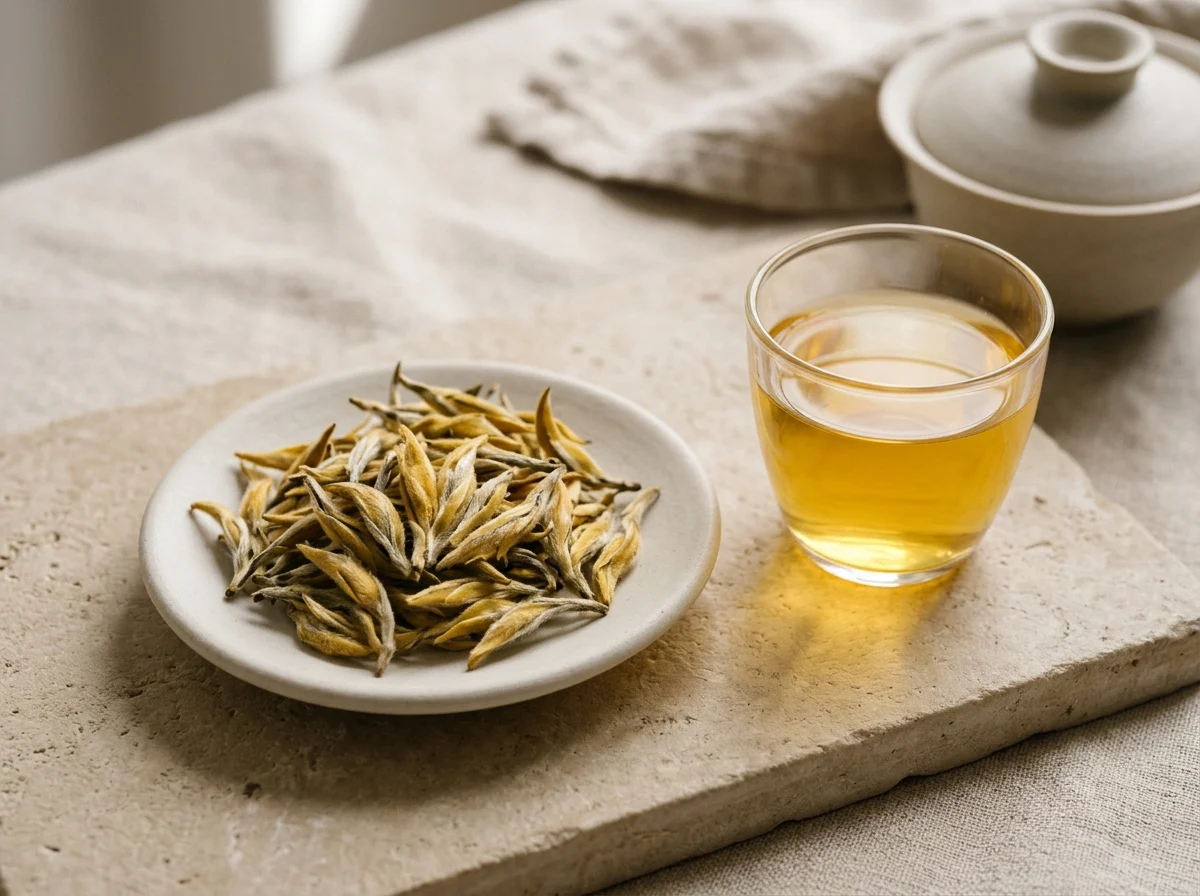
Bold, rustic brown-gold leaves joined with golden stems.
Brewed Liquor Color
Deep amber-gold, clear and warm.
Aroma & Palate Profile
Unmistakable toasted rice-crust ('guoba'), dark caramel, and warm roasted grain. — Hearty, warming, and remarkably gentle on the stomach—zero astringency, prized for pairing with rich meals.
Practical Buyer & Drinker Guide
Price Benchmarks, Authenticity Tips & Storage
Reference Price Range
Exceptionally accessible everyday classic: ~$15–$35/500g
Authenticity & Buying Tips
Expect rustic stems and broad leaves—judge quality by clean toasted-crust sweetness free of acrid smoke.
Home Storage Advice
Thorough roasting yields excellent shelf life; stays mellow 1–2 years in an airtight tin.
Related Teas in This Category
Gentle sweet corn, steamed cane sugar, and soft toasted cereal floral notes.
Sweet roasted chestnut mingled with steamed grain and gentle honey.
Fresh sweet bean and chestnut warmed by delicate corn silk and meadow floral notes.
Verified References & Provenance
- [01] 1979Source
Chen Chuan's Six-Category Tea Classification (1979) & Camellia sinensis Phylogeography
Chen Chuan (1979) / Chen Zongmao (ed., China Tea Classic)
Chen Chuan (1979) established the modern scientific taxonomy of six tea families based on processing mechanisms (enzyme inactivation, withering, yellowing, semi-oxidation, full oxidation, microbial piling) rather than linear fermentation; Chen Zongmao's China Tea Classic synthesizes modern agronomy and tea chemistry.
- [02] 2022Source
Traditional tea processing techniques and associated social practices in China
UNESCO Intangible Cultural Heritage · Nomination File No. 01884
Inscribed in 2022; documents the six core Chinese tea categories, reprocessed teas, and their embedded social rituals across 44 national heritage items.