Mengding Huangya (Mengding Yellow Buds)
蒙顶黄芽
Mount Mengding, Ya'an, Sichuan
85°C
1:45 (approx. 3.5 g per 150 ml)
45–60 s
Glass tumbler or white porcelain gaiwan (4–5)
History & Provenance
Mount Mengding stands at the heart of Sichuan tea antiquity: linked in legend to Han-era cultivator Wu Lizhen and prized as Tang imperial tribute celebrated by poet Bai Juyi. Modern Mengding Huangya codifies that legacy through controlled wet-heat yellowing.
Cultivar & Raw Leaf
Tender spring single buds and incipient one-bud-one-leaf shoots from Mount Mengding's cool, rain-soaked slopes.
Processing Craft
Characterized by alternating pan-fixation and warm cloth-wrapped yellowing cycles: heated buds rest in moist warmth to convert chlorophyll before gentle re-panning and final drying.
Dry Leaf Appearance
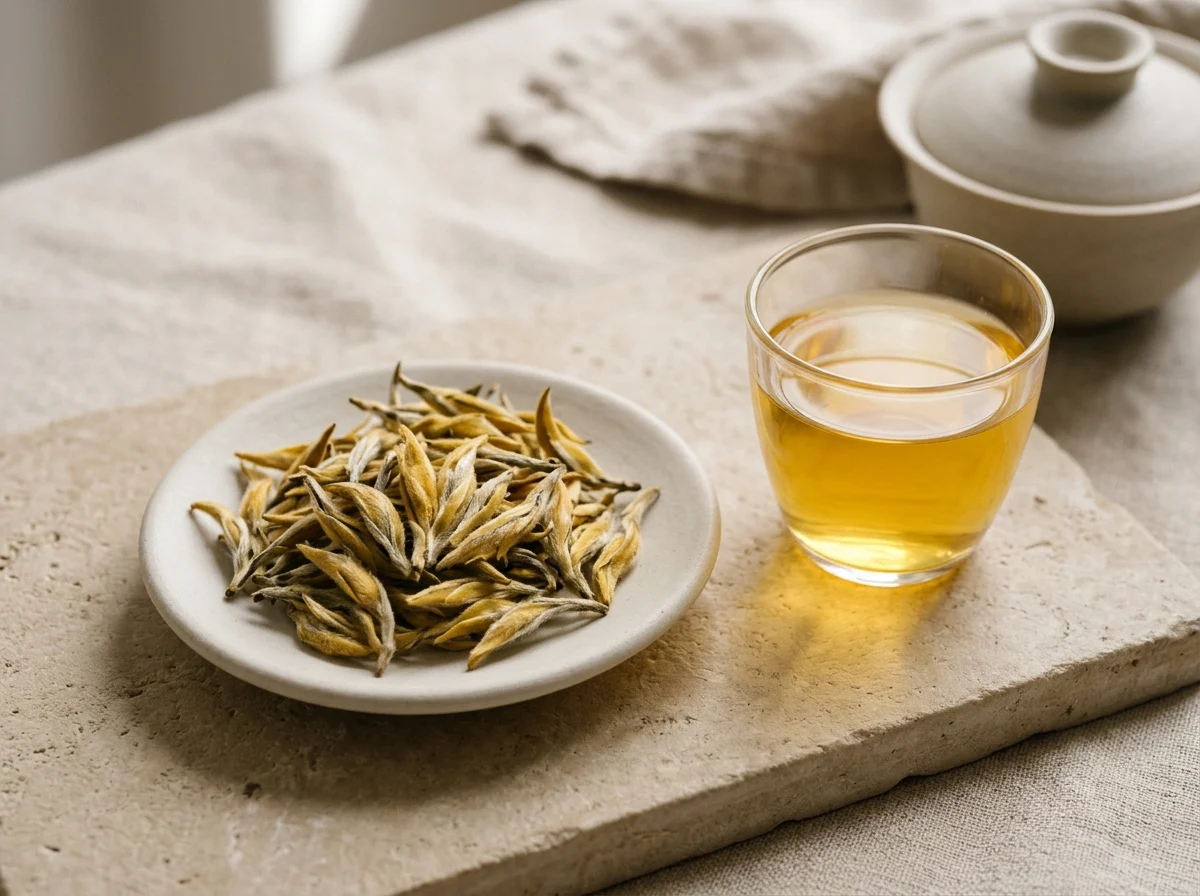
Slightly flattened, plump buds in warm pale gold with subtle down.
Brewed Liquor Color
Clear golden-yellow with a delicate jade undertone.
Aroma & Palate Profile
Sweet roasted chestnut mingled with steamed grain and gentle honey. — Rich, sweet, and supple, combining yellow-tea gentleness with subtle pan-fired body.
Practical Buyer & Drinker Guide
Price Benchmarks, Authenticity Tips & Storage
Reference Price Range
Everyday yellow leaf teas ~$15–$45/500g; artisan yellow bud teas ~$90–$260/500g
Authenticity & Buying Tips
True menhuang yellowing creates smooth, corn-sweet amber broth gentle on the stomach—distinct from stale oxidized green tea.
Home Storage Advice
Keep sealed in dark cool tins; enjoy bud teas within 12 months, while high-fired Huangdacha holds 2+ years.
Related Teas in This Category
Gentle sweet corn, steamed cane sugar, and soft toasted cereal floral notes.
Fresh sweet bean and chestnut warmed by delicate corn silk and meadow floral notes.
Unmistakable toasted rice-crust ('guoba'), dark caramel, and warm roasted grain.
Verified References & Provenance
- [01] 1979Source
Chen Chuan's Six-Category Tea Classification (1979) & Camellia sinensis Phylogeography
Chen Chuan (1979) / Chen Zongmao (ed., China Tea Classic)
Chen Chuan (1979) established the modern scientific taxonomy of six tea families based on processing mechanisms (enzyme inactivation, withering, yellowing, semi-oxidation, full oxidation, microbial piling) rather than linear fermentation; Chen Zongmao's China Tea Classic synthesizes modern agronomy and tea chemistry.
- [02] 2022Source
Traditional tea processing techniques and associated social practices in China
UNESCO Intangible Cultural Heritage · Nomination File No. 01884
Inscribed in 2022; documents the six core Chinese tea categories, reprocessed teas, and their embedded social rituals across 44 national heritage items.
- [03] c. 760–780Source
The Classic of Tea (Chajing) by Lu Yu
Lu Yu (c. 760–780 CE)
The earliest surviving systematic monograph on tea, organized into ten chapters covering origins, tools, processing, vessels, boiling, drinking, historical anecdotes, regions, omissions, and scroll diagrams.