Jin Jun Mei (Golden Steed Eyebrow)
金骏眉
High-Elevation Tongmuguan, Wuyi Mountains, Fujian
85–90°C (never boil-stew)
1:35 (approx. 3–4 g per 120–140 ml)
5–10 s quick infusions initially
White porcelain gaiwan (8–10)
History & Provenance
Crafted in 2005 in Tongmuguan by master maker Liang Junde and colleagues, Jin Jun Mei departed from smoked Lapsang tradition by processing exclusively tiny alpine spring buds without pine smoke—catalyzing China's modern wave of refined unsmoked bud black teas.
Cultivar & Raw Leaf
Tiny early spring terminal buds hand-picked from high-mountain Tongmuguan tea bushes at 1,200–1,800 m elevation.
Processing Craft
Carefully temperature-controlled withering (zero smoke), gentle hand-rolling to keep delicate buds intact, calibrated oxidation, and low-heat drying.
Dry Leaf Appearance
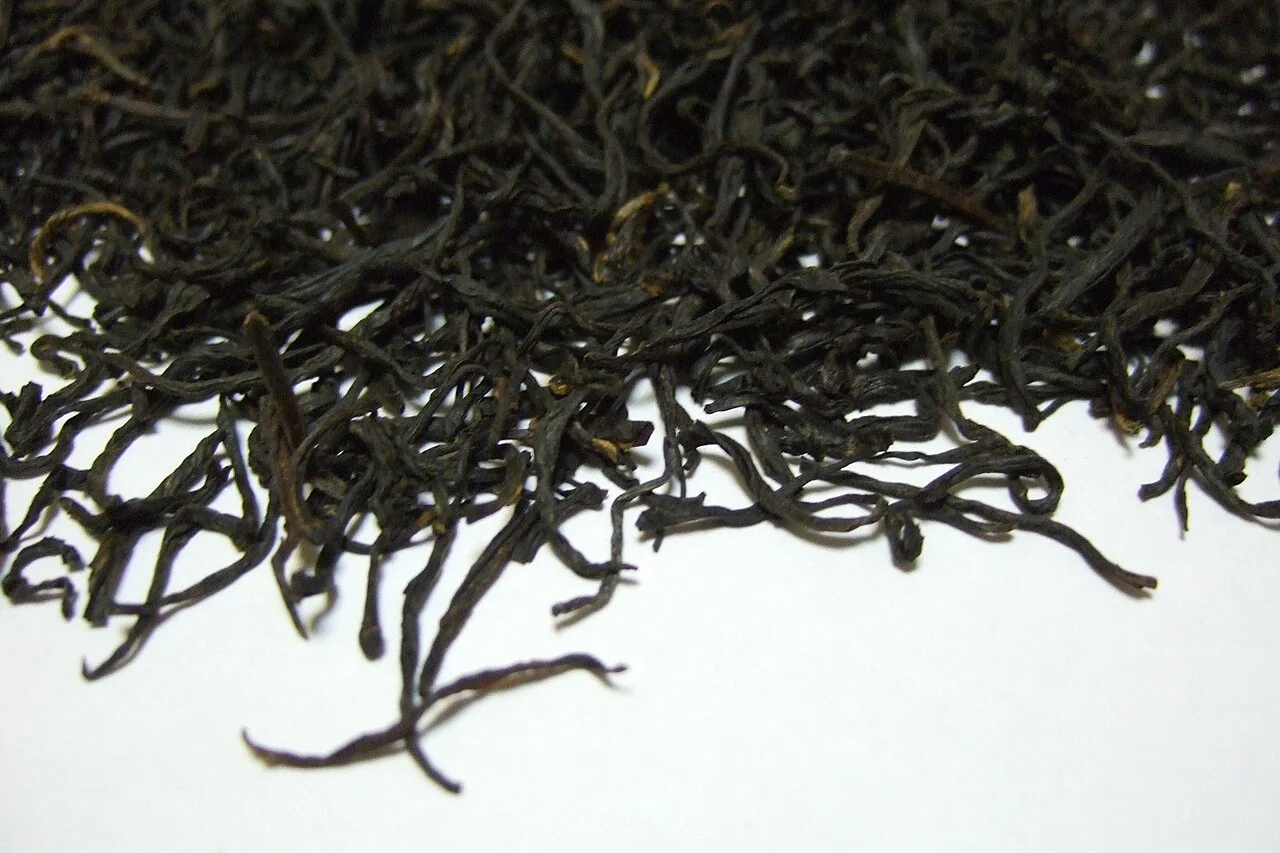
Delicate, curved, slender buds showing an authentic weave of bronze, black, and burnished gold—not uniform artificial gold.
Brewed Liquor Color
Luminous golden-amber rather than opaque dark red.
Aroma & Palate Profile
High-altitude blossom, wildflower honey, sweet potato, and nectarine unfolding cleanly in successive waves. — Silky, concentrated sweetness with bright mountain crispness and an aromatic empty-cup finish.
Practical Buyer & Drinker Guide
Price Benchmarks, Authenticity Tips & Storage
Reference Price Range
True Tongmuguan bud-only Jin Jun Mei is genuinely scarce (~$220–$800+/500g); bargain all-gold buds are almost always out-of-region imitations.
Authenticity & Buying Tips
Authentic dry leaf weaves black, bronze, and gold—never uniform bright yellow; steep briskly at 85–90°C.
Home Storage Advice
Store airtight in dark metal tins at room temperature; enjoys a 1–3 year sweet spot without refrigeration.
Related Teas in This Category
Traditional smoked: clean resinous pine smoke and dried longan; unsmoked: sweet wildflower, roasted yam, and fresh longan nectar.
The celebrated 'Keemun aroma': delicate dried rose petals, baked apple, warm honey, and subtle cedarwood.
Lush roasted sweet potato, warm maltose, cacao, and dried tropical fruit.
Verified References & Provenance
- [01] 1979Source
Chen Chuan's Six-Category Tea Classification (1979) & Camellia sinensis Phylogeography
Chen Chuan (1979) / Chen Zongmao (ed., China Tea Classic)
Chen Chuan (1979) established the modern scientific taxonomy of six tea families based on processing mechanisms (enzyme inactivation, withering, yellowing, semi-oxidation, full oxidation, microbial piling) rather than linear fermentation; Chen Zongmao's China Tea Classic synthesizes modern agronomy and tea chemistry.
- [02] 2022Source
Traditional tea processing techniques and associated social practices in China
UNESCO Intangible Cultural Heritage · Nomination File No. 01884
Inscribed in 2022; documents the six core Chinese tea categories, reprocessed teas, and their embedded social rituals across 44 national heritage items.