Yunnan Dianhong (Yunnan Golden Black Tea)
滇红
Lincang (Fengqing), Baoshan & Pu'er, Yunnan
90–95°C
1:30 (approx. 4–5 g per 150 ml)
15–25 s first steep, +10 s thereafter
Porcelain gaiwan or clay teapot (6–8)
History & Provenance
When wartime blockades cut off eastern Chinese ports in 1938, agronomist Feng Shaoqiu traveled to Fengqing in Yunnan and successfully adapted Camellia sinensis var. assamica leaves to black-tea processing in 1939, creating 'Dianhong' as a golden-tipped wartime export landmark.
Cultivar & Raw Leaf
Stout, thickly downy buds and young leaves of Yunnan large-leaf tea (var. assamica), notably Fengqing and Menghai cultivars.
Processing Craft
Controlled withering, vigorous rolling to tap dense leaf polyphenols, warm humid oxidation that turns downy trichomes golden, and hot-air drying.
Dry Leaf Appearance
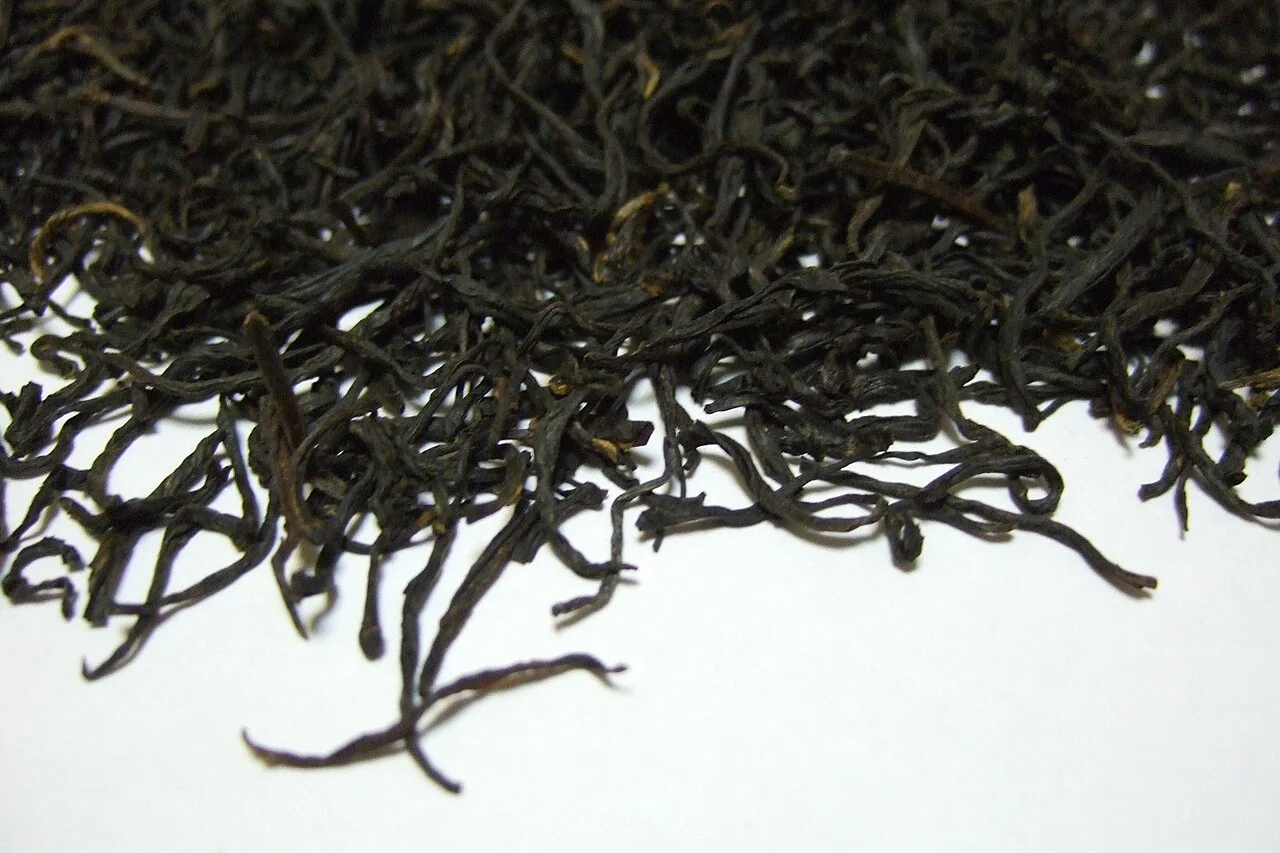
Plump, broad leaves interlaced with abundant burnished gold tips against dark mahogany strands.
Brewed Liquor Color
Rich, glowing copper-ruby with a bright golden halo.
Aroma & Palate Profile
Lush roasted sweet potato, warm maltose, cacao, and dried tropical fruit. — Full-bodied, malty, and generously sweet—robust enough for hearty single-origin sipping or milk pairings.
Practical Buyer & Drinker Guide
Price Benchmarks, Authenticity Tips & Storage
Reference Price Range
Value daily black teas ~$15–$45/500g; single-estate or spring-bud specialties ~$75–$360+/500g
Authenticity & Buying Tips
Quality whole-leaf black tea finishes sweet and clean; beware ultra-cheap golden buds that taste hollow or harsh.
Home Storage Advice
Store airtight in dark metal tins at room temperature; enjoys a 1–3 year sweet spot without refrigeration.
Related Teas in This Category
Traditional smoked: clean resinous pine smoke and dried longan; unsmoked: sweet wildflower, roasted yam, and fresh longan nectar.
The celebrated 'Keemun aroma': delicate dried rose petals, baked apple, warm honey, and subtle cedarwood.
High-altitude blossom, wildflower honey, sweet potato, and nectarine unfolding cleanly in successive waves.
Verified References & Provenance
- [01] 1979Source
Chen Chuan's Six-Category Tea Classification (1979) & Camellia sinensis Phylogeography
Chen Chuan (1979) / Chen Zongmao (ed., China Tea Classic)
Chen Chuan (1979) established the modern scientific taxonomy of six tea families based on processing mechanisms (enzyme inactivation, withering, yellowing, semi-oxidation, full oxidation, microbial piling) rather than linear fermentation; Chen Zongmao's China Tea Classic synthesizes modern agronomy and tea chemistry.
- [02] 2022Source
Traditional tea processing techniques and associated social practices in China
UNESCO Intangible Cultural Heritage · Nomination File No. 01884
Inscribed in 2022; documents the six core Chinese tea categories, reprocessed teas, and their embedded social rituals across 44 national heritage items.
- [03] 2021Source
Royal Botanic Gardens, Kew: The History of Tea from China to India
Royal Botanic Gardens, Kew
Traces botanical classification of Camellia sinensis var. assamica, Wardian-case plant transport, and Kew's role in colonial botanical networks.