Lapsang Souchong (Zhengshan Xiaozhong)
正山小种
Tongmuguan Valley, Wuyi Mountains, Fujian
90–95°C
1:30 (approx. 5 g per 150 ml)
15–25 s first steep, +10 s thereafter
White porcelain gaiwan or glazed teapot (7–9)
History & Provenance
Recognized as the world's earliest black tea, Zhengshan Xiaozhong originated in Tongmuguan around the late sixteenth to early seventeenth century and fueled early European maritime demand. Crucially, it comprises two distinct branches: traditional smoked Lapsang Souchong kilned over masson pine wood for intense pine-smoke and dried-longan depth, and modern unsmoked Zhengshan Xiaozhong dried without smoke to spotlight pure floral-honey sweetness.
Cultivar & Raw Leaf
Spring one-bud-two-to-three-leaf shoots of the native Tongmuguan small-leaf landrace grown under misty forest canopy.
Processing Craft
In the traditional smoked method, leaves wither above burning masson pine in multi-story wooden 'qinglou' kilns, then roll, oxidize, flash-pan, and re-dry over pine smoke; unsmoked versions substitute clean hot air to preserve delicate floral-longan clarity.
Dry Leaf Appearance
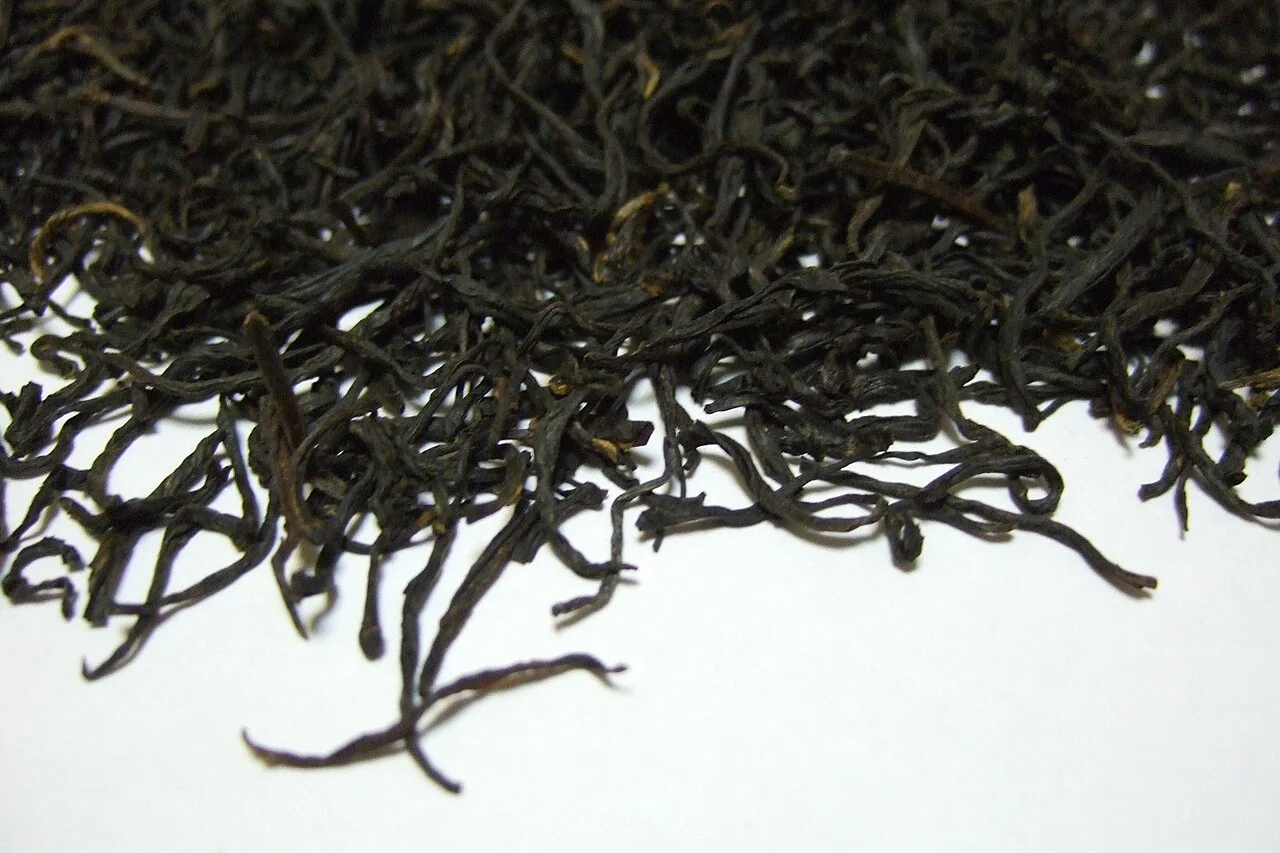
Stout, tightly rolled strips; glossy jet-black in smoked lots or dark cocoa-brown with sparse gold tips in unsmoked lots.
Brewed Liquor Color
Deep mahogany-crimson with a luminous golden ring.
Aroma & Palate Profile
Traditional smoked: clean resinous pine smoke and dried longan; unsmoked: sweet wildflower, roasted yam, and fresh longan nectar. — Rounded, warming, and remarkably smooth—well-made smoked lots weave pine resin seamlessly into sweet longan broth without acridity.
Practical Buyer & Drinker Guide
Price Benchmarks, Authenticity Tips & Storage
Reference Price Range
Standard Wuyi black tea ~$25–$60/500g; core Tongmuguan landrace lots ~$90–$260+/500g
Authenticity & Buying Tips
Check whether the lot is Traditional Pine-Smoked Lapsang or Modern Unsmoked Zhengshan Xiaozhong before buying—their flavor profiles differ dramatically.
Home Storage Advice
Store airtight in dark metal tins at room temperature; enjoys a 1–3 year sweet spot without refrigeration.
Related Teas in This Category
The celebrated 'Keemun aroma': delicate dried rose petals, baked apple, warm honey, and subtle cedarwood.
Lush roasted sweet potato, warm maltose, cacao, and dried tropical fruit.
High-altitude blossom, wildflower honey, sweet potato, and nectarine unfolding cleanly in successive waves.
Verified References & Provenance
- [01] 1979Source
Chen Chuan's Six-Category Tea Classification (1979) & Camellia sinensis Phylogeography
Chen Chuan (1979) / Chen Zongmao (ed., China Tea Classic)
Chen Chuan (1979) established the modern scientific taxonomy of six tea families based on processing mechanisms (enzyme inactivation, withering, yellowing, semi-oxidation, full oxidation, microbial piling) rather than linear fermentation; Chen Zongmao's China Tea Classic synthesizes modern agronomy and tea chemistry.
- [02] 2022Source
Traditional tea processing techniques and associated social practices in China
UNESCO Intangible Cultural Heritage · Nomination File No. 01884
Inscribed in 2022; documents the six core Chinese tea categories, reprocessed teas, and their embedded social rituals across 44 national heritage items.
- [03] 2009Source
The True History of Tea
Victor H. Mair & Erling Hoh
Philological and historical synthesis tracing tea from southwest China/Southeast Asia across overland 'cha' and maritime 'te' linguistic and trade corridors.