Yingde Black Tea (Yinghong No. 9)
英德红茶(英红九号)
Yingde Karst Hills & Beijiang Valley, Guangdong
92–95°C
1:35 (approx. 4 g per 140 ml)
15–20 s gongfu; 2.5–3 min teapot
White porcelain gaiwan or ceramic teapot (6–8)
History & Provenance
Launched in the late 1950s by adapting Yunnan large-leaf germplasm in northern Guangdong, Yingde quickly joined global black tea trade; the later clonal release of 'Yinghong No. 9' forged today's benchmark South China sweet, full-bodied black tea.
Cultivar & Raw Leaf
Plump one-bud-one-to-two-leaf shoots of the Yinghong No. 9 large-leaf cultivar.
Processing Craft
Controlled withering, whole-leaf or broken rolling, warm humid oxidation, and hot-air drying.
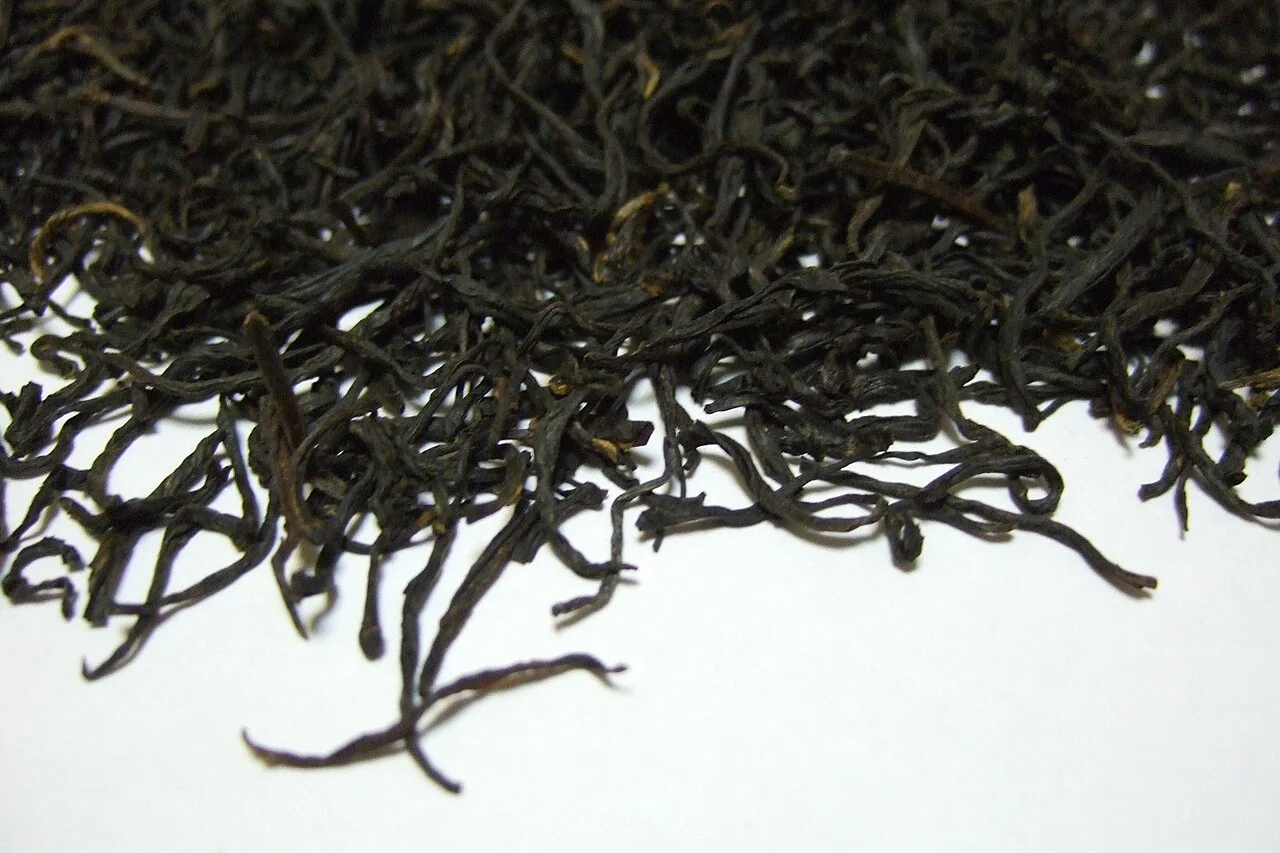
Dry Leaf Appearance
Bold, dark mahogany leaves richly streaked with bright golden buds.
Brewed Liquor Color
Radiant ruby-red with a bright golden cup ring.
Aroma & Palate Profile
Sweet blossom, caramelized yam, warm malt, and light honeyed rose. — Generously sweet, thick, and rounded—smoother than Assam straight up, yet bold enough for Cantonese-style milk tea.
Practical Buyer & Drinker Guide
Price Benchmarks, Authenticity Tips & Storage
Reference Price Range
Outstanding value daily black tea: ~$18–$45/500g; golden-bud spring lots ~$65–$120/500g
Authenticity & Buying Tips
Verify the 'Yinghong No. 9' cultivar rather than generic broken Guangdong black tea; true No. 9 leaves stay thick, supple, and sweet even as the cup cools.
Home Storage Advice
Keeps smoothly for 2–3 years in sealed opaque tins at room temperature.
Related Teas in This Category
Traditional smoked: clean resinous pine smoke and dried longan; unsmoked: sweet wildflower, roasted yam, and fresh longan nectar.
The celebrated 'Keemun aroma': delicate dried rose petals, baked apple, warm honey, and subtle cedarwood.
Lush roasted sweet potato, warm maltose, cacao, and dried tropical fruit.
Verified References & Provenance
- [01] 1979Source
Chen Chuan's Six-Category Tea Classification (1979) & Camellia sinensis Phylogeography
Chen Chuan (1979) / Chen Zongmao (ed., China Tea Classic)
Chen Chuan (1979) established the modern scientific taxonomy of six tea families based on processing mechanisms (enzyme inactivation, withering, yellowing, semi-oxidation, full oxidation, microbial piling) rather than linear fermentation; Chen Zongmao's China Tea Classic synthesizes modern agronomy and tea chemistry.
- [02] 2022Source
Traditional tea processing techniques and associated social practices in China
UNESCO Intangible Cultural Heritage · Nomination File No. 01884
Inscribed in 2022; documents the six core Chinese tea categories, reprocessed teas, and their embedded social rituals across 44 national heritage items.